
When Your Heat Pump Fan Stops Working: What Glenview Homeowners Need to Know
Heat pump fan repair is often more straightforward than you think — if you know where to look.
Quick answer for common heat pump fan problems:
| Symptom | Likely Cause | What to Do |
|---|---|---|
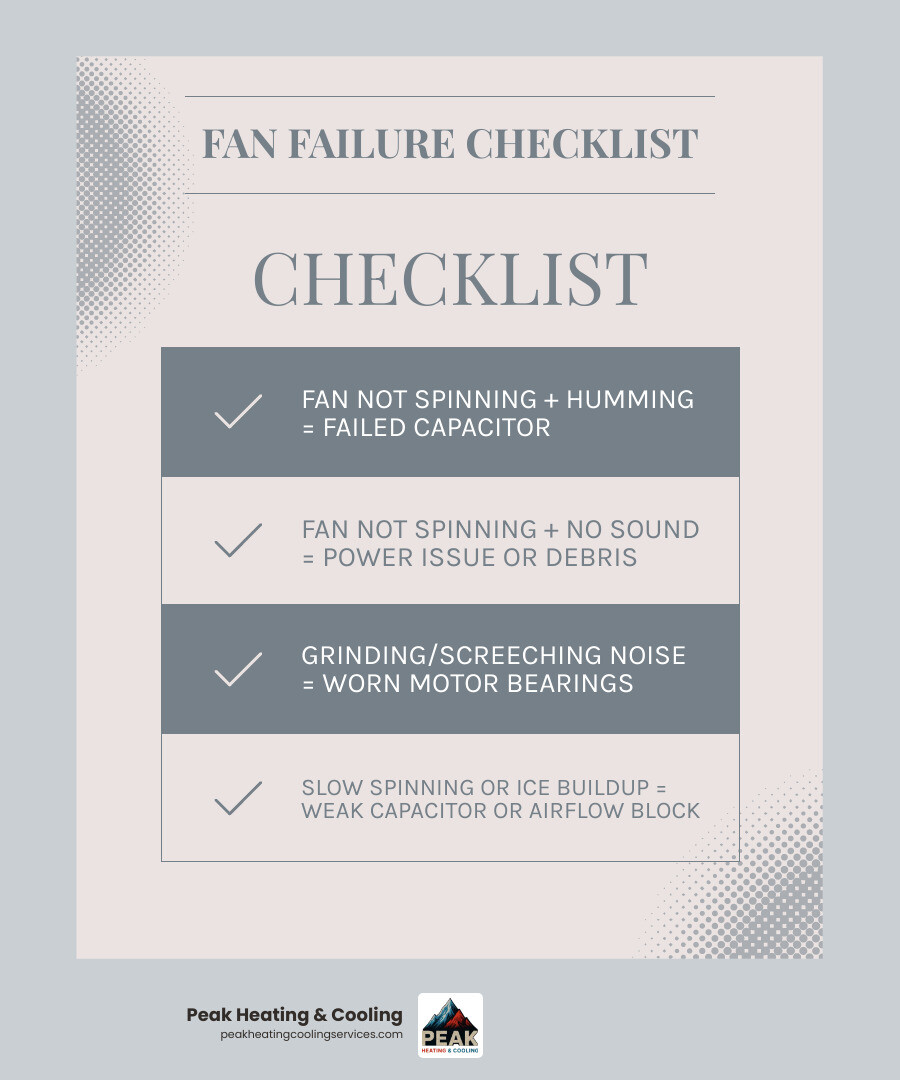
| Fan not spinning, unit humming | Failed capacitor | Turn off unit, call a licensed and insured HVAC contractor |
| Fan not spinning, no sound | Power issue or debris | Check breaker, inspect for blockage |
| Grinding or screeching noise | Worn motor bearings | Shut down unit, schedule heat pump repair Glenview IL |
| Unit iced over | Dirty air filter or airflow issue | Turn off unit, replace filter, let thaw |
| Fan spins slowly | Failing motor or weak capacitor | Schedule heat pump repair Glenview IL |
The outdoor unit sitting in your backyard has one critical job: keep the compressor cool. When the fan stops, the compressor can overheat and fail — sometimes within hours. In other words, a small problem ignored can turn into a much bigger repair.
Whether you’re dealing with a silent outdoor unit on a hot Chicagoland summer day or a heat pump that’s struggling through a Glenview winter, the fan is usually the first place to look.
This guide walks you through how to diagnose what’s happening, what’s safe to check as a homeowner, and when it’s time to call Peak Heating & Cooling for heat pump repair Glenview IL.
Identifying Common Causes for heat pump fan repair
When your house won’t warm up or the AC stopped working suddenly, the silence from your outdoor unit is a major clue. Before assuming the worst, we recommend checking for the most common culprits. Often, heat pump fan repair starts with identifying why the power isn’t reaching the blades or why the motor is struggling to “kick over.”
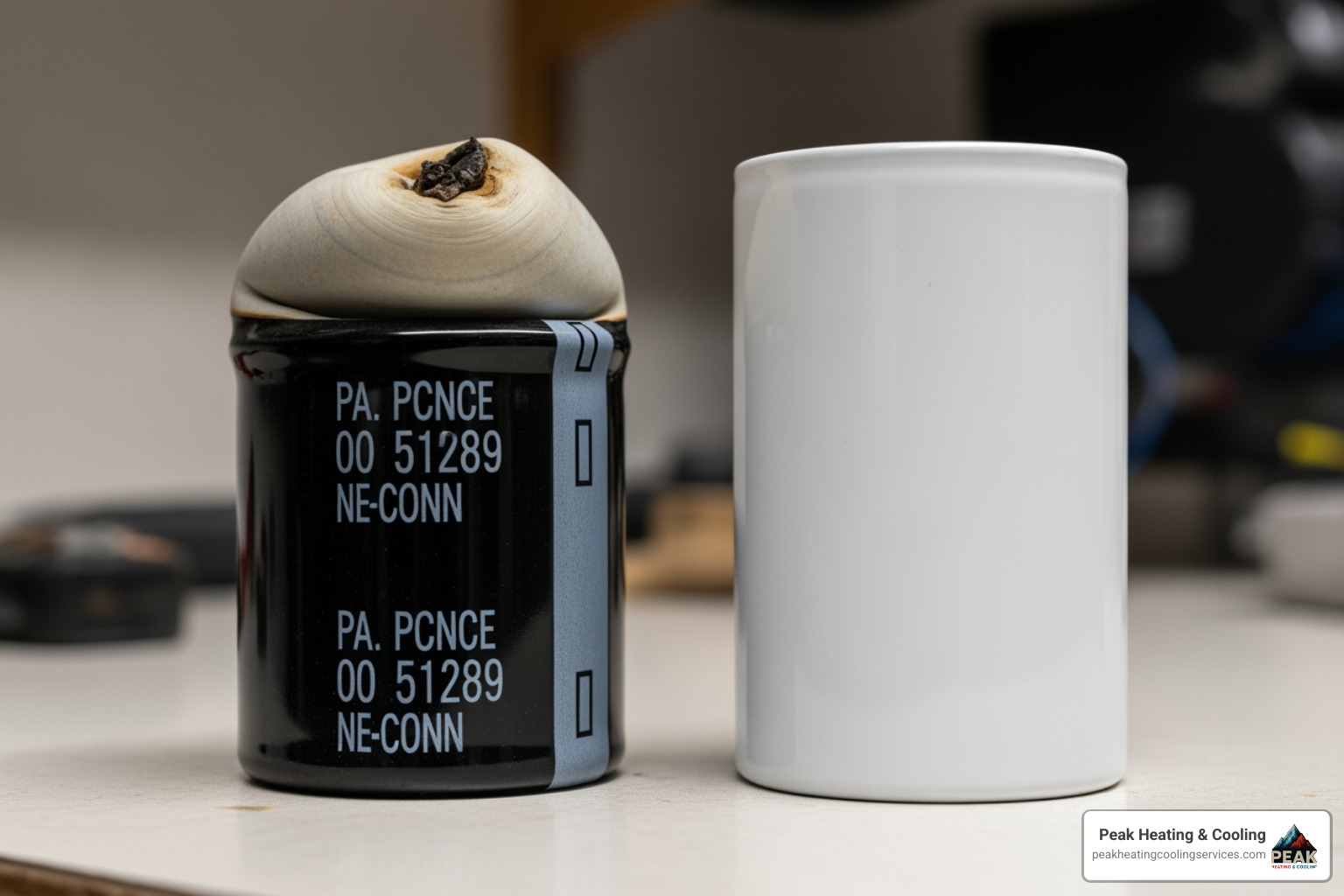
The most frequent cause of a non-spinning fan is a failed capacitor. This small, cylindrical component acts like a battery, providing the high-voltage “jolt” needed to start the motor. If you hear a distinct humming or buzzing sound coming from the unit, but the blades aren’t moving, that is a classic sign of a dead capacitor.
Other common issues include:
- Mechanical Blockages: Twigs, leaves, or even small toys can fall through the top grille and wedge the blades.
- Electrical Supply Problems: A tripped circuit breaker or a blown fuse in the outdoor disconnect switch can cut power entirely.
- Thermostat Settings: If the thermostat isn’t calling for heat or cool properly, the fan won’t engage.
If you aren’t comfortable poking around high-voltage equipment, it’s always best to contact a professional HVAC Contractor to handle the diagnostics.
Warning Signs Requiring heat pump fan repair
You don’t always have to wait for the fan to stop completely to know there’s trouble. Your system often “talks” to you before a total breakdown occurs. Watch for these symptoms:
- Strange Noises: Grinding or screeching usually indicates worn-out bearings in the fan motor.
- Weak Airflow: If the fan is spinning but moving very little air, the motor may be failing or the blades could be damaged.
- Intermittent Operation: The fan starts but shuts off after a few minutes, often due to the motor overheating.
- Visible Ice Buildup: If the outdoor coils are encased in ice, it means the fan isn’t moving enough air to facilitate the heat exchange process.
- The “Stick Test” Failure: If you try to gently nudge the fan blade with a stick (with the power on) and it starts spinning, your capacitor is definitely shot.
Troubleshooting Power Supply Issues
Before you start looking for replacement parts, we always check the basics. Is the unit actually getting electricity?
- Check the Thermostat: Ensure it is set to “Cool” or “Heat” and the temperature is at least 5 degrees above or below the current room temperature.
- The Circuit Breaker: Look at your home’s electrical panel. If the breaker labeled “Heat Pump” or “AC” has moved to the middle position, reset it.
- Outdoor Disconnect Switch: Most units in Northbrook and Park Ridge have a “pull-out” or flip switch located in a small box on the exterior wall near the unit. Ensure it is firmly in the “ON” position.
If the breaker trips again immediately after resetting, do not try a third time. This indicates a short circuit or a grounded motor that requires professional Services.
Essential Safety Precautions and Troubleshooting Steps
Safety is our absolute priority. Heat pumps operate on 220V circuits, which can be lethal if handled improperly. Before you even remove a screw from the access panel, you must disconnect the power.
- Shut off the breaker at the main electrical panel.
- Pull the disconnect plug at the outdoor unit.
- Wait several minutes for any residual charge to dissipate.
When inspecting the fan blades, never use your hands. Even with the power off, a fan that is stuck under tension could spin unexpectedly. Use a long, sturdy stick to see if the blades move freely. If they are stiff or won’t budge, the motor bearings have likely seized.
Understanding how heat pumps move heat helps you realize why this fan is so vital. It’s the engine of the heat exchange process. If you need assistance with these initial safety checks, our Heating Contractor Services are available 24/7 for emergency calls across the Chicagoland area.
Safe Inspection Techniques
If you decide to open the electrical cabinet to look at the capacitor, be extremely careful. Capacitors store electricity even when the power is off. A professional technician uses an insulated screwdriver to “short” the terminals and discharge that energy safely.
Always look for physical signs of failure:
- Bulging or “mushroomed” tops on the capacitor.
- Leaking oil around the electrical terminals.
- Burnt wire insulation or a “burnt electronics” smell.
Understanding the Role of the Capacitor and Motor
To understand heat pump fan repair, you have to understand the partnership between the motor and the capacitor. The fan motor is a heavy component that takes a lot of energy to start from a dead stop.
- The Start Capacitor provides that initial “kick” of torque.
- The Run Capacitor stays in the circuit to provide a steady, smooth flow of power while the motor is running.
Modern units often use a “dual capacitor” that handles both the fan and the compressor. When this part fails, neither will run. If you learn about high-efficiency heat pumps from NRCAN, you’ll see that maintaining these electrical components is key to keeping your system running efficiently.
When to Call a Professional for heat pump fan repair
While some homeowners in Skokie or Wilmette are handy with a multimeter, most fan issues involve electrical testing and the right replacement parts. We recommend calling a licensed and insured HVAC contractor if:
- The fan motor is hot to the touch (possible internal electrical issue)
- You see sparks or smoke
- The circuit breaker keeps tripping
- You need to replace the motor itself, which involves matching horsepower, RPM, and voltage correctly
If you’re dealing with a heat pump that won’t keep up or the outdoor fan won’t stay on, Peak can help you get to the bottom of it with straightforward troubleshooting and honest recommendations. Our Furnace Repair Services team can also help if the issue turns out to be a heating-side problem inside the home (like airflow or thermostat control).
Step-by-Step Guide to DIY Fan Motor Replacement
If you have determined the motor is truly burned out and you have the right tools, here is the general process for replacement. You will need an insulated screwdriver, a socket set, wire strippers, and needle-nose pliers.
- Document the Wiring: Take a clear photo of how the old motor is wired to the capacitor and the contactor. Label the wires (usually black, brown, and yellow/white).
- Remove the Top Grille: Most fans are attached to the underside of the top cover. Unscrew the perimeter screws and carefully lift the top.
- Loosen the Fan Blade: There is usually a set screw holding the fan blade to the motor shaft. Use a wrench to loosen it. If it’s rusted, you may need penetrating oil.
- Swap the Motor: Unscrew the mounting bolts holding the motor to the grille. Install the new motor, ensuring it is the correct orientation.
- Reinstall the Blade: Slide the blade onto the new shaft. It is critical to measure the height of the blade on the old shaft so you can replicate it on the new one; if it’s too high or low, it won’t move air efficiently.
Repair vs. Replacement Decision Matrix
| Factor | Repair (Motor/Capacitor) | Replace (Full System) |
|---|---|---|
| Age of System | Less than 10 years old | Over 12–15 years old |
| Repair Severity | Isolated fan motor/capacitor issue | Multiple recurring breakdowns or major component failure |
| Efficiency | System still performs well | High utility bills, struggling to keep up |
| Warranty | Parts might still be covered | Warranty has expired |
Selecting the Right Replacement Parts
Not all motors are created equal. In the Glenview and North Shore area, we frequently see Lennox and Ducane systems. We recommend using OEM (Original Equipment Manufacturer) parts whenever possible. A “universal” motor might seem simpler, but it can require modifications to the mounting brackets or wiring that lead to reliability issues. Always match the Voltage, RPM, Horsepower, and Shaft Diameter exactly.
Preventing Future Failures with Regular Maintenance
The best heat pump fan repair is the one you never have to do. Most fan motors fail because they are overworked. When your air filters are clogged, the system has to run longer and harder to maintain temperature, putting immense strain on the outdoor fan.
We suggest keeping at least a 2-foot clearance around your outdoor unit. If shrubs, weeds, or stored items are crowding the unit, the fan can’t pull enough air through the coils. This causes the motor to run hot, which eventually melts the internal wire insulation and kills the motor.
For homeowners in Chicagoland, an annual tune-up is essential. Our Air Conditioning Repair Service includes cleaning the outdoor coils and testing the capacitor’s “microfarad” levels to catch a failing part before it leaves you without heat or air.
Seasonal HVAC Maintenance Plan
- Fall Furnace Prep: Clear away dead leaves and summer debris from the outdoor unit. Check that the defrost cycle is working for the upcoming Illinois winter.
- Spring AC Tune-up: Hose down the outdoor coils (gently!) to remove salt, dirt, and cottonwood seeds.
- Prune Shrubbery: Keep plants at least 18 inches to 2 feet away from the unit.
- Monthly Filter Checks: In homes with pets or high dust, change filters every 30 days to ensure smooth airflow.
Frequently Asked Questions about Heat Pump Fans
Can I run my heat pump if the fan isn’t working?
Absolutely not. If you notice the fan has stopped but the unit is making a loud humming sound (the compressor running), turn it off at the thermostat immediately. Without the fan to dissipate heat, the compressor can overheat and fail. If you’re in an “AC stopped working” situation in Glenview, shut the system down and schedule same-day HVAC service.
Should I replace the capacitor when replacing the motor?
In most cases, yes. Capacitors can weaken over time, and a failing motor can also stress the capacitor. Replacing both at the same time helps protect the new motor and can reduce repeat breakdowns.
Why does my outdoor unit keep freezing up?
While a failing fan is a common cause, ice buildup is often linked to restricted airflow from a dirty indoor air filter. If the indoor blower can’t move enough air over the indoor coils, the system can ice over. If your unit is a block of ice, turn it off, let it thaw completely, and replace your filters before calling for service.
Conclusion
A broken fan doesn’t have to mean the end of your HVAC system. By catching warning signs early—like humming sounds, the fan not spinning, or a grinding noise—you can often prevent bigger damage.
At Peak Heating & Cooling, we’re a locally operated, licensed and insured HVAC contractor serving Glenview and the surrounding North Shore suburbs with 20+ years of HVAC experience. If you need heat pump repair Glenview IL or you’re dealing with an HVAC emergency in Chicagoland, we’re here to help.
For system replacements or new installations, 0% financing options available for qualified customers.
If your heat pump fan isn’t working, call Peak Heating & Cooling and contact our team today to schedule service.