

What Does Central Heating Boiler Installation Actually Involve?
Central heating boiler installation is the process of fitting a new boiler unit into your home’s heating system — including connecting pipework, venting, controls, and radiators — so your home stays warm reliably through a Glenview, IL winter.
If your boiler stopped working suddenly or you have no heat in the house, a safe, professional installation (or replacement) can get you back to reliable comfort.
Here’s a quick overview of what’s involved and what to expect:
| Factor | What to Know |
|---|---|
| Types of boilers | Combi, system, and conventional — each suits different home sizes and hot water needs |
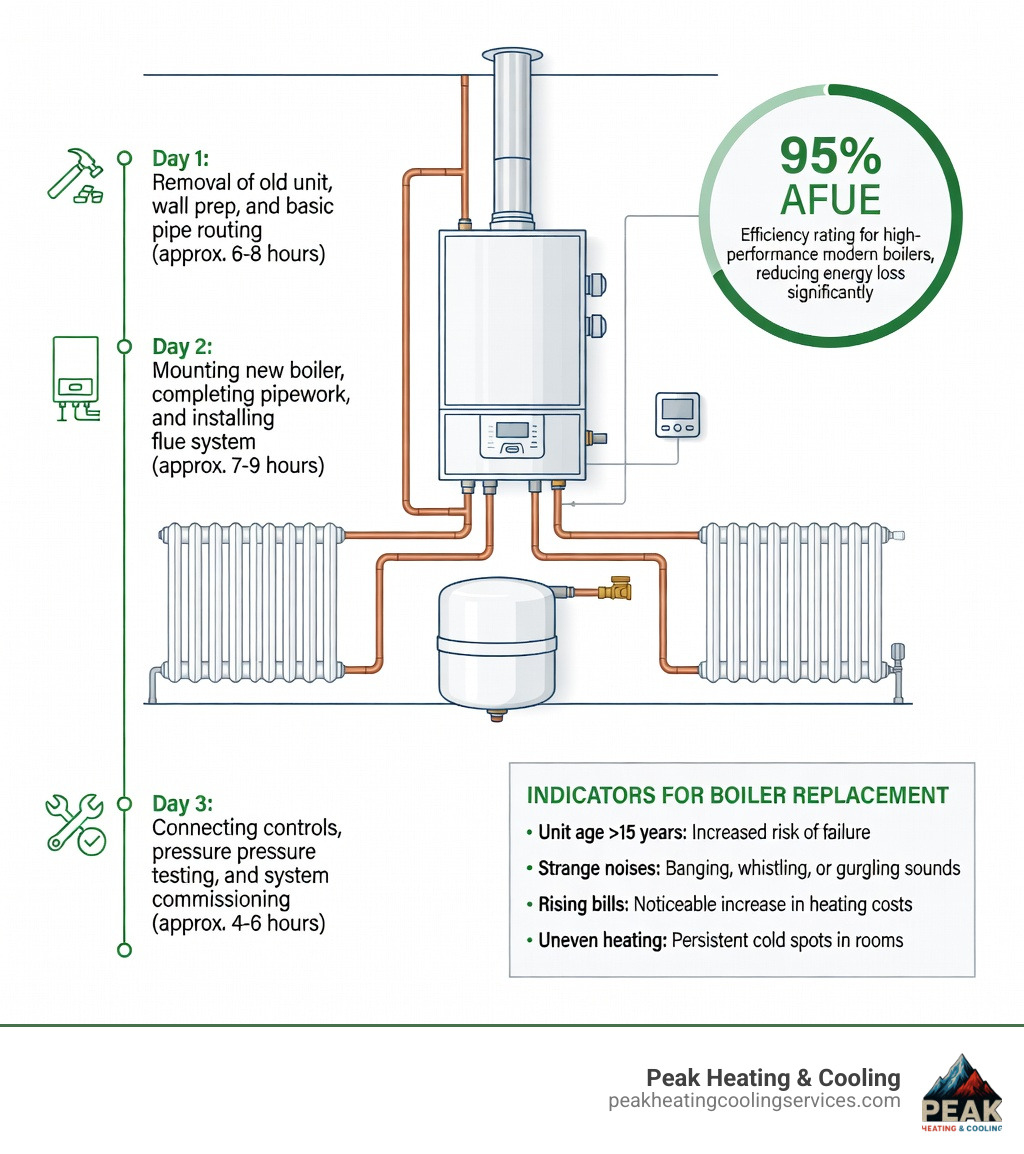
| Installation time | Typically 1 to 3 days depending on system type and complexity |
| When to replace | Boilers over 15–20 years old, or those with frequent breakdowns, rising energy use, or strange noises |
| Who installs it | A licensed and insured HVAC contractor — never a DIY job with gas systems |
| Efficiency | Modern high-efficiency boilers can reach 95% AFUE or higher, reducing wasted energy |
| Regulations | Permits and inspections are required; always use a licensed, insured contractor |
Replacing or installing a boiler is one of the bigger home comfort decisions you’ll make — especially in the North Shore suburbs where winters don’t give you much margin for error. A failed or aging boiler in Glenview in January isn’t just uncomfortable — it’s an urgent situation.
The good news? A well-chosen, properly installed boiler can last 15 to 20 years — or even longer with regular maintenance. The challenge is navigating the options, understanding the process, and making sure the system is sized and installed correctly.
This guide walks you through everything: choosing the right system, what happens on installation day, when it’s time to upgrade, and how to plan for the investment.
Choosing the Right System for Your Property
When we talk about central heating boiler installation, the first question we always hear from homeowners in Wilmette or Winnetka is: “Which one do I actually need?” It isn’t a one-size-fits-all situation. The layout of your home and how much hot water your family uses every morning will dictate the best path forward.
There are three primary types of boilers used in modern residential systems:
- Combination (Combi) Boilers: These are the ultimate space-savers. They act as both a high-efficiency water heater and a central heating boiler in a single compact unit. They don’t require a separate hot water cylinder or a cold water tank in the attic.
- System Boilers: These require a cylinder for storing hot water, but the major heating and hot water components are built into the boiler itself. They are great for homes with multiple bathrooms where everyone might be showering at once.
- Conventional (Regular) Boilers: Also known as “heat-only” boilers, these are often found in older Chicagoland homes. They require both a hot water cylinder and a cold water storage tank, usually located in an attic or upper crawlspace.
According to A Guide to Installing a Boiler, the choice often comes down to your property size and existing infrastructure. At Peak Heating & Cooling, we frequently recommend Lennox and Ducane models because they offer incredible reliability and high-efficiency ratings that stand up to our brutal Illinois winters.
Combi vs. System Boilers
Choosing between a combi and a system boiler is often the biggest fork in the road. Combi boilers provide on-demand heating. This means they only heat water when you turn on a tap or when the thermostat calls for heat. They are highly efficient because you aren’t keeping a massive tank of water warm all day. However, they rely on good mains water pressure. If your home in Skokie has lower pressure, a combi might struggle to feed two showers simultaneously.
System boilers, on the other hand, are the workhorses for larger families. Because they store hot water in a dedicated cylinder, you can run multiple taps without a drop in temperature. If you have the space for a cylinder, this is often the most comfortable choice for busy households. For those looking for a comprehensive look at how these integrate into your home, our Heating Contractor Services can help map out the best layout for your specific floor plan.
The Central Heating Boiler Installation Process
Installing a boiler is a precision job. It’s not just about swapping one box for another; it’s about ensuring the heart of your home’s comfort system is set up safely and calibrated correctly. When we arrive at a home in Glenview or Northbrook, we follow a strict protocol to support long-term reliability.
The process begins with a thorough site assessment. We don’t just look at the old boiler; we examine the flue (the exhaust system), the gas line, and the condition of your radiators. One of the most critical steps we perform is a system flush. Over years of operation, sludge and debris can build up in your pipes. If we connect a brand-new, high-tech boiler to “dirty” pipes, that debris can damage the new unit almost immediately.
Safety is our absolute priority. We adhere to all local building codes and industry standards to ensure gas connections are secure and carbon monoxide is vented safely out of your living space.
Professional Central Heating Boiler Installation Steps
Once the assessment and prep work are done, the actual central heating boiler installation moves into the active phase. Here is what a typical day looks like when our team is on-site:
- Removal of the Old Unit: We carefully disconnect and remove your aging boiler, keeping the work area clean and protected.
- Pipework Upgrades: Modern boilers often require different pipe sizes or configurations. We update the copper or PEX lines as needed.
- Venting and Flue Installation: High-efficiency boilers vent differently than older models. We ensure the flue is positioned correctly to meet Glenview and Chicagoland safety codes.
- System Integration: We connect the boiler to your home’s heating loop, water, gas, and controls. This is where our full range of Services comes into play, ensuring every connection is secure.
- Final Testing and Commissioning: We don’t just turn it on and leave. We verify safe operation, confirm proper combustion/venting, and make sure radiators are heating evenly.
- Thermostat Integration: We ensure your new system works correctly with your thermostat, including smart thermostat options like Nest or Ecobee.
Recognizing When to Upgrade Your System
How do you know if you need a repair or a full central heating boiler installation? It’s a question of diminishing returns. While we offer 24/7 emergency service for those “no heat” situations, planning an upgrade is always better than reacting to a total failure in the middle of a blizzard.
Boilers often last 13 to 20 years. If your unit is approaching that 15-year mark, it’s time to watch for these red flags:
- Energy use is creeping up: If your energy bill went up but your habits haven’t changed, your boiler may be losing efficiency.
- Strange noises: Banging, whistling, or gurgling can mean the heat exchanger is struggling or there’s buildup inside the system.
- Frequent repairs: If you’re scheduling service repeatedly in one season, replacement may be the more reliable path forward.
- Uneven heating: If your house has uneven heating (some rooms hot, others cold), the system may no longer distribute heat effectively.
- Pilot light concerns: A healthy pilot flame is typically blue. If you’re seeing yellow/orange or the pilot won’t stay lit, it’s time to schedule service.
Benefits of a High-Efficiency Central Heating Boiler Installation
Upgrading isn’t just about avoiding a breakdown; it’s about improved comfort and efficiency. Many modern boilers reach up to 95% AFUE, meaning more of the fuel you use is turned into usable heat.
When you work with a trusted, locally operated HVAC Contractor serving Glenview and the North Shore, you’ll also notice:
- More consistent temperatures: Less cycling and fewer hot/cold swings.
- Quieter operation: Newer equipment runs much more smoothly than aging units.
- Peace of mind in winter: Fewer surprise “no heat in the house” nights when temperatures drop.
Navigating Regulations and Professional Standards
In the Chicagoland area, central heating boiler installation is strictly regulated—and for good reason. Gas-fired appliances require expert handling to ensure they are safe for your family. We are a licensed and insured contractor with over 20 years of experience navigating the specific permit requirements of Glenview, Morton Grove, and the surrounding suburbs.
Organizations like the Association of Plumbing and Heating Contractors (APHC) set the bar for professional standards globally, and we bring that same level of rigor to every local job. This includes securing the necessary building control certificates and ensuring that every installation passes a final safety inspection.
Sizing Your Central Heating Boiler Installation
One of the most common mistakes we see from less experienced contractors is “over-sizing.” They think a bigger boiler is always better. In reality, a boiler that is too large for your home will “short-cycle,” turning on and off constantly. This wears out the components faster and drives up your energy usage.
We perform a detailed heat loss calculation for every home. This involves looking at:
- The total square footage of your living space.
- The level of insulation in your attic and walls.
- The number and type of windows.
- The total radiator count and their sizes.
Getting the sizing right is just as important as the installation itself. Whether you need a simple Furnace Repair Services visit or a full boiler replacement, we ensure the equipment matches the unique demands of an Illinois winter.
Financial Planning and Warranties
We understand that a new boiler is a significant investment. That’s why we focus on long-term value and protection for homeowners across Glenview, Skokie, and the North Shore. A high-quality boiler helps protect your home during harsh winters and supports consistent comfort.
For boiler installation and replacement, 0% financing options are available for qualified customers. This can help you plan the upgrade without putting off a needed replacement.
| Feature | Standard Protection | Peak Heating & Cooling Advantage |
|---|---|---|
| Financing | Varies by provider | 0% financing options available for qualified customers |
| Warranty Length | Varies by model | Manufacturer warranty support (model-dependent) |
| Emergency Support | Varies by contractor | 24/7 emergency heating repair availability |
| Brands | Varies | Lennox & Ducane experience |
| Installation | Varies | Licensed & insured HVAC contractor |
Many manufacturers require installation by a licensed professional for warranty coverage. Choosing an experienced team helps ensure your system is installed correctly and your documentation is handled properly.
Frequently Asked Questions about Boiler Installation
How long does a typical boiler installation take?
For most homes in the Glenview area, a straightforward like-for-like boiler swap takes about one day. However, if we are converting your system (for example, moving from a conventional boiler to a high-efficiency combi boiler), it can take 2 to 3 days. This extra time is needed to update pipework, remove old tanks, and ensure the new venting system is perfect.
Do I need building regulations approval for a new boiler?
Yes. In Illinois and specifically in the North Shore suburbs, a new boiler installation requires a permit and a subsequent inspection. This ensures the gas lines, venting, and electrical connections meet the latest safety codes. As your contractor, we handle the paperwork and coordination with local building departments so you don’t have to worry about the red tape.
How do gas boilers compare to heat pumps?
This is a hot topic right now! Gas boilers remain incredibly popular in Chicagoland because they provide high-intensity heat even when the outdoor temperature drops well below zero. Air-source heat pumps have come a long way, but in our climate, they are often used in a “hybrid” setup—where the heat pump handles the milder days and the gas boiler kicks in for the deep freeze. Gas is currently proven to be significantly less expensive than heating with oil, and modern condensing boilers are among the most efficient ways to stay warm in the Midwest.
Conclusion
At Peak Heating & Cooling, we’ve spent 20+ years helping homeowners stay warm through Glenview and the surrounding North Shore and Northwest suburbs. If your boiler stopped working suddenly, your house won’t warm up, or you’re planning a proactive upgrade, our team is here with straightforward guidance and professional installation.
For boiler installation Glenview IL and nearby areas like Northbrook, Wilmette, and Skokie, you can count on a licensed and insured HVAC contractor that’s locally operated and focused on doing the job right.
Call Peak Heating & Cooling or schedule service today for same-day service when available and 24/7 emergency support when you have no heat.