

When Your AC Is Losing Its Cool: What a Refrigerant Leak Means for Your Home
Air conditioner gas leak repair in Glenview, IL is the process of locating, sealing, and recharging a refrigerant leak in your AC system — and it always requires a licensed HVAC professional.
Here’s a quick overview of what’s involved:
- Shut off your AC as soon as you suspect a leak
- Call a licensed HVAC technician — do not attempt repairs yourself
- The tech locates the leak using electronic detectors, UV dye, or soapy water tests
- The leak is sealed by brazing, patching, or replacing the damaged component
- The system is evacuated and recharged with the correct refrigerant
- The unit is tested to confirm proper operation
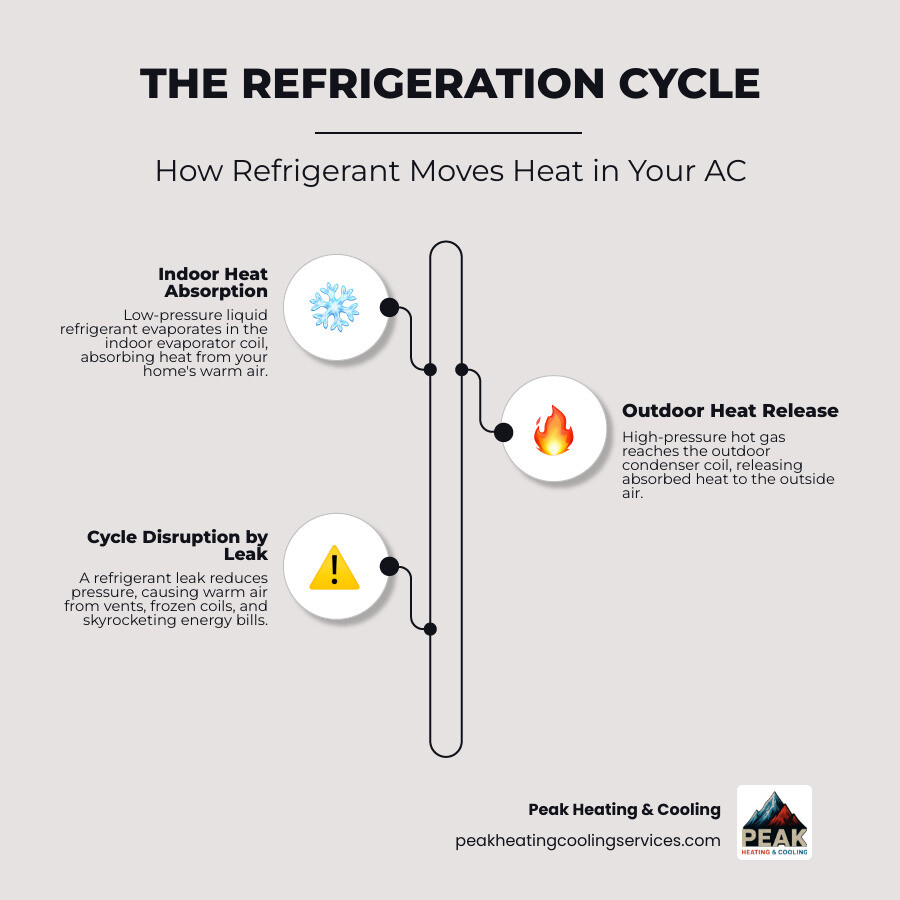
Your air conditioner runs on refrigerant — a chemical that absorbs heat from inside your home and releases it outside. It’s a closed loop. The refrigerant level should never drop on its own. If it does, you have a leak.
And in a Chicagoland summer, a leaking AC isn’t just an inconvenience. It’s a real problem — for your comfort, your energy bills, and your health.
Refrigerant leaks can develop silently over months. By the time your home feels muggy and your AC is running nonstop, the damage is already underway. Left unaddressed, a slow leak can destroy your compressor — the most expensive part of your system.
The good news? A leak that’s caught early is usually fixable. The key is knowing the warning signs and acting fast.
Recognizing the Signs of a Refrigerant Leak
In our years of serving Glenview and the North Shore, we’ve seen many homeowners mistake a refrigerant leak for a simple “old age” issue. However, your AC shouldn’t just stop cooling one day. If you notice any of the following symptoms, your unit is likely crying out for air conditioner gas leak repair in Glenview, IL.
- AC Not Blowing Cold Air / AC Running but Not Cooling: This is the most common red flag. If your vents are blowing lukewarm air even when the thermostat is set low, your system likely lacks the refrigerant needed to absorb heat. You can find more info about AC repair services if your AC is not blowing cold air as it should.
- Water Pooling Around the Unit: While it sounds counterintuitive, a refrigerant leak often leads to water pooling around your indoor air handler. This happens when the low refrigerant causes the coils to freeze and then melt rapidly.
- AC Keeps Freezing Up: If you see ice buildup on the copper lines or the indoor coil, you have a frozen evaporator coil. Low pressure in the lines causes the temperature to drop below freezing, turning condensation into ice.
- Hissing or Bubbling Sounds: A large leak often makes a distinct hissing sound, while smaller leaks in the liquid line might sound like “champagne bubbles.”
- High Humidity: Part of your AC’s job is to dehumidify. If your Glenview home feels sticky and muggy despite the AC running, the refrigeration process is failing.
- Energy Bill Went Up: When refrigerant is low, your system has to work harder to reach the desired temperature. This can show up as a noticeable spike in your monthly utility bill.
- Smell Coming From Vents: Some modern refrigerants have a faint, sweet, or “chloroform-like” smell. If you notice weird smells coming from your vents, it’s time for an inspection.
Common Causes of Air Conditioner Gas Leak Repair Issues
Refrigerant doesn’t just “evaporate.” If it’s gone, there is a hole in your system. Understanding why these holes form can help you prevent them in the future. As a leading HVAC Contractor, we typically find leaks are caused by:
- Metal Corrosion: This is the “silent killer” of AC units. Formicary corrosion occurs when copper lines react with household VOCs that release formic acid. These VOCs are found in common items like hairspray, cleaning products, and air fresheners. Over time, they create microscopic pinhole leaks in the coils.
- Mechanical Vibrations: Your AC unit is a powerful machine. Over years of operation, the constant vibrations can cause copper lines to rub against each other or the unit’s frame, eventually wearing through the metal.
- Wear and Tear: Like any mechanical system, seals and joints can weaken over time. This is especially true for units over 10–15 years old in the Chicagoland area.
- Physical Damage: Whether it’s a lawnmower kicking up a rock against the outdoor condenser or a weed whacker hitting a line, physical trauma is a frequent cause of sudden leaks.
- Factory Defects or Improper Installation: If a joint wasn’t brazed correctly during installation, it might hold for a few years before finally giving way.
Why Professional Air Conditioner Gas Leak Repair Is Essential
We cannot stress this enough: air conditioner gas leak repair is not a DIY project. In fact, it’s a task that requires specialized Services and legal certifications.
Safety Risks and Air Conditioner Gas Leak Repair Regulations
Refrigerant is a hazardous chemical. If inhaled, it can lead to “Freon poisoning,” which causes dizziness, nausea, and in extreme cases, asphyxiation. Contact with the skin can cause severe chemical burns.
Beyond personal safety, there are strict federal laws. Under EPA Section 608, it is illegal to vent refrigerant into the atmosphere. Technicians must be certified to handle, recover, and dispose of these gases to protect the ozone layer and reduce greenhouse gas emissions.
Why DIY Air Conditioner Gas Leak Repair Is Prohibited
Attempting to “top off” your own refrigerant is dangerous and ineffective. Without the right tools—like manifold gauges, vacuum pumps, and leak detectors—you risk overcharging the system, which can slug the compressor and kill the unit instantly. Furthermore, DIY repairs almost always void your manufacturer’s warranty.
The Professional Process for Fixing Refrigerant Leaks
When you call us for air conditioner gas leak repair, we don’t just add more gas and leave. We follow a rigorous process to ensure the problem is solved for good.
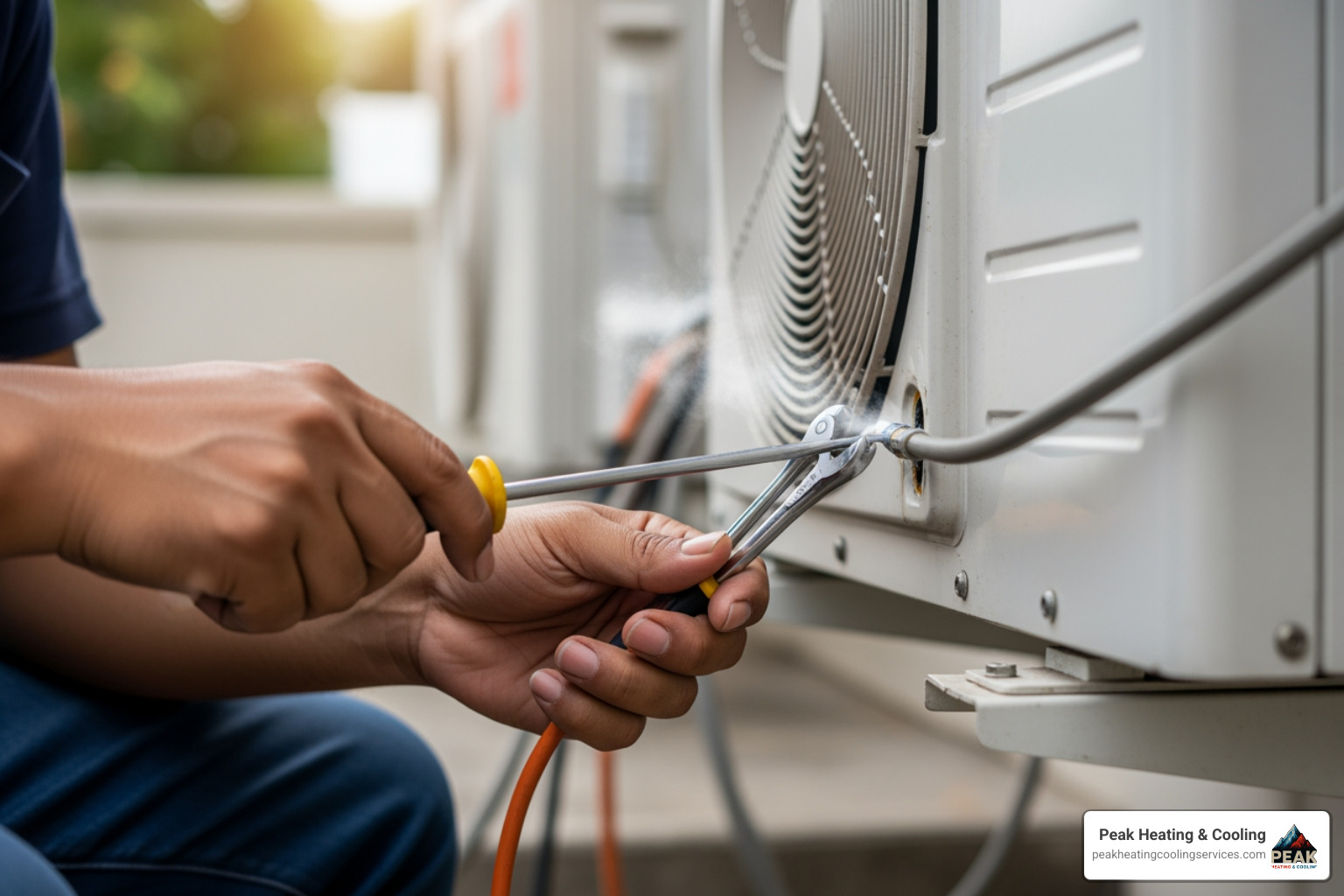
- Detection: We use “electronic sniffers” that can detect refrigerant concentrations as low as 0.1 ounces per year. For harder-to-find leaks, we may use a UV dye test or a nitrogen pressure test, where we empty the system and fill it with high-pressure nitrogen to listen for the escape point.
- Brazing and Repair: Once the leak is found, we don’t just “patch” it with tape. We use high-temperature brazing (a form of welding) to create a permanent, airtight seal on the copper lines. If the evaporator coil is riddled with formicary corrosion, we will recommend a full component replacement.
- Evacuation: After the repair, we use a vacuum pump to remove all air and moisture from the lines. Moisture is the enemy of an AC system; if left inside, it can turn into acid and eat the compressor from the inside out.
- Recharge: Finally, we weigh in the exact amount of refrigerant specified by the manufacturer. This ensures the unit operates at peak efficiency.
Repair vs. Replacement: Making the Right Choice for Your Chicagoland Home
Deciding whether to invest in a repair or plan for a new system is a big decision. At Peak Heating & Cooling, we believe in honest advice. We often use the “15-year rule”—if your unit is over 15 years old and needs a major repair, replacement is usually the smarter long-term move.
| Factor | Repair | Replacement |
|---|---|---|
| System Age | Under 10 years | Over 15 years |
| Refrigerant Type | R-410A | R-22 (Phase-out makes it harder to source) |
| Repair Severity | Minor leak or isolated part | Major component failure or repeated leaks |
| Efficiency | Stays the same | Potential monthly energy savings |
| Warranty | Often expired | Newer systems typically include a manufacturer parts warranty |
If your old unit uses R-22 (Freon), it is no longer being produced due to environmental regulations. That can make recharging and ongoing repairs more complicated than moving forward with a new, high-efficiency Lennox or Ducane system. Learn more About Us and our commitment to finding the best solution for your home.
Preventing Future Refrigerant Leaks in Your AC Unit
The best way to handle a leak is to prevent it from happening in the first place. Regular maintenance is key.
- Annual Tune-Ups: During a spring maintenance visit, we check your refrigerant levels and inspect lines for signs of wear or oil spots (which indicate a leak).
- Keep It Clean: An AC clean is vital. Dirt on the coils can lead to overheating and increased pressure, which stresses the joints.
- Protect the Lines: Ensure that your outdoor refrigerant lines are insulated and that no garden debris or heavy objects are leaning against them.
- Vibration Pads: We can install vibration-absorbing pads under your condenser to reduce the mechanical stress on the copper connections.
If you live in Glenview, Northbrook, or Wilmette, scheduling a seasonal check-up is the best insurance against a mid-summer breakdown. Contact Us today to set up your annual service.
Frequently Asked Questions about AC Gas Leaks
Is it safe to run my AC with a refrigerant leak?
No. Running a unit with low refrigerant forces the compressor to work without proper cooling and lubrication (which the refrigerant carries). This will eventually cause the compressor to overheat and “burn out,” turning a repair into a total system replacement.
How long does a professional leak repair take?
A standard air conditioner gas leak repair usually takes between two and five hours. This includes the time needed to find the leak, braze the repair, pull a deep vacuum on the system, and recharge the gas.
What is the difference between a refrigerant leak and a water leak?
A refrigerant leak involves the chemical gas used for cooling. A water leak is typically just condensation that isn’t draining properly due to a clogged line or a cracked drain pan. While water leaks can cause ceiling damage, refrigerant leaks can destroy the entire HVAC system.
Conclusion
A refrigerant leak is more than just a nuisance; it’s a threat to your home’s comfort and your system’s lifespan. Whether you’re in Glenview, Northbrook, or Wilmette, you need a team that responds quickly and does the job the right way.
At Peak Heating & Cooling, we bring 20+ years of HVAC experience to every job site. We’re a family-owned, locally operated, licensed and insured HVAC contractor serving the North Shore and Northwest Suburbs. We believe in upfront communication and no hidden fees—just straightforward service to help you get your home comfortable again.
If your AC stopped working or you suspect a refrigerant leak, call Peak Heating & Cooling or schedule AC repair in Glenview, IL today.