

Is Your Oil Heating System Ready for a Chicagoland Winter?
Oil heater maintenance is the regular process of cleaning, inspecting, and servicing your oil heating system to keep it running safely and efficiently. Here’s a quick overview of what it involves:
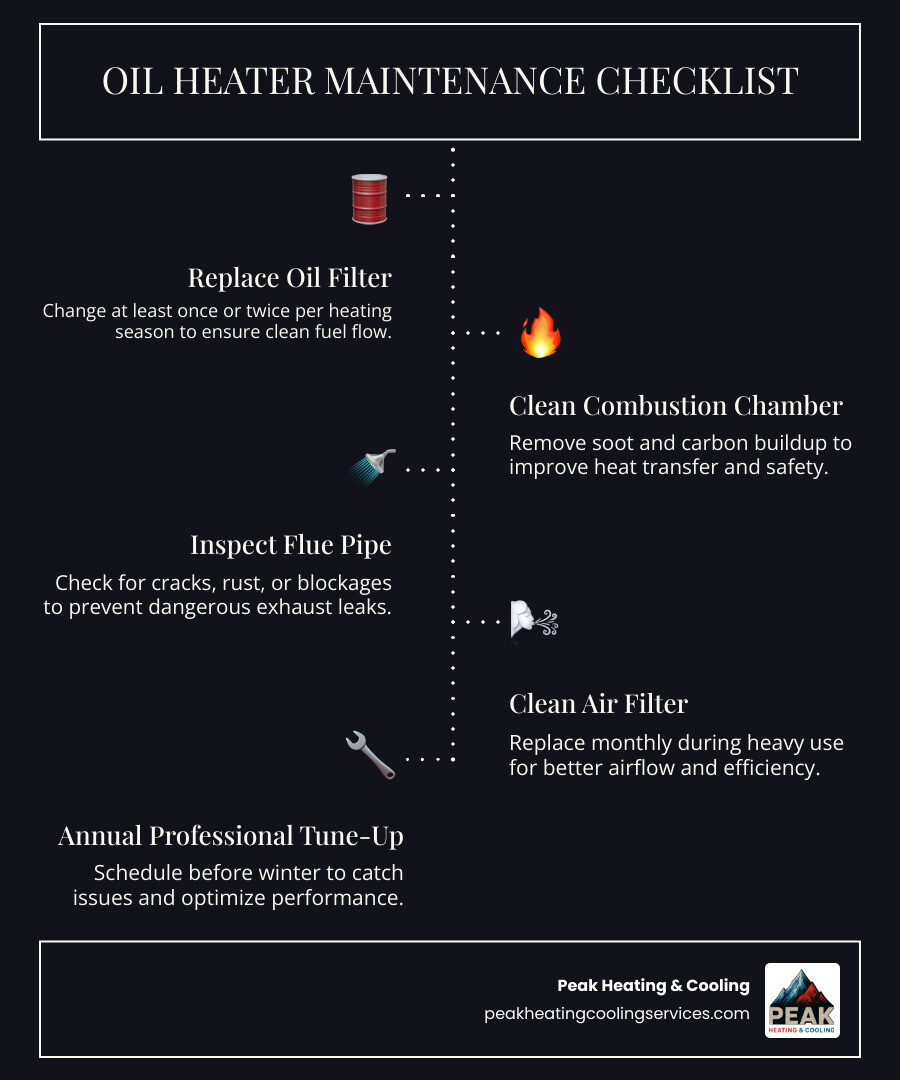
Core oil heater maintenance tasks:
- Replace the oil filter – at least once or twice per heating season
- Clean the combustion chamber – remove soot and carbon buildup
- Inspect and clean the flue pipe – check for cracks, rust, or blockages
- Check and clean the air filter – monthly during heavy use
- Inspect the oil tank – look for rust, wet spots, or leaks
- Bleed air from the system – if you notice uneven heating or strange noises
- Schedule an annual professional tune-up – ideally before winter hits
Chicagoland winters don’t give you a warning. One cold night in Glenview or Northbrook, your oil furnace is either ready — or it isn’t.
The good news? Most oil heating problems are completely preventable. A neglected system burns more fuel, heats less effectively, and is far more likely to fail mid-January. Worse, it can become a safety hazard — a dirty or cracked heat exchanger can allow carbon monoxide to enter your home without any warning.
According to the U.S. Department of Energy, something as simple as adjusting your thermostat by 7-10°F for 8 hours a day can save up to 10% on your annual heating bill. Combine that with a well-maintained system, and the savings add up fast.
This guide walks you through everything — from basic DIY steps to knowing when to call a licensed technician.
Why Regular Oil Heater Maintenance is Essential for Chicagoland Homes
Living in the North Shore or Northwest Suburbs means your heating system works overtime from October through April. Unlike gas furnaces, oil-burning systems produce significantly more soot and residue. If you skip your oil heater maintenance, that soot acts as an insulator, trapping heat inside the furnace instead of letting it warm your home.
Beyond efficiency, there are three critical reasons to stay on top of your system:
- System Longevity: A well-maintained oil furnace can reliably last 20 years or more. Neglect leads to premature component wear and expensive Furnace Repair Services.
- Safety Hazards: Cracked heat exchangers or blocked flue pipes can lead to carbon monoxide leaks. Regular Heating system maintenance ensures these exhaust gases exit your home safely.
- Reliability: There is nothing worse than a “no heat” emergency in the middle of a Skokie blizzard. Maintenance catches small issues before they become midnight breakdowns.
Experts at Heatable suggest that an annual tune-up is the best “protection policy” for your system, ensuring it runs smoothly for the other 364 days of the year.
Improving Efficiency Through Oil Heater Maintenance
When your burner is dirty, it struggles to achieve a clean “burn.” This results in higher fuel consumption and lower heat transfer. Sediment at the bottom of your oil tank can also be pulled into the lines, clogging the nozzle and causing the system to misfire. By performing a regular Furnace inspection, we can ensure the fuel-to-air ratio is perfect, squeezing every bit of warmth out of every drop of oil.
Seasonal Preparation for North Shore Winters
In places like Wilmette and Winnetka, the humidity and temperature swings can cause condensation inside outdoor oil tanks. This water leads to rust and bacterial growth (sludge). We recommend a full system check before the first frost hits. Preparing your furnace for winter ensures that when you finally flip that thermostat to “Heat,” the system responds instantly without strange smells or noises.
Essential Safety Precautions and DIY Maintenance Steps
Before you touch your furnace, safety is the priority. Oil systems involve high voltage and combustible fuel.
Safety First:
- Shut off the power: Locate the service switch (usually a red plate) and turn it off.
- Close the fuel valve: Turn the handle on the oil line to stop the flow.
- Wear PPE: Use gloves and a mask, as soot is messy and can be an irritant.
- Ventilation: Ensure the area is well-ventilated while you work.
For those looking for a refresher on the basics, HowStuffWorks provides an excellent novice-level overview of system components.
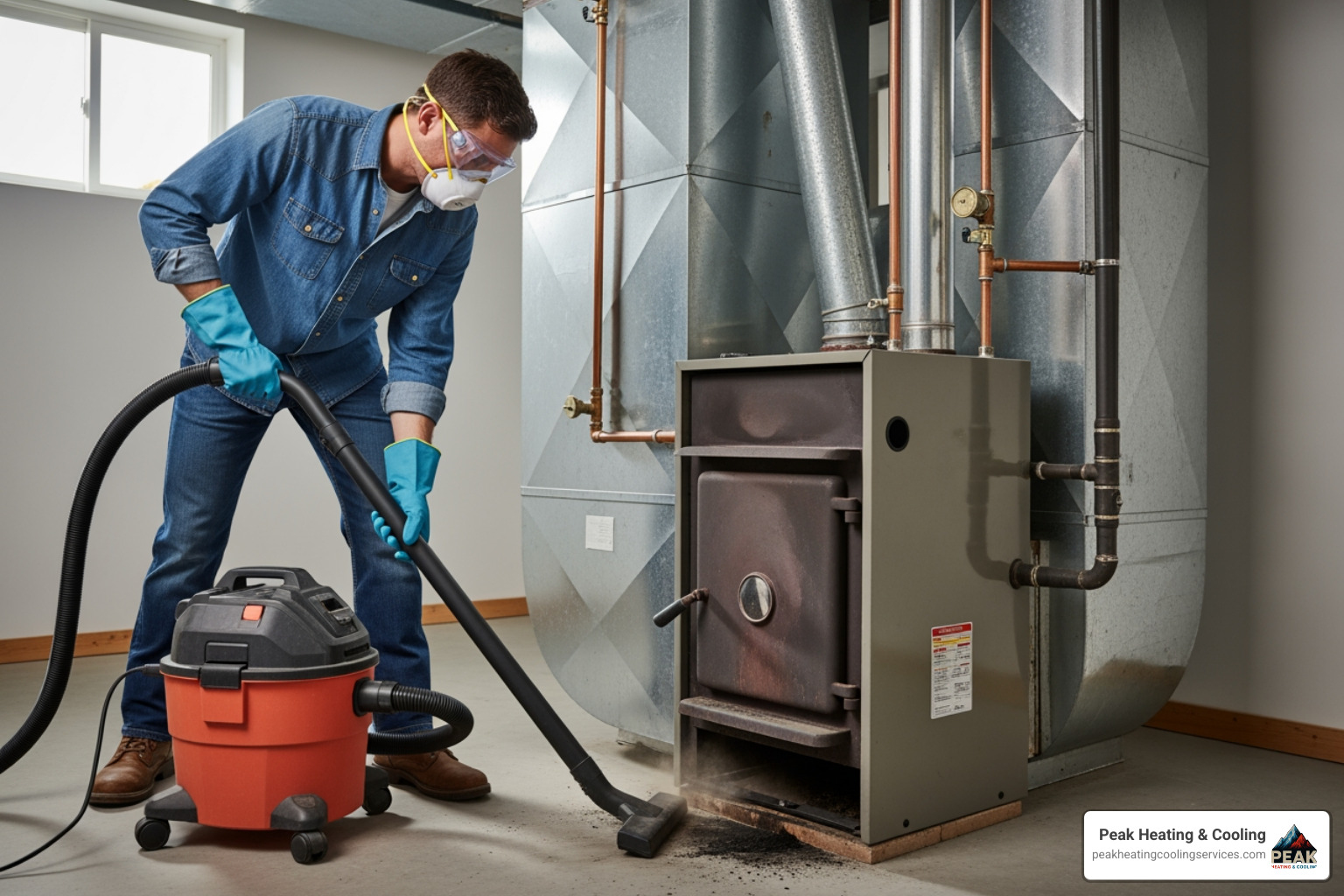
Cleaning the Combustion Chamber and Flue Pipe
The combustion chamber is the heart of your furnace. Over the season, carbon soot builds up on the walls.
- Open the inspection door to access the chamber.
- Use a stiff wire brush to gently scrape soot from the walls.
- Use a heavy-duty shop vacuum to remove the debris.
- Check the flue pipe (the “exhaust pipe”) for any signs of rust or small holes. If the pipe feels thin or looks corroded, it needs immediate replacement by a professional HVAC Contractor.
Replacing Filters and Bleeding the System
You should replace your oil filter twice per heating season to prevent impurities from clogging the burner nozzle.
- Place a container under the filter housing.
- Unscrew the canister, replace the cartridge and the rubber gasket.
- Tighten it back up and check for leaks.
If your system makes a “gurgling” noise or heats unevenly, you may have air trapped in the lines. You can “bleed” the system by loosening the bleeder valve on the oil pump while the burner is running. Hold a container underneath until a steady stream of oil (without air bubbles) flows out, then tighten the valve. If you aren’t comfortable with this, our Furnace Repair Services team can handle it quickly during a routine visit.
Specialized Care for Portable and Waste Oil Systems
Not every oil heater is a central furnace. Many homes in the Chicagoland area use portable oil-filled radiators for supplemental heat in basements or home offices.
Maintaining Oil-Filled Room Heaters
These units are permanently sealed. You should never attempt to open them or refill the oil. The oil inside acts as a thermal reservoir, not fuel. Maintenance for these is simple:
- Wipe the fins: Dust buildup on the fins reduces heat radiation.
- Check the cord: Inspect for any cracks or fraying.
- Clean the thermostat: Ensure no dust is blocking the sensors.
Specialized Care for Waste Oil Heater Maintenance
For commercial shops or garages in areas like Morton Grove or Niles, waste oil heaters are a great eco-friendly option. However, they require a stricter schedule. Lanair recommends cleaning the heat exchanger every 1,200 hours of operation. Because waste oil is “dirtier” than standard heating oil, you must also clean the nozzle adapter heat block every 2,000 to 3,000 hours to prevent heavy carbon buildup.
Troubleshooting and Professional Tune-Up Indicators
Sometimes, DIY cleaning isn’t enough. Use this table to decide if you can handle the issue or if it’s time to call Peak Heating & Cooling.
| Symptom | Potential Cause | Action |
|---|---|---|
| No Heat / Won’t Start | Tripped breaker or empty tank | Check power and fuel level; Reset once. |
| Strange Rumbling Noise | Dirty burner or air in lines | Bleed the system; Call a pro if it persists. |
| Smoke or Strong Odor | Incomplete combustion | Emergency: Shut off system and call us. |
| Frequent Cycling | Clogged air filter or thermostat issue | Replace air filter; Check thermostat batteries. |
| Black Soot around Vents | Cracked heat exchanger | Safety Risk: Call for professional inspection. |
If you notice these signs, our Heating Contractor Services can diagnose the problem before it leads to a total system failure.
When to Call for Emergency Heating Repair
If you smell raw fuel or see persistent smoke, do not wait. These are signs of a serious leak or a “puffback,” which can send soot throughout your entire home, requiring professional restoration. We offer 24/7 emergency service across Glenview, Skokie, and the surrounding suburbs because we know that a furnace failure at 2 AM is a crisis.
Frequently Asked Questions about Oil Heater Maintenance
How often should I perform maintenance on my oil heater?
At a minimum, you need an annual professional tune-up. However, as a homeowner, you should check your air filters monthly and replace your oil filter twice during the winter. Regular checks are the best way to ensure your HVAC Contractor doesn’t find expensive surprises later.
Does the oil in an oil-filled room heater need to be changed?
No. The oil in portable radiators is a specialty thermal fluid that is meant to last the lifetime of the device. If your portable heater is leaking oil, it is broken and should be replaced immediately.
How do I maintain the oil tank to prevent leaks?
Check your tank foundation regularly; Chicagoland’s freeze-thaw cycles can cause the ground to shift, putting stress on the fuel lines. Look for “wet spots” or rust on the bottom of the tank. If you have an outdoor tank, keeping it painted with reflective, rust-preventing paint can extend its life significantly.
Conclusion: Trust the Chicagoland Experts
Maintaining an oil heating system is about more than just staying warm; it’s about peace of mind. At Peak Heating & Cooling, we have over 20 years of experience serving our neighbors in Glenview, Northbrook, Wilmette, and throughout the Chicagoland area.
We are a family-owned, licensed, and insured team that understands the unique demands of Illinois winters. Whether you need a routine fall tune-up or a same-day emergency repair, we are here to help. We recommend top-tier brands like Lennox and Ducane for replacements and offer 0% financing to ensure your home stays comfortable without the stress.
Don’t wait for the first “big freeze” to find out your system is struggling. Schedule your professional heating tune-up today and stay slick all winter long!