
Mistake #1: Ignoring Warning Signs and Inspection Frequency
One of the most common mistakes we see in Glenview and the surrounding North Shore suburbs is the “out of sight, out of mind” mentality. Because your ductwork is hidden behind drywall or tucked away in a crawlspace, it is easy to ignore until a major problem occurs. However, your ducts are the circulatory system of your home. When they aren’t healthy, the rest of your HVAC system suffers.

If you notice any of the following symptoms, it is likely time to look into duct repair services:
- Uneven Temperatures: Does your living room feel like an icebox while the upstairs bedrooms are sweltering? This is a classic sign of a disconnected or leaking duct.
- Whistling or Rattling Noises: Air escaping through a small hole often creates a high-pitched whistling sound. Rattling usually indicates loose metal joints or failing supports.
- Excess Dust: If you find yourself dusting your furniture every two days, your ducts might be pulling in particulates from your attic or basement through cracks and blowing them into your living space.
- Weak Airflow: If the air coming out of your registers feels like a faint breeze rather than a strong gust, there is likely a blockage or a major leak upstream.
- Musty Odors: Strange smells when the furnace kicks on can indicate mold growth or pest activity inside the ventilation.
To keep your system running at peak performance, we recommend a professional assessment every 3 to 5 years as part of your regular HVAC maintenance.
Identifying Root Causes of Damage
Understanding why ducts fail helps you prevent future issues. In Chicagoland, common culprits include:
- Pest Infestations: Rodents love the warmth of ducts and can chew through flexible materials or dislodge joints.
- Mold Growth: High humidity in unconditioned spaces like crawlspaces can lead to moisture buildup and mold inside the lines.
- Aging Materials: Most duct systems have a lifespan of 20 to 25 years, but issues often start developing around the 10- to 15-year mark as seals dry out.
- Poor Installation: If the original installer used low-quality tape or didn’t provide enough support, sections can sag and eventually disconnect.
- Shifting Foundations: As older homes in areas like Wilmette or Skokie settle, the movement can pull metal duct joints apart.
Mistake #2: Using Improper Materials for Ventilation Fixes
The biggest irony in the HVAC world is that “duct tape” is actually one of the worst materials you can use for duct repair services. Standard cloth-backed duct tape dries out, loses its adhesive, and falls off within a year or two due to the constant temperature fluctuations of a Midwest climate.
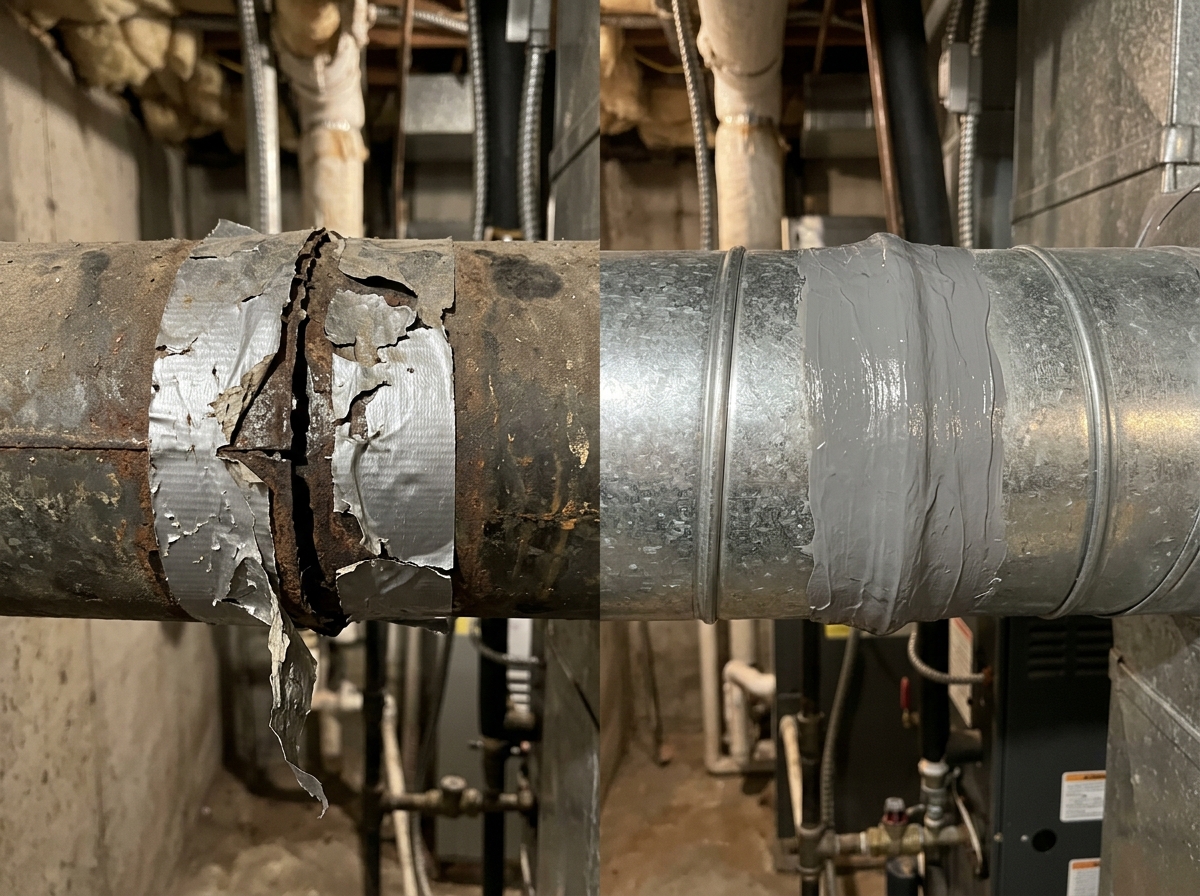
When we perform professional repairs, we use materials designed to last decades, not months:
- Mastic Sealant: A thick, gooey substance that hardens into a flexible, airtight seal. It is the gold standard for sealing joints.
- UL-Listed Foil Tape: Unlike the silver tape found at big-box stores, this is heat-resistant and specifically rated for HVAC use.
- Mechanical Fasteners: We use screws and specialized straps to ensure connections stay physically secure before we even apply sealant.
Whether you have flexible duct, rigid metal, or fiberboard, using the right material for the specific substrate is critical. For more tips on how these systems work, check out our duct system repair DIY guide.
Why DIY Duct Repair Services Often Fail
Many homeowners try to patch visible leaks themselves, but DIY attempts often lead to:
- Temporary Fixes: Without professional-grade mastic, the “fix” will likely fail within a season.
- Airflow Restriction: Improperly patching a crushed flex duct can actually worsen the pressure imbalance in your home.
- Safety Risks: If you accidentally seal a flue or vent incorrectly, you risk backdrafting, which can pull dangerous carbon monoxide into your home.
- Inaccessibility: Most leaks occur in areas you can’t see, such as inside wall cavities.
For a permanent solution that protects your home and family, it is always best to choose professional duct repair services.
Mistake #3: Repairing When Replacement is Necessary
Sometimes, no amount of sealant or foil tape can save a ventilation system. A major mistake is pouring money into “band-aid” repairs for a system that has reached the end of its functional life.
| Feature | Repair Candidate | Replacement Candidate |
|---|---|---|
| Age | Under 15 years old | Over 20 years old |
| Damage Extent | Isolated holes or 1-2 loose joints | Widespread corrosion or crushed sections |
| Material | Modern metal or intact flex duct | Asbestos-lined or eroding fiberglass |
| Airflow | Generally good, minor hot spots | Significant “dead zones” in the house |
| Design | Properly sized for current HVAC | Outdated, restrictive, or undersized |
If your ductwork is older than 15 years, it is worth having a specialist evaluate its structural integrity. You can learn more about duct repair and sealing to see which path is right for your home.
When to Invest in New HVAC Installation
In cases of extensive corrosion, large-scale pest damage, or outdated designs that can’t handle a modern high-efficiency furnace, a full replacement is the smarter long-term investment. This is especially true during a new HVAC installation, as your new equipment will only perform as well as the ducts delivering the air.
Mistake #4: Overlooking the Impact on HVAC Performance and IAQ
Many homeowners view duct leaks as a minor “comfort” issue. In reality, it is a performance and health crisis. When 20-30% of your air is escaping into the attic, your furnace or AC has to work 30% harder to reach the temperature set on your thermostat.
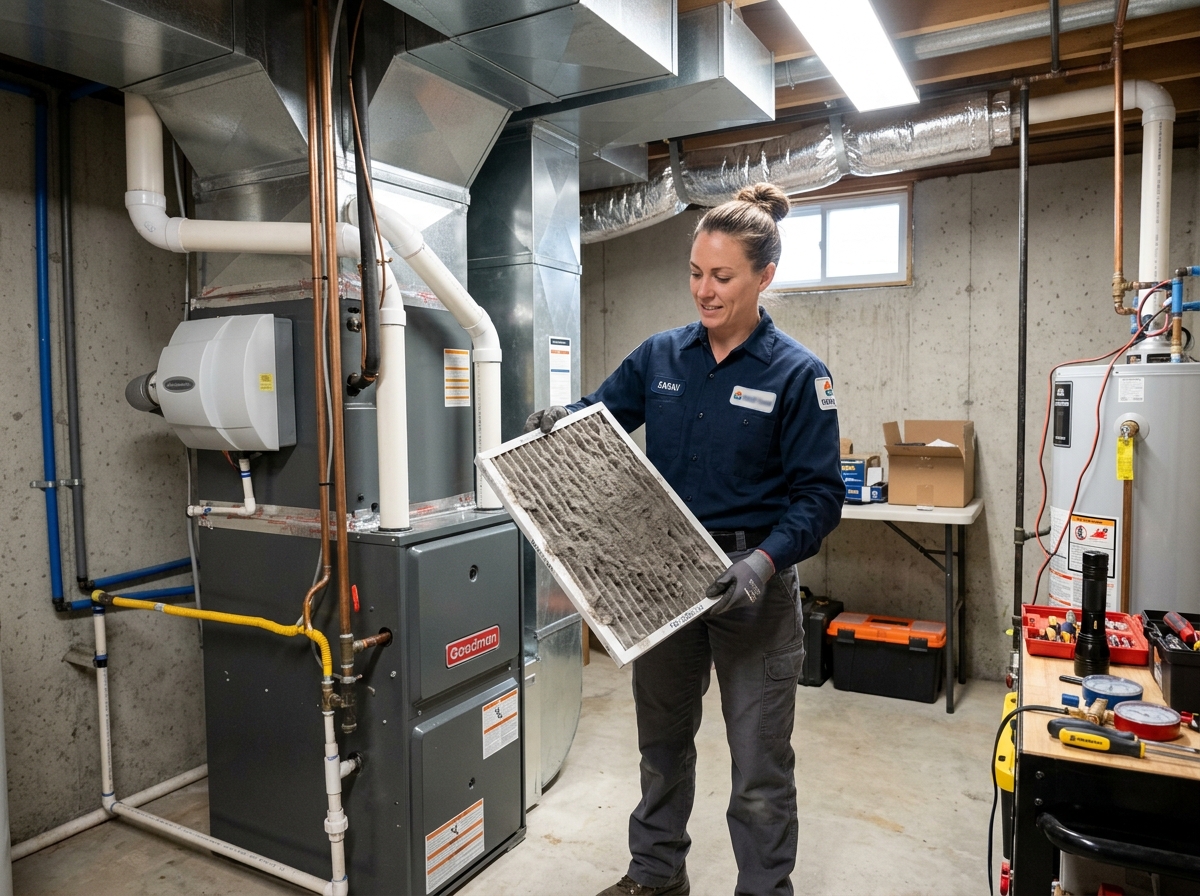
This extra strain leads to:
- System Strain: Your components wear out faster because the system cycles more frequently.
- Premature Failure: We often see an AC compressor or furnace motor fail years early because it was “fighting” a leaky duct system.
- Poor Indoor Air Quality (IAQ): Leaky ducts in a crawlspace don’t just let air out; they pull “bad” air in. This includes allergens, insulation fibers, and dust that circulate through your home.
If you are dealing with constant dust or frequent breakdowns, our HVAC duct & vent repair in Glenview, IL can help. Addressing these leaks often goes hand-in-hand with our furnace repair services to restore total system health.
The Long-Term Value of Professional Duct Repair Services
Sealing your ducts isn’t just an expense; it’s an investment that pays for itself.
- 20% Efficiency Improvement: The Department of Energy suggests that sealing leaks can improve your system’s efficiency by 20% or more.
- Consistent Comfort: No more hot and cold spots.
- Lower Utility Bills: Stop paying to heat your attic.
- Extended Equipment Life: Your air conditioning repair service visits will likely become much less frequent when the system isn’t overworking.
Mistake #5: Neglecting Professional Sealing and Testing
How do you know if a repair actually worked? A common mistake is assuming a visual “patch” solved the problem. Professional duct repair services involve sophisticated testing to quantify the results.
At Peak Heating & Cooling, we don’t just guess where the leaks are. We use tools like:
- Pressure Testing: We seal off the registers and pressurize the system to measure exactly how much air is escaping.
- Duct Blower Tests: This helps us identify the “leakage rate” before and after our work.
- Internal Sealing: For leaks hidden inside walls, we can use specialized technology like Aeroseal, which seals holes from the inside out using polymer particles.
Our comprehensive services ensure that every joint is reinforced and every gap is closed.
Selecting a Specialist for Duct Repair Services
When choosing a contractor in Glenview, Northbrook, or Wilmette, don’t settle for a “handyman.” Look for a team that is:
- Licensed and Insured: Protects your property and ensures the work meets local Illinois building codes.
- NATE-Certified: This signifies the highest level of technical training in the industry.
- Local: We understand the specific architectural quirks of North Shore homes, from classic bungalows to modern builds.
- Transparent: You should always receive upfront quotes before the work begins.
To learn more about our commitment to quality, visit our about us page.
Frequently Asked Questions about Ventilation
How do I know if my ducts are leaking?
The most common signs include rooms that won’t stay at the right temperature, a sudden rise in energy bills, and weak airflow from your registers. If you see excessive dust around your vents, that is another major red flag.
How often should ductwork be inspected?
We recommend a professional assessment every 3 to 5 years. However, if you are moving into a new home or have recently completed a major renovation, a pre-winter check is highly recommended to ensure construction debris or shifting hasn’t damaged the lines.
Is duct sealing worth the investment?
Absolutely. With an average efficiency gain of 20%, the reduction in your monthly utility bills usually pays for the service within a few years. Plus, the reduced wear and tear on your HVAC system can save you thousands in avoided repairs.
Conclusion
Your home’s comfort depends on more than just a high-quality furnace or air conditioner; it depends on the delivery system that moves that air. Avoiding these 7 common mistakes will save you money, improve your air quality, and ensure your system lasts as long as possible.
At Peak Heating & Cooling, we are proud to serve Glenview, IL, and the surrounding Chicagoland suburbs with expert duct repair services. Whether you need a simple joint sealed or a full system evaluation, our team is ready to help. We offer 24/7 emergency service, same-day repairs, and 0% financing for qualified customers on new installations.
Don’t let your hard-earned money leak out of your ducts. Contact us today or schedule professional duct services today to start breathing easier and saving more.