Why the Installation of Central Heating System Is One of the Most Important Home Decisions You’ll Make
The installation of central heating system in your home is a significant investment — and getting it right from the start saves you money, stress, and cold nights for years to come.
Here’s a quick overview of what the process involves:
- Professional assessment — A licensed HVAC technician evaluates your home’s size, insulation, and heat loss to recommend the right system.
- System selection — Choose between a gas furnace, boiler, heat pump, or dual-fuel system based on your home and climate.
- Infrastructure prep — Ductwork, pipes, or radiant tubing are installed or inspected.
- Equipment mounting — The main unit is placed, leveled, and secured.
- Fuel and electrical connections — Gas lines, wiring, and safety shut-offs are connected by certified professionals.
- Venting and filtration — Flue pipes, exhaust systems, and air filters are set up.
- Commissioning and walkthrough — The system is tested, balanced, and you’re shown how to use it.
Heating accounts for roughly 29% of the average home’s utility bill — making it the single biggest energy expense most Chicagoland homeowners carry. A well-installed, properly sized system can make a dramatic difference in comfort and efficiency, especially during harsh Illinois winters.
Most homeowners complete a full central heating installation in 2 to 5 days, with total project scope depending on whether ductwork already exists, the system type chosen, and the size of the home.
Whether you’re starting from scratch in a new build or replacing an aging system in a Glenview or Northbrook home, understanding the process helps you ask the right questions and avoid costly mistakes.
Understanding the Installation of Central Heating System Basics
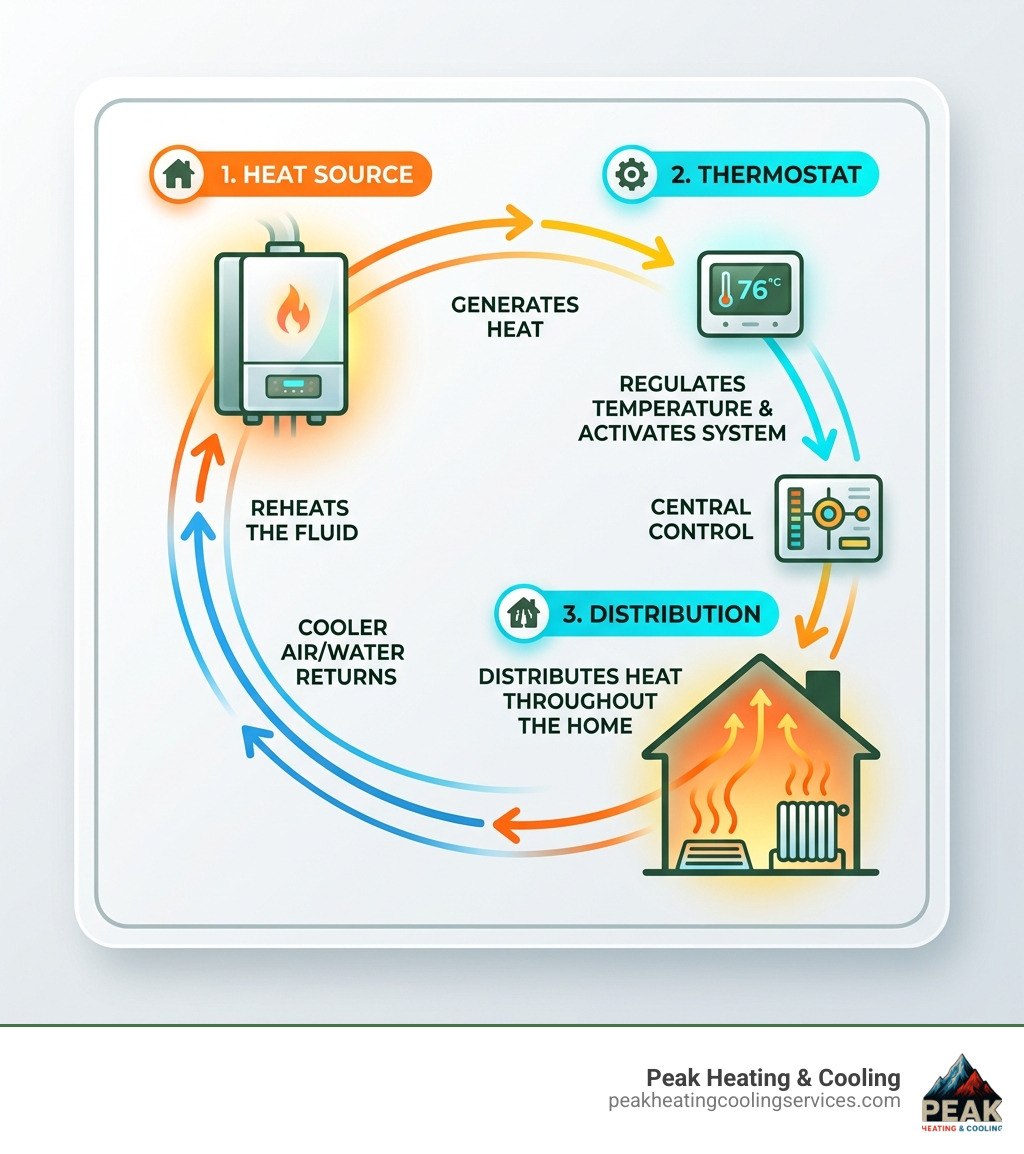
Before we dive into the steps, we need to talk about what “central heating” actually means for a home in the Chicagoland area. Unlike a space heater that warms one corner of a room, a central system generates heat in one spot—usually a mechanical room or basement—and pushes it throughout the entire house.
In our region, you’ll typically see three main setups:
- Forced-Air Systems: These use a furnace to heat air, which a blower fan then pushes through a network of metal or flexible ducts. This is the most common setup in modern Northbrook and Skokie homes because the same ducts can be used for your air conditioner in the summer.
- Hydronic (Boiler) Systems: Instead of air, a boiler heats water. That hot water travels through copper or plastic pipes to radiators or baseboard heaters. Many older, charming homes in Wilmette and Winnetka rely on this “wet” system for steady, draft-free warmth.
- Heat Pumps: These are becoming incredibly popular because they move heat rather than creating it. In the winter, they pull heat from the outside air (even when it’s cold!) and move it indoors.
Every system relies on a thermostat—the “brain” that tells the unit when to kick on—and a distribution method like ductwork or pipes. According to research on home energy use, heating is the largest energy expense for most U.S. homes, which is why choosing the right components is so vital.

Choosing the Right System for Your Illinois Home
Choosing a new system isn’t as simple as picking the biggest unit on the shelf. In fact, an oversized furnace is a recipe for disaster—it will “short cycle,” turning on and off constantly, which wears out parts and spikes your bills.
We use a Manual J load calculation to determine exactly how much heat your home loses through its walls, windows, and roof. This ensures your installation of central heating system is perfectly tailored to your square footage and insulation levels.
Efficiency Ratings to Know:
- AFUE (Annual Fuel Utilization Efficiency): This measures how efficiently a furnace converts fuel to heat. A 95% AFUE rating means only 5% of the energy is lost.
- HSPF2 / SEER2: These ratings apply to heat pumps. The higher the number, the less electricity the unit uses to keep you cozy.
For many of our neighbors in Des Plaines and Park Ridge, a dual-fuel system is the gold standard. This pairs an electric heat pump with a gas furnace backup. The heat pump handles the chilly autumn days efficiently, and the gas furnace takes over when the “Polar Vortex” hits.
| System Type | Best For | Lifespan | Efficiency |
|---|---|---|---|
| Gas Furnace | Cold climates, existing ducts | 15–20 Years | 80%–98% AFUE |
| Boiler | Allergy sufferers, even heat | 20–30 Years | 90%+ AFUE |
| Heat Pump | Moderate cold, high efficiency | 12–15 Years | 200%–300% (COP) |
If you’re wondering if it’s time to ditch the old unit, check out our more info about furnace replacement or read this comprehensive system guide for a deeper look at your options.
The 7-Step Installation Process
Step 1: Professional Assessment for the Installation of Central Heating System
The very first thing we do is walk through your home. We aren’t just looking at the old furnace; we’re looking at your windows, checking the attic insulation, and seeing how many south-facing rooms you have. We calculate the BTU (British Thermal Unit) requirements to make sure the new unit can actually handle an Illinois January. You can find more info about heating contractor services to see how we handle these initial surveys.
Step 2: Infrastructure and Ductwork Preparation
If you’re moving from a boiler to a furnace, we have to install ductwork—this is the most “invasive” part of the job. For homes that already have ducts, we inspect them for leaks. A poorly sealed duct can lose 20% or more of your heated air before it even reaches your bedroom! We use specialized sealants and tapes to ensure every bit of heat goes where it belongs.
Step 3: Equipment Mounting and Placement
Next, we bring in the “muscle.” We place the furnace or boiler on a level surface, often using vibration pads to keep the unit quiet. If we’re installing a heat pump, the outdoor unit needs a sturdy concrete or composite pad with plenty of clearance for airflow.
Step 4: Fuel and Electrical Connections
This is where the expertise really matters. We connect the gas lines and ensure there are no leaks using specialized sensors. We also wire the unit to your home’s electrical panel on a dedicated circuit. Safety shut-offs are installed so that if anything ever goes wrong, the system kills the fuel supply instantly. We also set up condensate drains to handle the moisture that high-efficiency units produce.
Step 5: Venting and Filtration Setup
Every combustion-based heater (gas or oil) produces exhaust. We install flue pipes—usually made of specialized PVC for modern condensing units—to safely vent these gases out of your home. We also install high-quality air filters to protect the equipment and improve your indoor air quality.
Step 6: Commissioning the Installation of Central Heating System
We don’t just “flip a switch” and leave. Commissioning involves pressure testing the lines, measuring the temperature “rise” (the difference between air going in and air coming out), and balancing the airflow so one room isn’t a sauna while another is an icebox. We perform a rigorous safety check to ensure zero carbon monoxide is entering your living space.
Step 7: Homeowner Walkthrough and Controls
Finally, we sit down with you. We’ll show you how to program your new smart thermostat, explain how often to change your filters, and register your warranty. For a look at how other manufacturers detail this, you can see a detailed installation walkthrough from Viessmann.
Timeline and Professional Requirements
A standard installation of central heating system usually takes between 2 and 5 days. A simple “swap” where we replace an old furnace with a new one of the same type might only take a day or two. However, if we’re retrofitting a home with new ductwork or switching from a boiler to a furnace, it can take closer to a week.
It is vital that you hire a licensed and insured HVAC contractor. In towns like Morton Grove and Niles, local building codes are strict for a reason—gas and electricity are dangerous if handled incorrectly. We ensure all building permits are pulled and that the work meets every local safety standard. Our technicians carry NATE certification, which is the “gold standard” for technical excellence in our industry. For more on what to expect, read more info about HVAC installation.
Frequently Asked Questions about Central Heating
Can I install a central heating system myself?
In a word: No. While we love a good DIY project as much as anyone, the installation of central heating system involves high-pressure gas lines, high-voltage electricity, and refrigerant handling. One small mistake can lead to a gas leak or a house fire. Furthermore, most manufacturers (like Lennox and Ducane) will void your warranty if the system isn’t installed by a licensed professional.
How disruptive is the installation process for my home?
We do our best to keep the mess to a minimum. We use floor protectors and plastic sheeting to guard your furniture. You can expect some noise—drilling through joists or metalwork isn’t silent—but we aim to keep the “downtime” of your heat as short as possible. If you’re worried about the mess, we recommend clearing a 5-foot path around the installation area before we arrive.
What are common mistakes to avoid during setup?
- Improper Sizing: Don’t just buy what your neighbor has. Every home is different.
- Poor Duct Sealing: Using “duct tape” (ironically) is a mistake; we use professional-grade mastic or foil tape.
- Ignoring Insulation: A new furnace in a drafty house is like putting a brand-new engine in a car with no tires.
- Skipping Maintenance: Once it’s in, you need an annual tune-up to keep that 95% efficiency rating.
Conclusion
At Peak Heating & Cooling, we’ve spent over 20 years keeping our neighbors in Glenview, IL, and the surrounding Chicagoland suburbs warm. We know that a new heating system is a big decision, which is why we offer 0% financing options for qualified customers and stand behind our work with 24/7 emergency service.
Whether you’re in Wilmette or Niles, we’re here to ensure your home stays a sanctuary all winter long. If your furnace is blowing cold air or you’re ready for a high-efficiency upgrade, don’t wait for the first big snowstorm. Contact us today for a professional assessment and same-day repairs. For more help with the financial side of things, check out our guide on navigating your system installation.