
Identifying Common Thermostat Malfunctions
Thermostat repair is often simpler than it looks – and in many cases, you can fix the problem yourself in under an hour without calling a technician.
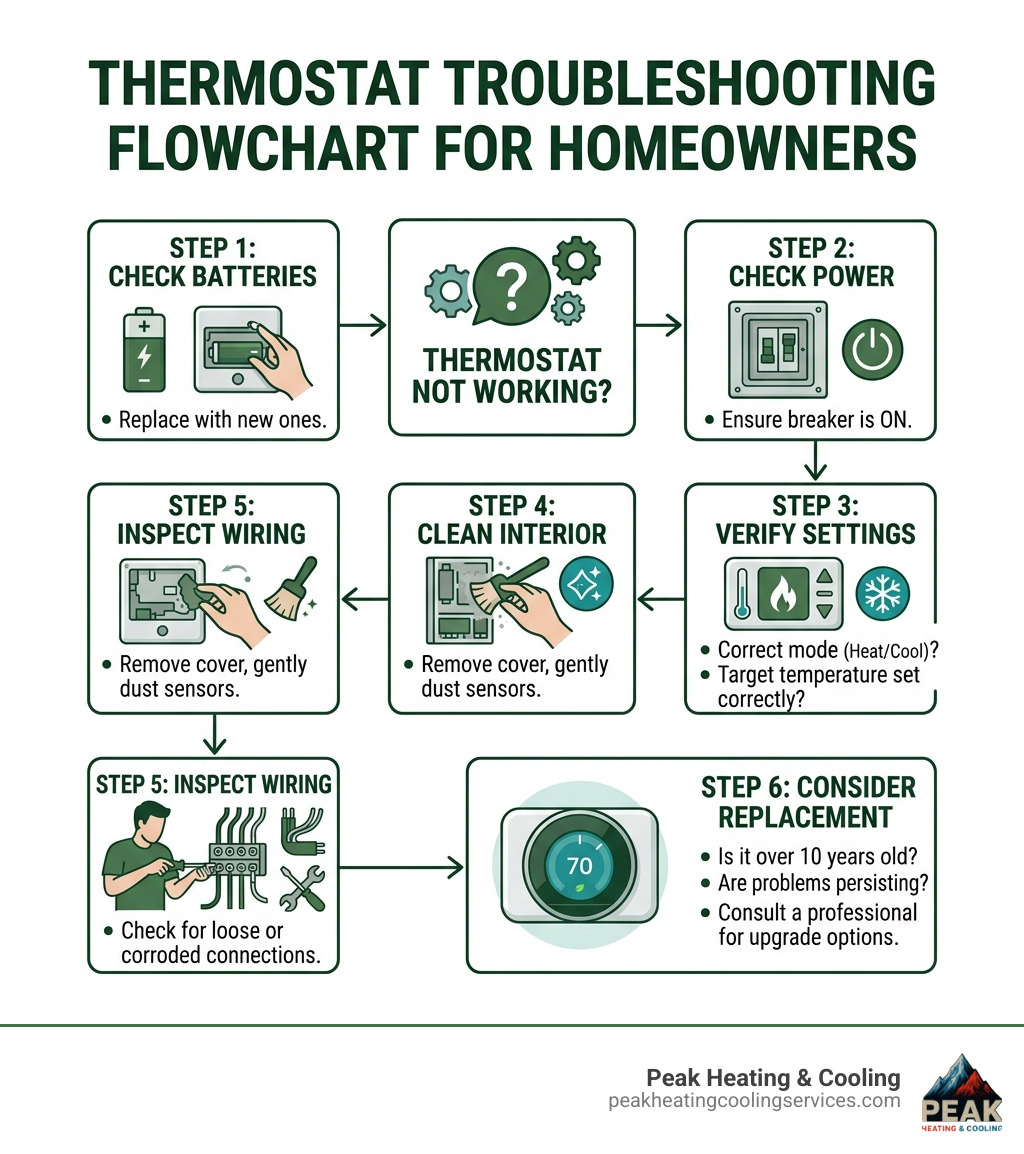
Here are the most common thermostat fixes, from easiest to most involved:
- Replace the batteries – the #1 cause of an unresponsive thermostat
- Check the circuit breaker – a tripped breaker cuts power to the whole system
- Verify settings – make sure it’s set to the right mode (heat vs. cool) and raise the target temp by at least 5 degrees
- Clean the thermostat interior – dust on sensors causes inaccurate readings
- Inspect the wiring – loose or corroded wires are behind many HVAC temperature problems
- Recalibrate or reset – compare the thermostat reading to a separate thermometer and reset per your manual
- Replace the thermostat – if it’s over 10 years old or none of the above works
If your home in Glenview or anywhere on Chicago’s North Shore suddenly has no heat – or the temperature just won’t behave – your thermostat is the first place to look. It’s a small device, but it controls everything your furnace and AC do.
The good news? Most thermostat problems aren’t caused by the thermostat itself. Wiring issues, dead batteries, and wrong settings account for the majority of complaints. A full replacement is rarely the first step.
This guide walks you through exactly how to diagnose and fix the most common thermostat problems – step by step, with the right tools, in the right order. According to the ENERGY STAR program, a properly functioning thermostat is key to home efficiency.
When the no heat in the house panic sets in during a freezing Illinois winter, it is easy to assume the worst. However, a malfunctioning thermostat often mimics more expensive furnace or AC problems. Before you assume you need a full system replacement, look for these key indicators that the “brain” of your HVAC system is acting up.
One of the most frequent issues we see is inconsistent temperatures. You might notice one room feels like a sauna while another is an icebox. Other times, you may encounter an unresponsive display; a blank screen often points toward power issues rather than a total mechanical failure.
If your system is short cycling-turning on and off every few minutes-it’s adding unnecessary wear to your equipment and causing your energy bills to go up. Furthermore, if your thermostat is over 10 years old, it may simply be reaching the end of its functional life. In the Chicagoland area, where our systems work overtime, a decade of service is a standard benchmark for replacement.
Common Signs You Need Thermostat Repair
How do you know for sure that the thermostat is the culprit? Keep an eye out for these specific red flags:
- Wrong Readout: The thermostat says it’s 75 degrees, but you’re shivering in a sweater.
- Unreliable Operation: The HVAC system fails to kick on when you adjust the dial.
- Blank Screen: This usually indicates dead batteries or a tripped circuit breaker.
- HVAC Won’t Kick On: You hear a click, but the furnace doesn’t start.
- Strange Noises: While the furnace might click, buzzing or clicking from the thermostat itself can indicate electrical issues.
- Furnace Blowing Cold Air: Sometimes a thermostat misconfiguration tells the system to run the fan without the heat.
Essential Tools and Safety for Thermostat Repair
Before we dive into the “how-to,” we need to make sure you have the right gear. Most thermostat repair tasks require only basic household tools.
Required Tools:
- Screwdrivers: A small Phillips and a flathead for removing the cover and tightening terminal screws.
- Multimeter: Essential for testing voltage and continuity in the wiring.
- Flashlight: To see inside the dark corners of the thermostat base or the furnace cabinet.
- Needle-nose Pliers and Wire Strippers: If you need to trim or reattach corroded wires.
- Soft Brush or Compressed Air: For cleaning dust off delicate sensors.
Safety Precautions Before You Begin
Safety is our top priority. Even though most thermostats operate on low-voltage (24V) power, there is still a risk of electrical shock or damaging your HVAC system if handled incorrectly.
- Cut the Power: Always turn off the power to your HVAC system at the circuit breaker panel before opening the thermostat or touching wires.
- Verify Voltage: Most modern homes use low-voltage systems, but older homes might have line-voltage (120V or 240V) thermostats. If you see thick wires with wire nuts, stop and call a licensed and insured HVAC contractor.
- Handle with Care: If you have an older electro-mechanical thermostat, it may contain a glass bulb filled with mercury. If this breaks, do not touch it; follow local hazardous waste disposal guidelines.
- Gear Up: Wear work gloves to protect against sharp metal edges on the base plate.
Step-by-Step Troubleshooting Guide
Let’s get to work. Most issues can be resolved by following this logical progression.
Troubleshooting a Malfunctioning Home Thermostat
Step 1: The 5-Degree Test The simplest check is to verify settings. Ensure the thermostat is set to “Heat” in winter or “Cool” in summer. Manually adjust the target temperature 5 degrees above (for heat) or below (for cooling) the current room temperature. You should hear a click, and the system should activate within a minute.
Step 2: Battery Replacement If the screen is blank or fading, replace the batteries immediately. This is the #1 reason for “broken” thermostats. Use high-quality alkaline batteries; avoid rechargeable ones as they often provide inconsistent voltage.
Step 3: Cleaning the Sensors Remove the thermostat cover. If you see a layer of dust, use a soft brush or a can of compressed air to gently clean the interior. Dust acts as an insulator and can prevent the sensors from reading the room temperature accurately.
Step 4: Calibration Check Tape a separate, accurate thermometer to the wall next to your thermostat. Wait 15 minutes. If the readings differ by more than a degree or two, your thermostat needs recalibration. Consult your owner’s manual for the specific button sequence to enter calibration mode.
Step 5: Check the Location Is your thermostat in direct sunlight? Is it near a drafty window or a heat-producing appliance? Thermostat location drastically impacts performance. If it’s in a “hot spot,” it will shut the AC off too late or the furnace off too early.
If you are dealing with a specific smart model, you might find our Smartsensors Acting Up Here Is Your Ecobee Repair Guide particularly helpful for more technical software fixes.
Inspecting and Testing Thermostat Wiring
If the basics didn’t work, we need to look under the hood. Wiring issues are a common cause of furnace went out emergencies in places like Northbrook and Skokie.
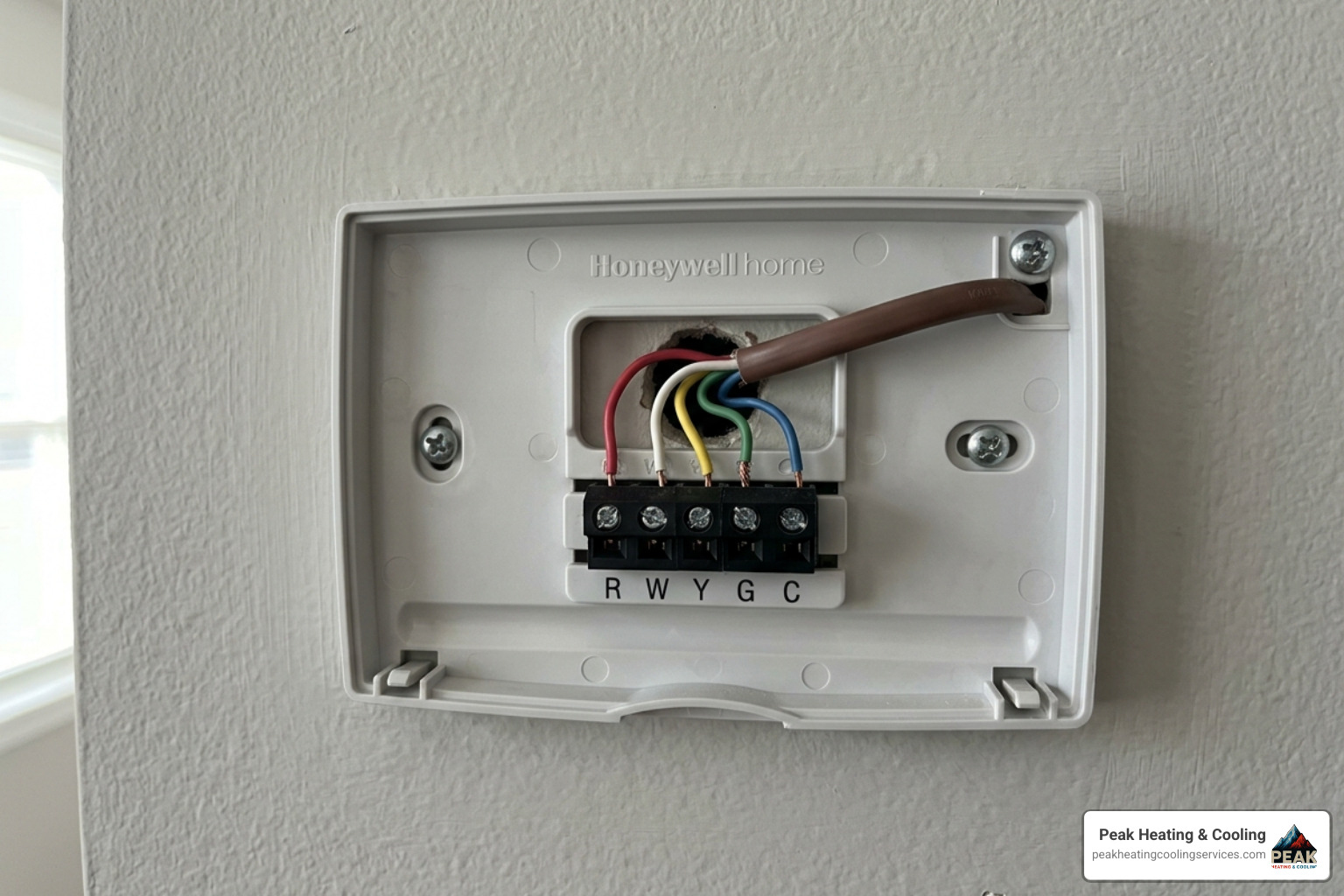
How to Inspect and Test Thermostat Wiring
- Inspect for Corrosion: Look for wires that look “crusty” or discolored. Corrosion prevents a clean electrical signal.
- Tighten Terminals: Use your small screwdriver to ensure every wire is firmly seated in its terminal (R, W, Y, G, etc.). A loose wire can cause the system to run nonstop or not at all.
- The “Jumper” Test: To see if the thermostat is the problem or if the furnace is at fault, you can carefully “jump” the wires. For example, touching the Red (power) and White (heat) wires together should force the furnace to kick on. If it does, your thermostat is definitely faulty.
- C-Wire Issues: Many smart thermostats require a “C-wire” (common wire) for constant power. If your smart thermostat is constantly rebooting or losing Wi-Fi, you might have a power-stealing issue that requires a dedicated C-wire installation.
When to Replace Instead of Repairing
While we love a good DIY fix, sometimes thermostat repair isn’t the most effective choice. If your unit is over a decade old, the internal sensors and circuitry are likely worn out. While an upgrade requires an initial investment, the energy savings from a modern unit often pay for the transition within a year or two.
We frequently recommend Lennox and Ducane systems for their reliability in our harsh Midwest climate.
| Thermostat Type | Repair Considerations | Best For |
|---|---|---|
| Electro-Mechanical | Hard to calibrate; mercury risks. | Old-school reliability, but inefficient. |
| Digital/Programmable | Battery and wiring issues are common. | Homeowners with set schedules. |
| Smart (Nest/Ecobee) | Software glitches and Wi-Fi drops. | Tech-savvy users wanting maximum efficiency. |
Benefits of Upgrading to a Smart Thermostat
Upgrading to a smart thermostat is a “no-brainer” for most Chicagoland homeowners. These devices offer:
- Learning Algorithms: They learn your schedule and automatically adjust to save energy when you’re at work.
- Geofencing: The system uses your phone’s GPS to know when you’re heading home, warming the house up just in time.
- Remote Access: Change the temp from your phone while you’re on vacation or stuck at the office.
- Utility Rebates: Many local Illinois utility companies offer rebates for installing Energy STAR-certified smart thermostats.
Frequently Asked Questions about Thermostat Repair
How do I know if my thermostat is bad or if it’s the furnace?
The easiest way is the “jumper test” mentioned above. If you bypass the thermostat by touching the R and W wires and the furnace starts, the problem is the thermostat. If the furnace still won’t start, the issue lies with the furnace ignitor, flame sensor, or control board.
Can I replace a thermostat myself or should I call a professional?
Many homeowners can handle a basic swap. However, if your home has a complex multi-stage system, a heat pump, or lacks a C-wire, professional installation is safer. Incorrect wiring can blow a fuse on your furnace control board, turning a simple upgrade into a significant repair.
What should I expect when fixing a thermostat issue?
Basic repairs like battery changes or wire tightening require only a few minutes of your time. If you need a professional for a wiring repair or sensor replacement, we provide upfront pricing with no hidden fees. A full replacement varies depending on the model you choose.
Conclusion
At Peak Heating & Cooling, we’ve spent over 20 years helping our neighbors in Glenview, IL, and the surrounding suburbs stay comfortable. We are a locally operated, family-owned HVAC company that prides itself on being an honest HVAC company. Whether you need a simple thermostat repair or a full Lennox furnace installation, we are here to help.
We offer 0% financing on new installations and provide 24/7 emergency service because we know that furnaces never break down at a convenient time. If your troubleshooting didn’t solve the problem, don’t spend another night in the cold. More info about thermostat services is just a click away.
Professional Thermostat Repair in Chicagoland
If you’ve tried the steps above and your furnace stopped working suddenly, it’s time to call in the experts. We provide:
- Furnace repair Glenview IL
- HVAC installation Northbrook IL
- AC repair Skokie IL
- Emergency HVAC Wilmette
We stand behind our work with a satisfaction guarantee and upfront pricing with no hidden fees. Contact us today for same-day furnace repair and experience why we are the 5-star HVAC contractor the North Shore trusts.
Call Peak Heating & Cooling today to get your home’s comfort back on track!