

714 Glenwood Ln, Glenview, IL
peakheatingcooling1@gmail.com
(773) 860-0451


Winnetka sits 15 miles north of Chicago along Lake Michigan — and it consistently ranks as one of the most desirable suburbs in the entire country. Its 12,484 residents live in 4,268 households. The median single-family home sale price is $1.45 million. The streets are lined with Victorians, Colonials, Tudors, and lakefront estates designed by some of the most celebrated architects of the 20th century — George Maher, Howard Van Doren Shaw, and David Adler among them. The village has three Metra stations and an active cultural calendar. It is the kind of place where the details matter — including who installs your heating and cooling system.
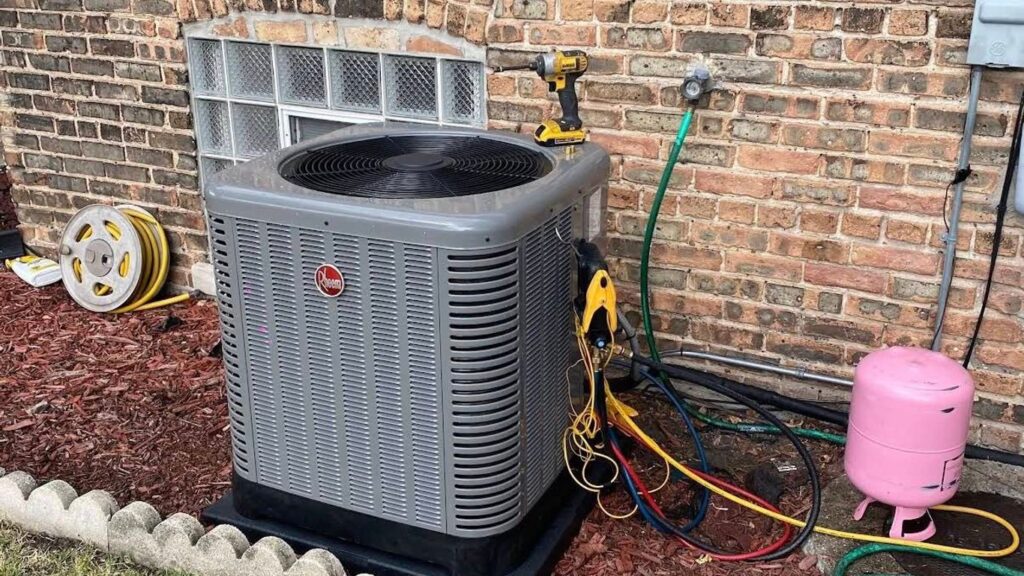
Winnetka was incorporated in 1869, the same year as Glencoe. But where Glencoe remained small, Winnetka grew into a full village of nearly 13,000 residents across 4.6 square miles. Its housing stock reflects every era of North Shore development: pre-war Tudors and Colonials from the 1910s and 1920s, Mid-Century Moderns from the 1950s and 1960s, and a steady stream of new construction and teardown-replacements that continues today. The Indian Hill subdivision — Winnetka’s most exclusive enclave, centered on the Indian Hill Country Club — features sprawling estates on some of the largest lots in Cook County. Hubbard Woods surrounds a Metra station and blends single-family homes with condos. East Winnetka runs along Sheridan Road toward Lake Michigan with larger homes and direct beach access. Woodley Road, west of Indian Hill, features elaborate homes with long driveways, swimming pools, and expansive landscaped lots.
What this means for HVAC installation is significant. A 1921 Colonial in Hubbard Woods has original ductwork — if it has ducts at all. A 1954 ranch in the Indian Hill area has a mechanical room that was never designed for today’s high-efficiency equipment. A 2010 new construction near the Elm Street Metra station has modern systems approaching a first replacement cycle. And a lakefront estate on Sheridan Road faces lake-effect thermal conditions that standard suburban load calculations simply do not model. We work in all of these homes. We know what each one demands before we arrive.
We’ve built dedicated content pages for each of Winnetka’s major neighborhoods and landmarks. Each one covers the specific housing types, permit rules, and local access details for that part of the village.

We offer same-day availability for urgent heating and cooling needs across all of Winnetka. Planned installations are typically scheduled within a few days of your call.
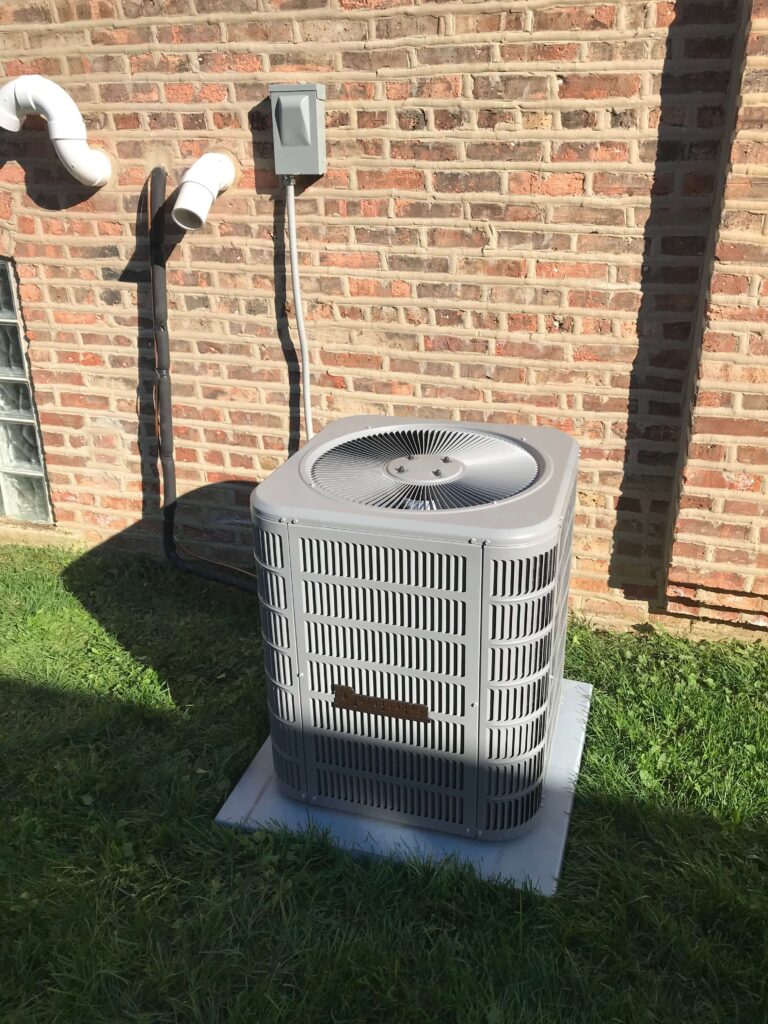
Winnetka’s range of home types — from 1910s pre-war Colonials to 2020s new construction estates — means we install every type of heating and cooling system the village requires. Every job starts with a site visit and a Manual J load calculation. We never select equipment without measuring your home first.
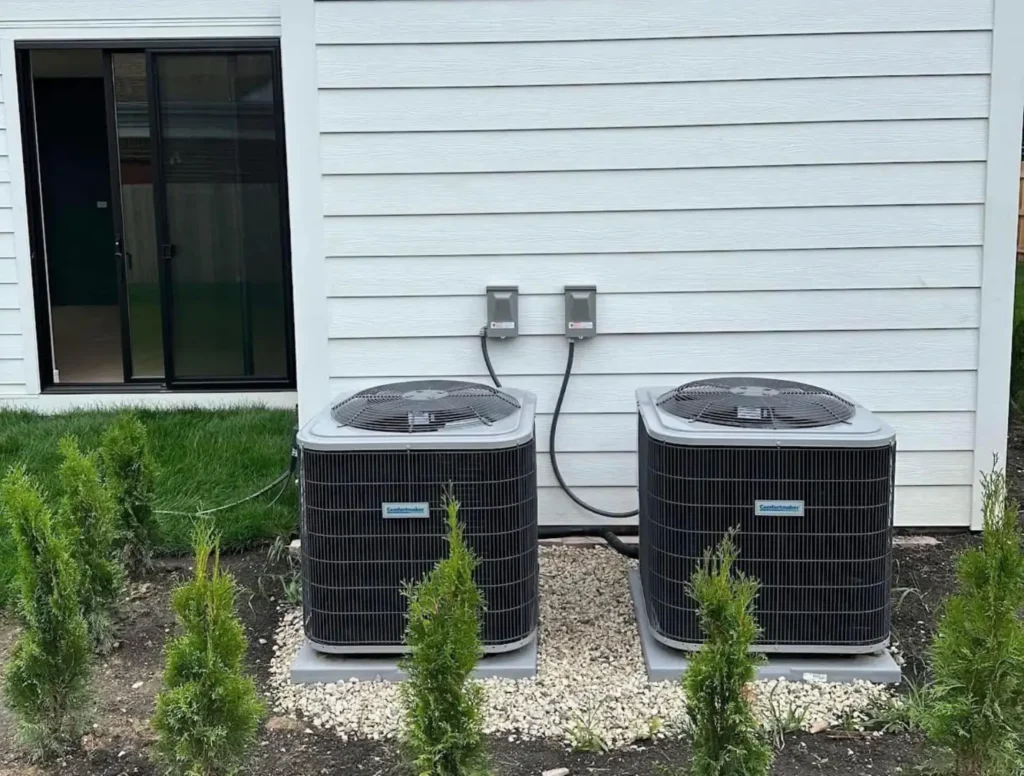
Winnetka’s housing stock skews old. The median single-family home sale price is $1.45 million, but age and value don’t always move together. A $2 million Tudor Revival from 1927 may have an HVAC system that is 22 years old and quietly failing. A $3 million estate in Indian Hill may have a multi-zone system where one zone is running at a fraction of its original efficiency.
Here are the warning signs we see most often across Winnetka’s neighborhoods:
We travel to every Northfield neighborhood without a trip charge. That includes Sunset Ridge Road, Fox Meadow, Meadowlake, Middlefork Woods, Northfield Manor, Courts of Regent, and Royal Ridge.
For Royal Ridge, we coordinate gate access at least one business day in advance. For Courts of Regent, we contact building management before booking. For homes with additions not covered by the original duct system, we identify the gap at the site visit — before any equipment is ordered.
We also serve the full surrounding North Shore: Winnetka, Glencoe, Northbrook, Glenview, Wilmette, Highland Park, Deerfield, Skokie, Morton Grove, Niles, Park Ridge, Des Plaines, and Chicago.
24/7 availability. Same-day service for urgent heating and cooling needs. Free estimates on all installation work with no commitment required.
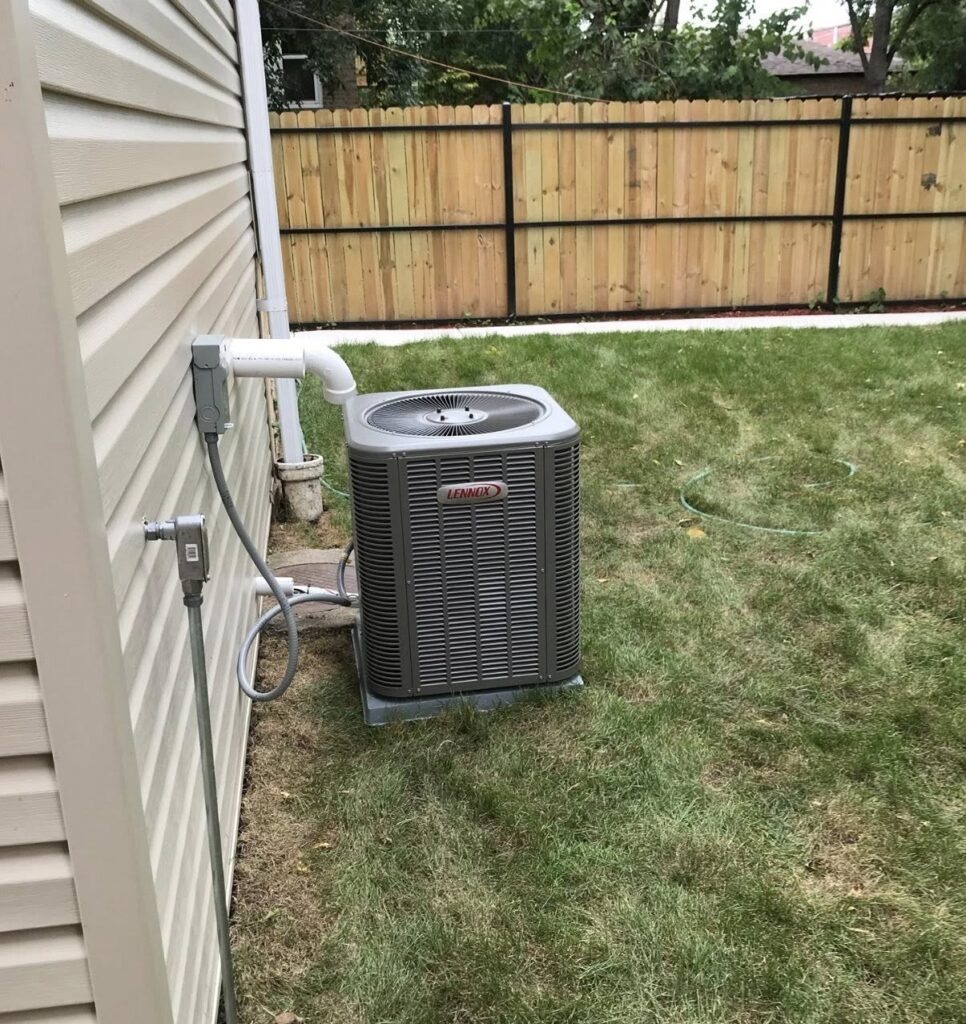


We know Winnetka. We’ve worked in Hubbard Woods Colonials, East Winnetka lakefront estates, Indian Hill multi-zone systems, and pre-war Tudors near the Elm Street station. We handle Winnetka’s dedicated Air Conditioning Permit Application, we comply with the November 2024 code adoption, and we run the site-specific load calculations that large, architecturally distinctive homes require.
The Village of Winnetka adopted new Building Model Codes effective November 4, 2024. This is one of the most recent code adoption dates among North Shore municipalities. All HVAC permit applications submitted after that date are reviewed against the new codes, including the 2021 International Residential Code with Winnetka’s local amendments. We verify compliance with the current code set on every Winnetka installation we perform.
No. Winnetka does not maintain a contractor licensing program. The Village accepts licenses issued by the State of Illinois or by other municipalities that test their licensees. There is no Winnetka-specific HVAC license. This is the same approach as Northfield and Northbrook, and different from some other North Shore municipalities that require local contractor registration.
Each village has a separate permit office, code adoption timeline, and process. Winnetka adopted new codes on November 4, 2024, and uses a dedicated Air Conditioning Permit Application submitted to the Community Development Department at 510 Green Bay Road. Northfield uses an email-based permit submission to the Village building contact with Safebuilt third-party inspections. Glencoe moved to a CSS Portal in October 2024. The physical differences matter too — Winnetka’s lakefront zone faces conditions not present in Northfield, and its pre-war housing stock is older and more architecturally varied than Northbrook’s 1970s–1990s subdivisions. We know the specific rules and conditions in each village and apply them to every job we book.
It can be. Homes along East Winnetka and Sheridan Road experience pronounced lake-effect conditions — temperature swings of 20°F or more between the shoreline and properties a few miles inland. A system sized for generic North Shore conditions will be undersized for direct lake exposure. If your system is running constantly without reaching setpoint, or if it is short-cycling, an assessment is worth scheduling. We run site-specific load calculations that account for actual location and exposure — not zip code averages.
Yes. Multi-zone HVAC systems are common in Indian Hill and on larger Woodley Road properties. We design and install zone systems with independent dampers, zone controls, and thermostats for each wing or floor. Every zone is sized and balanced independently — not as a single whole-house calculation. We assess your current duct layout and zone boundaries at the site visit before specifying any equipment.