

714 Glenwood Ln, Glenview, IL
peakheatingcooling1@gmail.com
(773) 860-0451


Kenilworth is the smallest village on Chicago’s North Shore — and arguably the most intentional. Founded in 1889 by Joseph Sears on 223.6 acres of farmland, it was designed from the first lot to be something permanent. Streets were laid out to maximize sunlight. Utilities were placed underground. No alleys or fences were permitted. Construction standards were among the highest in the region. The village reached 300 residents and incorporated in 1896. It has grown exactly once since then — a single annexation in the 1920s brought it to its current size of 0.6 of a square mile. Today, fewer than 1,000 homes exist within those boundaries. Every one of them is worth protecting.
Kenilworth is not a typical North Shore village. It does not have a commercial district beyond a small stretch on Green Bay Road. It has no large businesses. Its residential streets are quiet, tree-lined, and largely unchanged in character from the early 20th century. What it has — in remarkable concentration — is architecture. Architect George W. Maher, a contemporary and colleague of Frank Lloyd Wright, was instrumental in planning Kenilworth and designed approximately 37 homes within the village. Noted architect Franklin Burnham designed Kenilworth Station and Kenilworth Union Church, as well as several original homes. Frank Lloyd Wright’s Hiram Baldwin House on Essex Road, built in 1905, is listed on the National Register of Historic Places. The Chicago Architecture Center runs walking tours of Kenilworth specifically to explore homes built between 1891 and the 1920s — featuring Queen Anne, Shingle, Prairie School, Richardsonian Romanesque, Victorian, Neo-Classical, and Tudor Gothic styles along just a few streets.
What this means for HVAC installation is precise: these homes were not designed with modern forced-air mechanical systems in mind. Many have original floor plans from the 1890s through the 1930s. Mechanical rooms — where they exist — are tight, awkwardly placed, or shared with original utility infrastructure. Ductwork, if present at all in the oldest homes, may date to mid-century additions. Load calculations based on standard suburban assumptions will be wrong for almost every home in this village. The geometry, the glazing, the ceiling heights, the proximity to Lake Michigan — all of it must be measured before any equipment is specified. We do that work. We do not skip it.
Kenilworth also has an Architectural Review commission that governs new construction and substantial renovation to ensure all new work maintains the village’s tradition of architectural quality. Any exterior modification — including condenser placement — must comply with the Village’s specific location rules. We verify compliance on every job before anything is scheduled.
We’ve built dedicated content pages for each of Kenilworth’s major neighborhoods and landmarks. Each one covers the specific housing types, permit rules, and local access details for that part of the village.

We offer same-day availability for urgent heating and cooling needs in Kenilworth. For planned installations, we factor in the Village’s 5–10 business day permit review timeline and build that into the project schedule from the first call.
Kenilworth’s range — from 1890s Maher commissions to 1960s Cape Cods to current new construction subject to Architectural Review — means we install every heating and cooling system type the village requires. Every job begins with a site visit and a Manual J load calculation. We never recommend equipment without measuring your specific home.
Kenilworth’s housing stock is overwhelmingly pre-World War II. The village itself notes this in its own data: it has an unusually large stock of pre-war architecture even by North Shore standards. Systems in these homes have been replaced before. In some cases they have been replaced twice. The question is not whether the original heating has been updated — it has — but whether that update was done right, and whether that update itself is now aging.
Here are the warning signs we see most often in Kenilworth:
We travel to every Kenilworth street without a trip charge. That means the full length of Sheridan Road, Essex Road, Abbotsford Road, Kenilworth Avenue, Richmond Road, and every residential block in the village’s 0.6 square miles.
We also serve the full surrounding North Shore: Winnetka, Wilmette, Northfield, Glencoe, Northbrook, Glenview, Highland Park, Deerfield, Skokie, Morton Grove, Niles, Park Ridge, and Chicago.
24/7 availability. Same-day response for urgent needs. Free estimates with no commitment required.



Licensed and insured. 20+ years of Chicagoland experience. Available 24 hours a day, 7 days a week.
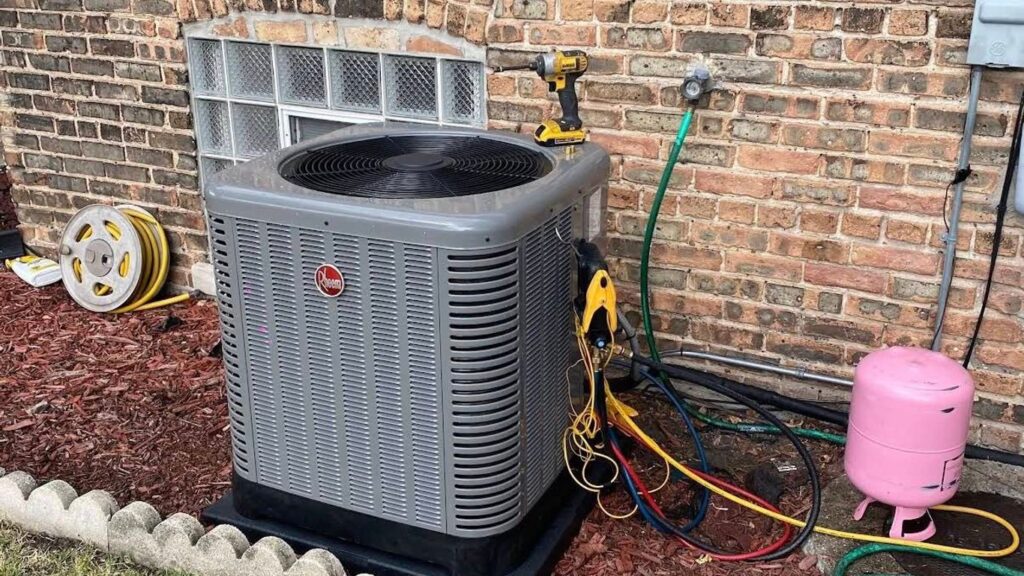
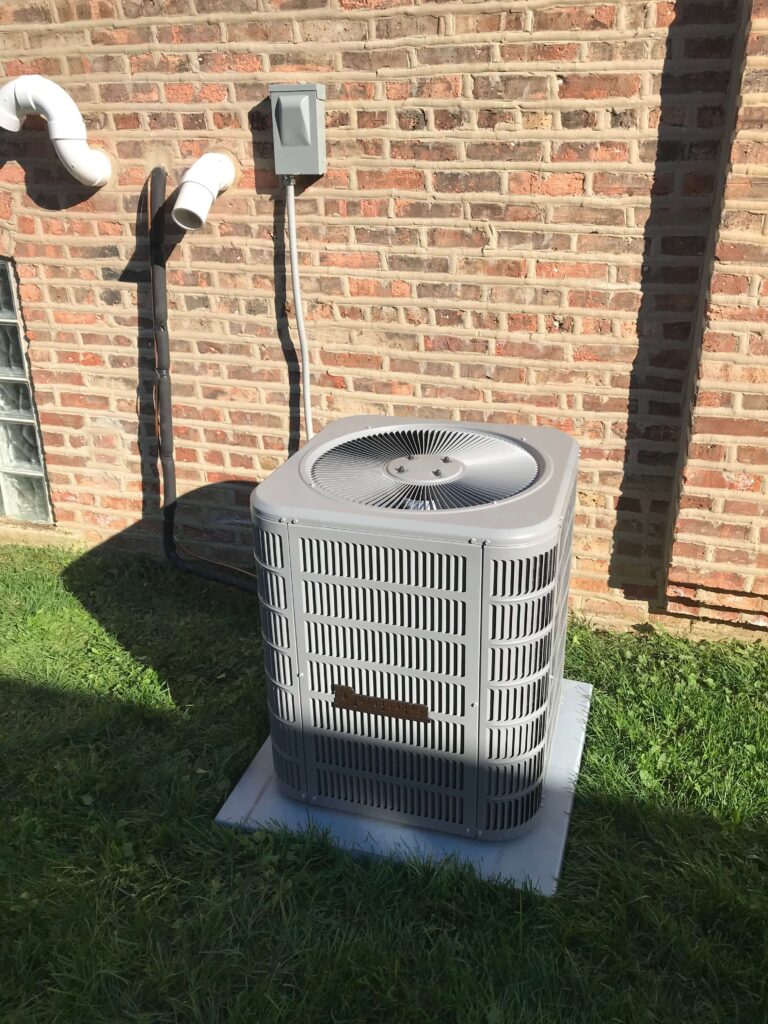
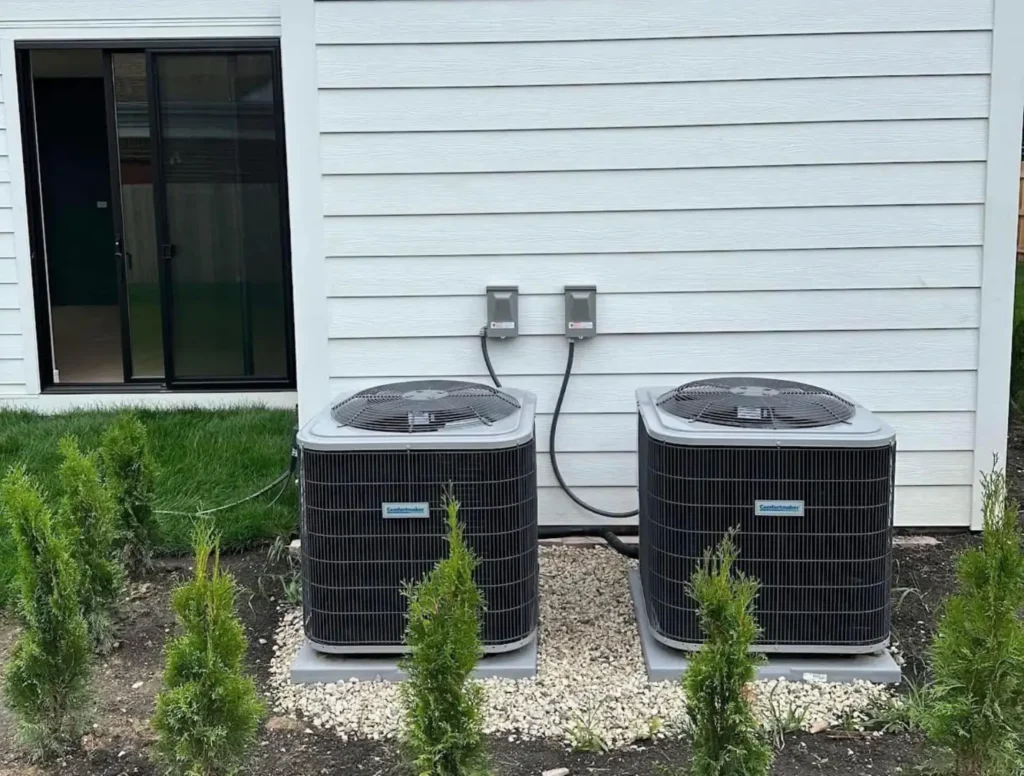
Kenilworth’s HVAC permit guidelines specify exact placement rules. Condensers must be in a side yard or rear yard — not a front yard, not a corner-lot side yard facing a street. At grade, they must be no closer to the side lot line than 50% of the required side yard setback for a principal structure. Existing equipment may be replaced in its existing location without triggering the placement review. If you are moving or upgrading the unit, a Zoning Compliance Worksheet is required. We verify compliance before scheduling and prepare this documentation as part of the permit package.
Kenilworth requires an escrow deposit of 25% of the cost of construction, up to a maximum of $2,500. This is collected at permit issuance and refunded upon project completion and final inspection. It is a Kenilworth-specific requirement not found in most neighboring villages. We document the project completion process to support your full refund at final inspection.
HVAC inspections in Kenilworth are scheduled PM (12:30–4:30 p.m.) Monday through Friday. AM availability (8 a.m.–12 p.m.) is offered on Tuesdays only. Inspections must be requested by 4 p.m. the day before the desired inspection date by calling 847-251-1666. Same-day re-inspections are not available. We coordinate the full inspection schedule on every Kenilworth job we perform.
The permit processes are entirely separate. Kenilworth has its own HVAC Permit Information page, its own escrow requirement, its own condenser placement rules with specific setback language, and a 5–10 business day review timeline. Winnetka uses a dedicated Air Conditioning Permit Application submitted to the Community Development Department on Green Bay Road with codes adopted November 2024. Glencoe uses a CSS online portal adopted October 2024. The physical differences are equally significant — Kenilworth is the smallest and oldest planned village in this series, with fewer than 1,000 homes and an unusually dense concentration of pre-World War II architecture. We apply the specific rules of each village to every job we book.