When Your HVAC Stops Working: What Chicagoland Homeowners Need to Know First
HVAC troubleshooting doesn’t have to mean an expensive emergency service call — many of the most common heating and cooling problems have simple fixes you can try right now.
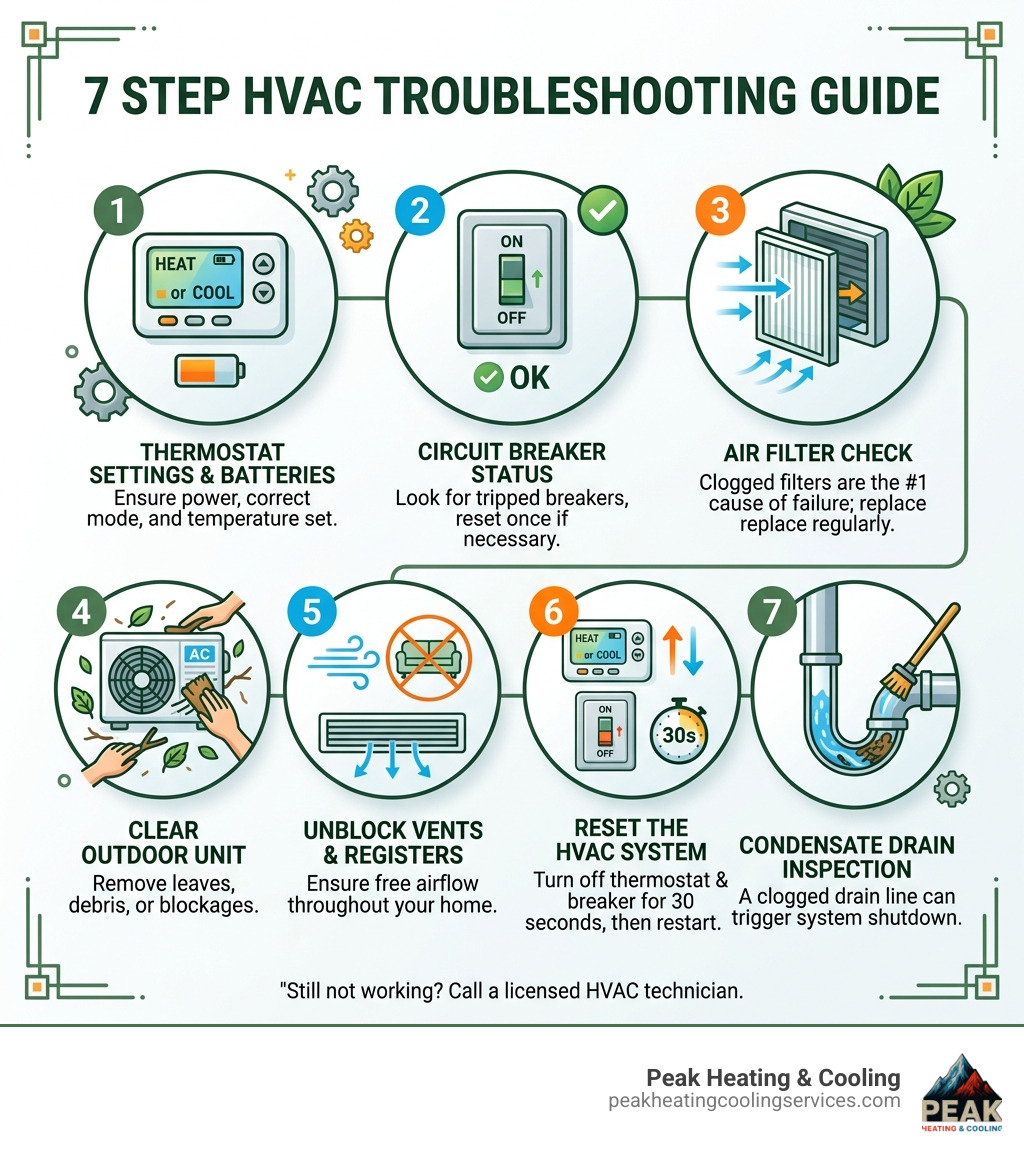
Here are the 7 quick checks to try before calling a pro:
- Check your thermostat — Is it set to Heat or Cool? Are the batteries dead?
- Inspect the circuit breaker — Look for a tripped breaker and reset it once if needed
- Replace the air filter — A clogged filter is the #1 cause of HVAC failure
- Clear the outdoor unit — Remove leaves, debris, or anything blocking the condenser
- Open all vents and registers — Make sure none are blocked by furniture or rugs
- Reset the system — Turn off the thermostat and breaker for 30 seconds, then restart
- Check the condensate drain — A clogged drain line can trigger a system shutdown
If none of those work, it’s time to call a licensed technician — especially for refrigerant issues, electrical faults, or a furnace that smells like gas.
Chicagoland winters are brutal. One January night with no heat in a Glenview or Northbrook home is one night too many. And when a sweltering July hits, a dead AC isn’t just uncomfortable — it’s a real problem for families and landlords alike.
The good news? Most HVAC problems follow predictable patterns. Whether your system won’t turn on, is blowing warm air, or is making a sound it definitely wasn’t making last week — there’s usually a clear reason. And often, a handful of simple checks can get things running again without waiting for a technician.
This guide walks you through 7 easy changes that fix the most common HVAC problems, plus helps you recognize when the issue is beyond DIY and needs a licensed pro from Peak Heating & Cooling.
Essential Safety and Power Checks for HVAC Troubleshooting
Before we dive into the mechanical side of things, we always prioritize safety. If your system is completely unresponsive, the issue might be as simple as a lack of power. However, working with electrical components carries risks. We recommend wearing rubber-soled shoes and using insulated tools if you are performing basic visual inspections.
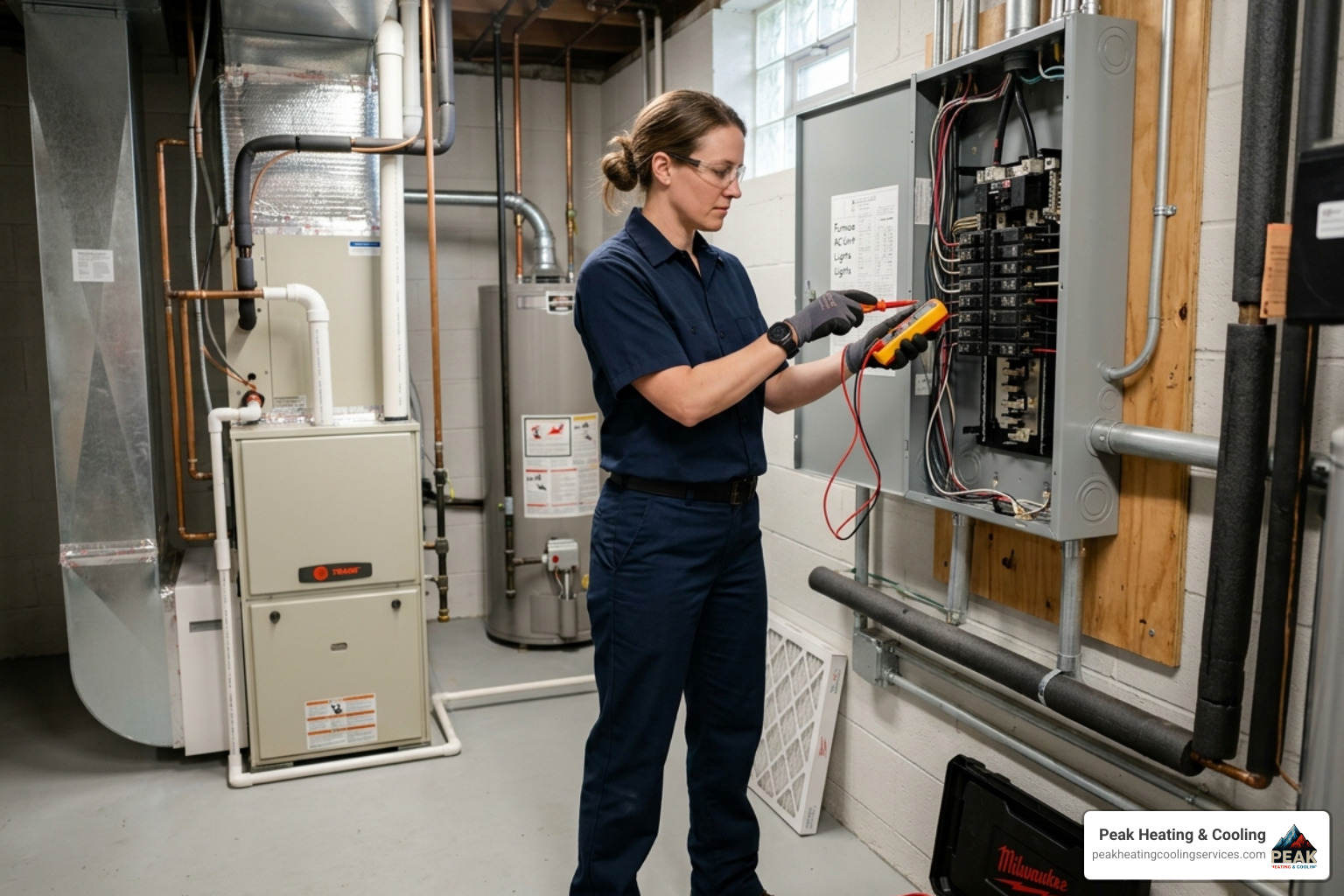
Start by checking your home’s main electrical panel. HVAC systems are high-draw appliances that can easily trip a breaker during a Northbrook heatwave or a sub-zero Skokie night. If the breaker has moved to the “off” or middle position, flip it all the way off and then back to “on.” If it trips again immediately, do not try a second time—this indicates a serious electrical fault that needs professional attention.
According to this HVAC Troubleshooting Guide for Common Issues, you should also verify the “SSU” switch. This often looks like a standard light switch located on or near your indoor furnace or air handler. It’s surprisingly common for someone to accidentally flip this switch while moving boxes in a Glenview basement, cutting power to the entire system.
Finally, check the outdoor disconnect switch. This is usually located in a small metal box mounted on the exterior wall near your AC condenser. Ensure the pull-out handle or switch is firmly in the “on” position.
Troubleshooting HVAC Issues Like Short Cycling and Strange Noises
Does your system turn on, run for three minutes, and then shut off again? This is known as short cycling, and it’s one of the most destructive behaviors an HVAC unit can exhibit. Short cycling puts immense strain on the compressor and can drive up your energy bills by 15-20% per cycle. Often, this is caused by restricted airflow. If the system can’t “breathe,” it overheats and triggers a safety shutdown.
Strange noises are another common symptom we hear about from homeowners in Park Ridge and Des Plaines. You can use this AC Troubleshooting Chart: Common Cooling Problems & Fixes to help identify the culprit:
- Banging or Clunking: Usually indicates a loose part, such as a fan blade or a failing compressor mount.
- Hissing: Often a sign of a refrigerant leak or air escaping through poorly sealed ducts.
- Squealing: Typically points to a worn-out fan belt or motor bearings that have lost their lubrication.
If you suspect air is escaping before it reaches your rooms, you may need to look into duct repair and sealing to ensure your conditioned air isn’t just heating your attic or crawlspace.
Advanced HVAC Troubleshooting for Furnaces and AC Units
When the basics don’t solve the problem, we have to look deeper into the system’s operation. If your furnace won’t kick on at all, it could be an ignition failure. Modern furnaces use electronic igniters or flame sensors that can become coated in carbon soot, preventing the system from staying lit.
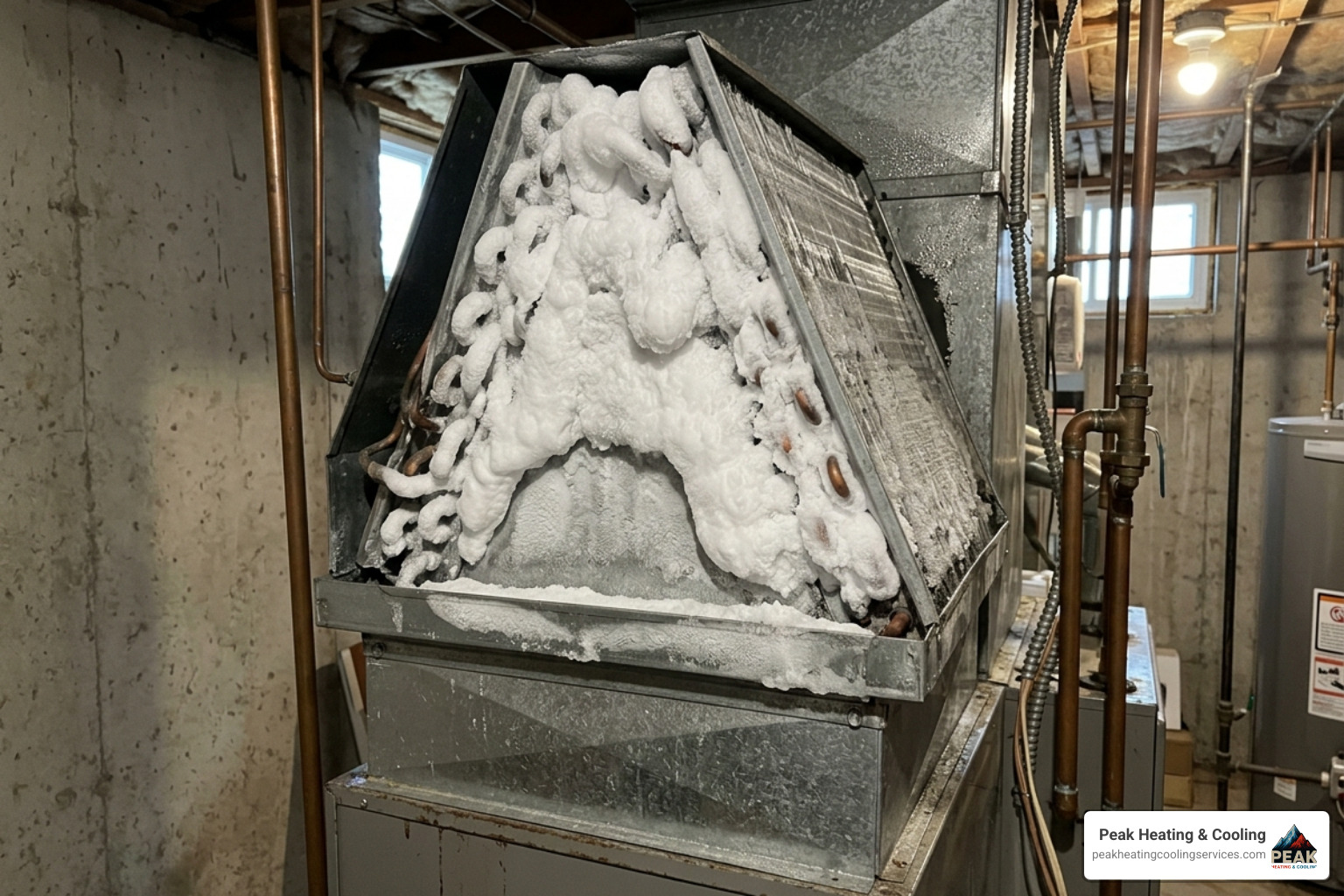
On the cooling side, if your AC is running but blowing warm air, you might be dealing with frozen evaporator coils. While it sounds counterintuitive for a cooling system to “freeze” in the summer, restricted airflow or low refrigerant levels cause the coils to drop below freezing, turning condensation into a block of ice. If you see ice on the outdoor lines or the indoor coil, turn the system off immediately and set the fan to “on” to allow it to thaw for 2–4 hours.
For more complex issues like these, our Furnace Repair Services and Air Conditioning Repair Service are designed to get to the root cause quickly. As noted in this guide on AC Troubleshooting: Common Problems and How to Fix Them, running a system with frozen coils or low refrigerant can turn a simple repair into a total compressor failure.
7 Easy Changes to Resolve Common HVAC Problems
Sometimes, the “fix” is just a matter of better HVAC Maintenance. We’ve seen hundreds of service calls in Wilmette and Winnetka that could have been avoided with these seven simple adjustments.
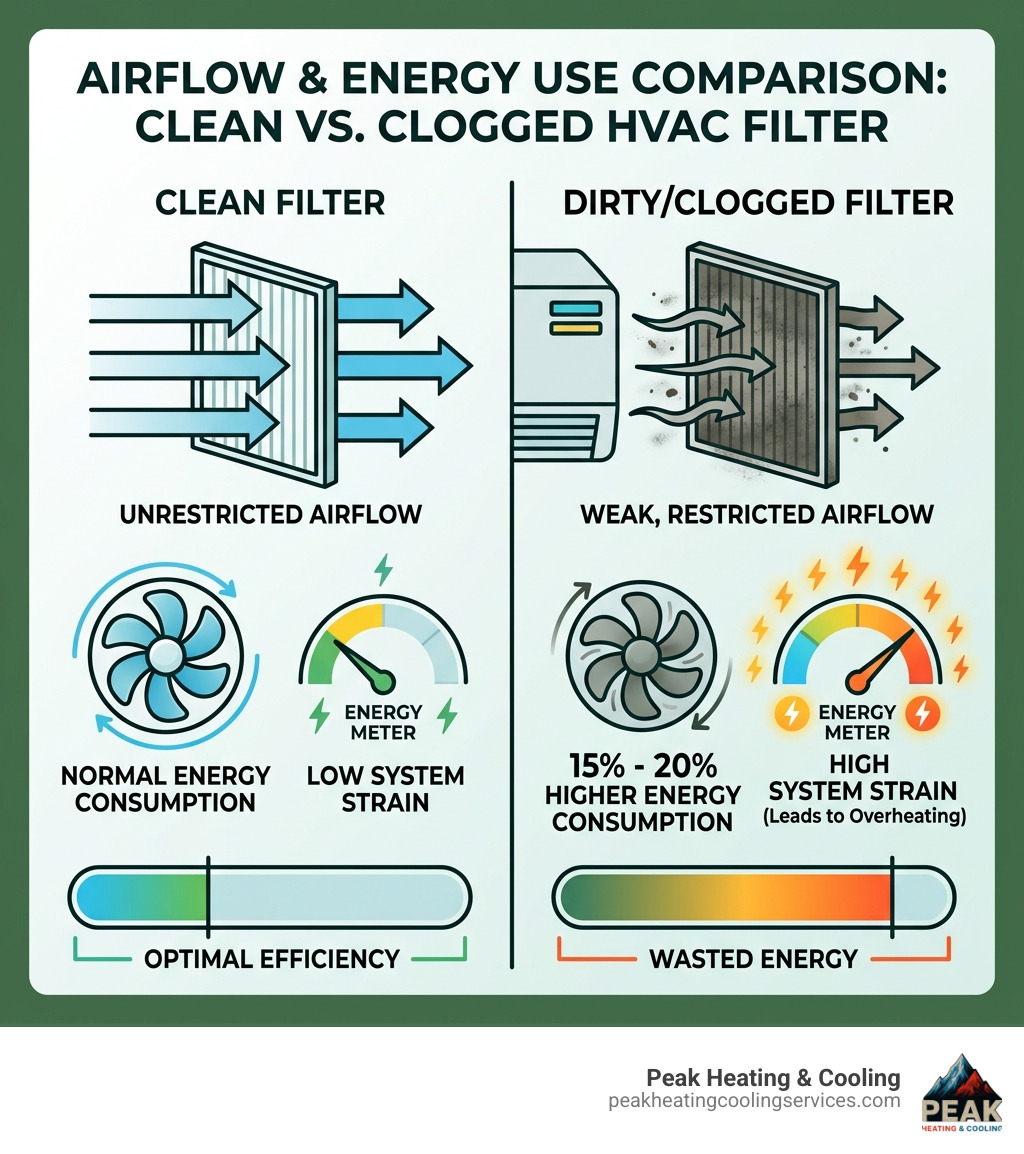
| Feature | Clean Filter | Dirty/Clogged Filter |
|---|---|---|
| Airflow Quality | Unrestricted, high volume | Weak, restricted |
| Energy Consumption | Normal | 15% – 20% Higher |
| System Strain | Low | High (leads to overheating) |
| Home Comfort | Even temperatures | Hot/Cold spots |
Verifying Thermostat Settings and Power
It sounds simple, but the thermostat is the “brain” of your system, and even brains have bad days. First, ensure it is set to the correct mode—”Heat” for winter and “Cool” for summer. If the screen is blank, replace the batteries immediately.
Location also matters. If your thermostat is in direct sunlight or near a drafty window in a Morton Grove home, it will give false readings, causing the system to cycle incorrectly. If you’re using a smart model and things seem off, check out our Smartsensors Acting Up? Here is Your Ecobee Repair Guide for specific digital troubleshooting tips.
Maintaining Airflow and Filter Health
The single most important thing you can do for your system is to change the air filter every 1 to 3 months. If you have pets or suffer from allergies, monthly changes are a must. A dirty filter blocks the return air, forcing the blower motor to work twice as hard.
Beyond the filter, check your registers. We often find that homeowners in Skokie or Niles have accidentally blocked return vents with furniture or rugs. For a deeper look at how to optimize your home’s breathing, see our Duct System Repair: A DIY Guide to Better Airflow.
Identifying Symptoms: When Your DIY Efforts Need a Pro
While we love empowering homeowners to handle the basics, some hvac troubleshooting scenarios are dangerous for anyone without EPA certification.
You should stop and call us immediately if you notice:
- Refrigerant Leaks: If you hear hissing and see an oily residue on the copper lines, you likely have a leak. Refrigerants are toxic and require specialized equipment to handle. For more on this, read AC Gas Leak Repair: Is Your Unit Gasping for Air?.
- Electrical Smells: A burning plastic or “ozone” smell indicates wires are melting or a capacitor is failing.
- Gas Odors: If you smell rotten eggs (sulfur), evacuate the house immediately and call your gas utility and Peak Heating & Cooling. This indicates a gas leak or a cracked heat exchanger.
As this HVAC Troubleshooting Guide: Common Problems, Causes and Repair Solutions points out, misdiagnosing a major component can lead to “reactive” repairs that cost thousands more than a simple proactive fix.
Frequently Asked Questions about HVAC Troubleshooting
How often should I replace my air filter and how do I know if it’s dirty?
You should replace your filter every 1–3 months. A simple test is to hold the filter up to a bright light. If you can’t see light passing through the fibers, it is too clogged with dust and dander to allow proper airflow.
What does it mean if my AC is blowing warm air?
This usually means the indoor unit is working, but the outdoor unit isn’t cooling the refrigerant. Check your outdoor breaker and the condenser unit for debris. If the outdoor unit is running but the air is still warm, you likely have a refrigerant leak or a failed compressor.
Why is my furnace not heating and how do I check the pilot light?
If you have an older gas furnace with a standing pilot, the flame may have blown out. Look for a small blue flame near the burners. If it’s out, follow the instructions on the furnace panel to relight it. If the flame is yellow or orange, shut the system off—this is a sign of incomplete combustion and a potential carbon monoxide risk.
Conclusion
At Peak Heating & Cooling, we’ve spent over 20 years keeping our neighbors in Glenview, Northbrook, and the surrounding Chicagoland suburbs comfortable. We are a family-owned, licensed, and insured team that stands behind every job with a satisfaction guarantee. Whether you need a new Lennox or Ducane system or just a quick fix for a furnace that went out, we are here to help.
Don’t spend another night in a cold house or a sweltering room. We offer 0% financing for qualified customers on new installations and provide 24/7 emergency service for those “house won’t warm up” moments.
Ready for professional help? Schedule HVAC Services with Peak Heating & Cooling today for same-day repairs and expert care.