

Is Dry Winter Air Wrecking Your Chicagoland Home? Here’s What to Know About Humidifier HVAC Installation
Humidifier HVAC installation is the process of connecting a whole-house humidifier directly to your home’s forced-air heating system — so every room gets consistent, controlled moisture automatically.
Here’s a quick overview of what’s involved:
- Choose your humidifier type — bypass, fan-powered, or steam
- Select the right size — based on your home’s square footage and construction type
- Mount the unit — typically on the supply or return plenum near your furnace
- Connect water supply and drain line — using a saddle valve and properly sloped drain
- Wire to your furnace and humidistat — for automatic humidity control
- Test and commission — verify airflow, humidity output, and controls
Most Glenview and North Shore homeowners get this done by a licensed HVAC professional in a single visit.
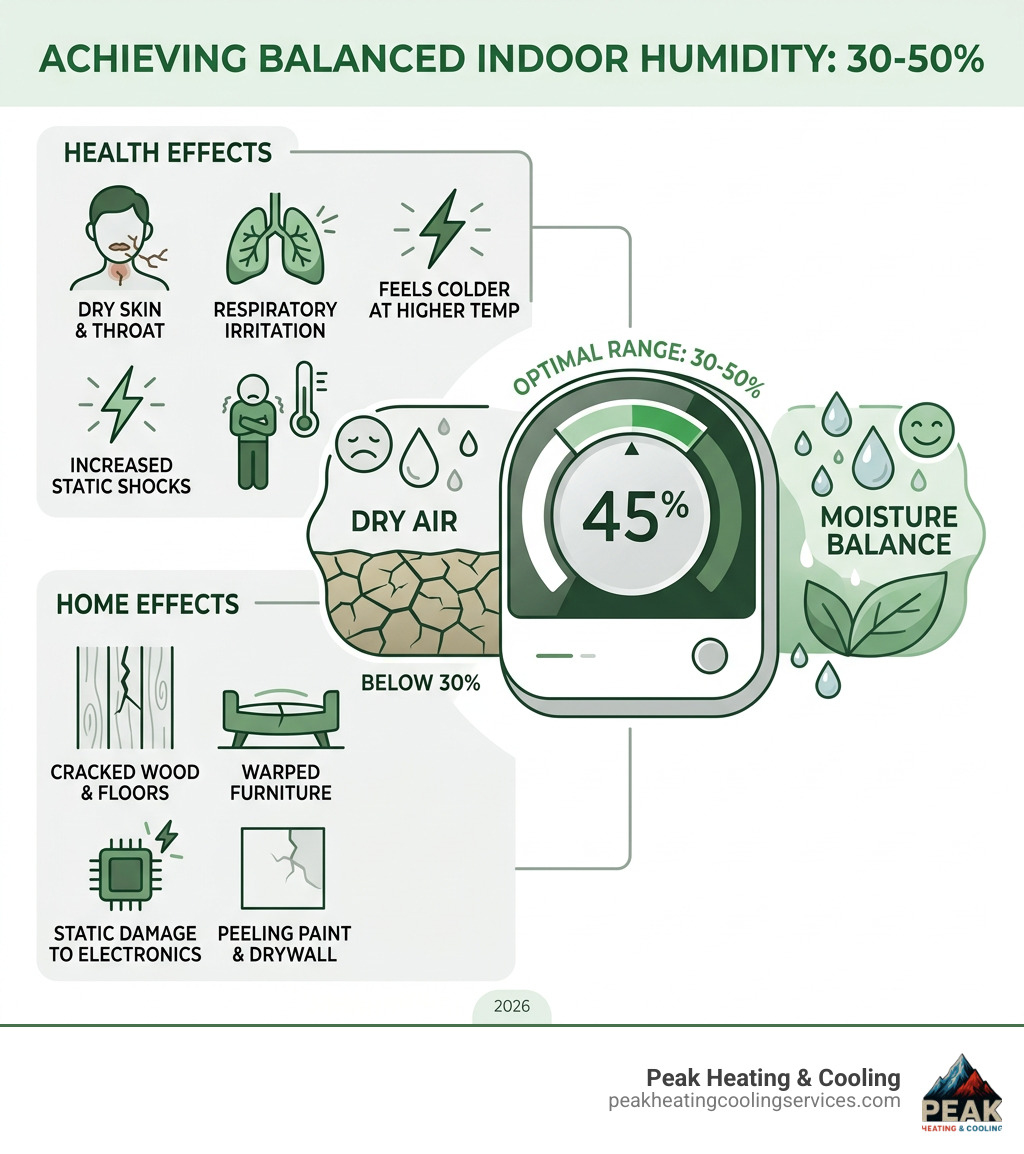
If you’ve ever woken up in January with cracked lips, a scratchy throat, or a static shock every time you touch a doorknob — your home is telling you something. Chicagoland winters are brutal on indoor air. When outdoor temperatures drop and your furnace runs constantly, indoor humidity can fall below 25%. That’s well below the 30–50% range recommended for healthy, comfortable living.
And it’s not just a comfort issue. Dry air warps hardwood floors, cracks wood furniture, damages electronics through static discharge, and makes your home feel colder than it actually is — which means your furnace works harder and your energy bills climb.
A whole-house humidifier integrated with your HVAC system solves all of this quietly, automatically, and without the hassle of refilling portable units room by room.
Why Your Chicagoland Home Needs a Humidifier HVAC Installation
Living in the North Shore or Northwest Suburbs means preparing for months of heavy furnace use. While our heating systems keep us warm, they also strip moisture from the air. In fact, during a typical Chicago winter, indoor humidity can drop lower than the humidity in the Sahara Desert!

When we perform a humidifier hvac installation, we aren’t just adding a gadget to your furnace; we are balancing your home’s ecosystem. Low humidity leads to itchy, dry skin, “bloody noses,” and increased susceptibility to respiratory infections. Furthermore, dry air is a magnet for static electricity, which can be annoying when touching a doorknob but devastating if it zaps your expensive home office electronics or gaming systems.
Beyond your health, your home itself suffers. Wood is a natural material that “breathes.” When the air is too dry, it pulls moisture out of your hardwood floors, crown molding, and antique furniture, leading to unsightly gaps and permanent warping. According to EPA Indoor Air Quality standards, maintaining proper humidity is a cornerstone of a healthy home. If you’ve noticed these signs, you might also need to check if your heating system is struggling—learn more about furnace repair services to ensure your entire HVAC setup is ready for the cold.
Benefits for Health and Home Comfort
Properly humidified air is a natural defense against illness. Research shows that many viruses thrive in dry environments (below 25% humidity). By keeping your home between 30% and 50%, you help your body’s natural filtration system—your sinuses—stay moist and effective. This leads to better sleep quality, reduced snoring, and relief from seasonal allergies.
From a structural standpoint, a humidifier hvac installation protects your investment. We’ve seen many homes in Wilmette and Winnetka where beautiful wallpaper begins to peel at the seams or drywall starts to crack simply because the house is “shrinking” in the dry winter air. Following ASHRAE guidance on indoor environments ensures that your home remains a stable environment for both people and property.
Impact on Heating Efficiency and Utility Bills
Did you know that moist air holds heat better than dry air? It’s the same reason a 90-degree day in Florida feels much hotter than a 90-degree day in Arizona. When we install a whole-house humidifier, your home feels warmer at a lower temperature.
This allows you to turn your thermostat down by 2 or 3 degrees without losing an ounce of comfort. According to ENERGY STAR tips on home comfort, every degree you lower your thermostat can save you up to 3% on your heating costs. Over a long Chicagoland winter, those savings really add up, reducing the overall workload on your furnace and extending its lifespan.
Types of Whole-House Humidifiers for Your HVAC System
Not every home in Skokie or Des Plaines requires the same type of humidification. Choosing the right technology is the first step in a successful humidifier hvac installation.
- Bypass Humidifiers: These are the most common and cost-effective units. They use the furnace’s own blower to move air through a water-soaked evaporative pad (water panel). They require a small “bypass” duct to be installed between the supply and return plenums.
- Fan-Powered Humidifiers: These units have their own internal fan to pull air across the water panel. They are great for homes with limited space for extra ductwork or for systems where the furnace blower isn’t powerful enough to move air through a bypass.
- Steam Humidifiers: The “gold standard” of humidification. These units boil water to create pure steam, which is then injected directly into the airflow. They work independently of the furnace’s heat, making them ideal for heat pumps or large homes over 4,000 square feet.
| Feature | Bypass | Fan-Powered | Steam |
|---|---|---|---|
| Installation Cost | Lowest | Moderate | Highest |
| Maintenance | Annual Pad Change | Annual Pad Change | Cylinder/Tank Cleaning |
| Water Efficiency | Moderate | Moderate | High |
| Ideal Home Size | Up to 3,000 sq. ft. | Up to 4,000 sq. ft. | 4,000+ sq. ft. |
| Operation | Only when furnace runs | Only when furnace runs | Independent of heat |
Choosing the Right Model for Humidifier HVAC Installation
Sizing a humidifier isn’t just about square footage; it’s about how “tight” your home is. A brand-new, energy-efficient home in Northbrook with modern insulation and windows (Tight Construction) might only need 5.4 gallons per day (GPD) for a 2,000 sq. ft. space. However, a beautiful historic home in Evanston with “Loose Construction” could require over 18 GPD for that same square footage.
As your local HVAC contractor, we use AHRI recommendations to ensure your unit is perfectly matched to your home’s specific needs.
Understanding Steam vs. Evaporative Technology
While evaporative pads are great for many, some Chicagoland homeowners prefer steam for its precision. Steam humidifiers, like the ones detailed in the condair RH HumiLife Steam Humidifier Guide, often use electrode technology. This process uses the natural impurities in your water to conduct electricity and generate heat. Because they produce moisture so quickly, they are perfect for larger homes or families with high-output needs.
Professional Steps for a Successful Humidifier HVAC Installation
A humidifier hvac installation is a complex job that involves sheet metal work, plumbing, and electrical wiring. It isn’t just about “hanging a box” on the side of your furnace.
When our technicians arrive at your home in Glenview or Niles, we follow a rigorous process to ensure the system is leak-free and efficient:
- Placement Strategy: We determine the best location—usually the supply plenum (where the air is warmest) or the return plenum. Proper placement ensures the moisture is absorbed into the air rather than condensing inside your ducts.
- Precision Cutting: Using a template and aviation snips, we cut a precise opening in your ductwork. This must be sealed perfectly to prevent air leaks that could drop your system’s efficiency.
- Mounting: The unit is secured with self-tapping screws and gaskets to ensure a vibration-free, airtight fit. You can find more details on these technical steps in the Whole Home Humidifier Installation Guide.
Critical Components for Humidifier HVAC Installation
Every installation requires several specialized components to work safely:
- Humidistat/Sensor: This is the “brain” of the system. We often install “Automatic” humidistats that include an outdoor temperature sensor. This is vital in Illinois; as the outdoor temperature drops, the system automatically lowers the indoor humidity setpoint to prevent frost and condensation from forming on your windows.
- Solenoid Valve: An electrically controlled valve that opens the water flow only when the system calls for humidity.
- Air-Proving Switch: A safety device that ensures the humidifier only runs when the furnace fan is actually blowing air.
Connecting Water, Drainage, and Electrical Controls
We connect the unit to your home’s cold water supply, typically using a dedicated shut-off valve rather than a flimsy “saddle valve” that can leak over time. The drain line is then routed with a consistent downward slope to a floor drain or condensate pump to prevent standing water and mold growth.
Finally, we wire the unit into your furnace’s 24V transformer. This allows the humidifier to communicate with your thermostat. Many modern systems we install offer smart app connectivity, allowing you to monitor your home’s humidity from your phone. Our heating contractor services ensure all electrical work meets local Chicagoland building codes.
Maintenance and Troubleshooting for Long-Term Performance
A whole-house humidifier can last 5 to 10 years, but only if it’s maintained. The biggest enemy of any humidifier is mineral buildup. Chicagoland is known for having “hard” water, which can quickly clog an evaporative pad with calcium and lime scale.
- Water Panel Replacement: For most bypass and fan-powered units, you should replace the water panel (evaporative pad) at least once per season. If you have very hard water, you might need to change it every 2-3 months during the peak of winter.
- Seasonal Shutdown: When the weather warms up in the spring, remember to turn off the water supply and set your humidistat to the “Off” position. This prevents stagnant water from sitting in the unit all summer.
- Filtration Options: If scale buildup is a constant problem, we can install an inline water filter or even a reverse osmosis (RO) system to provide pure water to the humidifier. This drastically reduces maintenance needs. For more DIY maintenance tips, check out this guide on humidifier maintenance.
Common Installation Mistakes to Avoid
We are often called to “fix” a humidifier hvac installation performed by an inexperienced hand. Common errors include:
- Improper Drainage: If the drain line isn’t sloped correctly, water will back up and cause a mess in your basement or mechanical room.
- Wrong Plenum Choice: Installing a bypass humidifier on the wrong side of the AC cooling coil can lead to the coil rusting out prematurely.
- No Airflow Verification: If the unit runs without the furnace fan being on, you’ll end up with a puddle of water inside your furnace.
Frequently Asked Questions about Whole-House Humidifiers
Where is the best location to install a humidifier on my furnace?
The best location is generally the supply plenum, which is the ductwork that carries warm air away from the furnace. The warmth helps the water evaporate more quickly. However, if space is tight, many units can be installed on the return plenum as long as they are connected to a hot water line to assist with evaporation.
Should I install a humidifier myself or hire a professional?
While some “handy” homeowners attempt a DIY installation, it is generally discouraged. A humidifier hvac installation involves cutting into expensive ductwork, tapping into plumbing lines, and wiring into the furnace’s control board. One mistake can lead to a flooded basement, a fried furnace circuit board, or mold growth inside your ducts. Hiring a professional ensures the job is done to code and maintains your manufacturer’s warranty.
How do I know what size humidifier my home requires?
Sizing is based on the total volume of your home (cubic feet) and the “tightness” of your construction. We calculate the Gallons Per Day (GPD) needed to maintain 35-45% humidity. A typical 2,500 sq. ft. home in Park Ridge or Mt. Prospect usually requires a unit capable of 12 to 18 GPD.
Conclusion
Don’t let another dry winter damage your health or your home. At Peak Heating & Cooling, we have over 20 years of experience helping homeowners across Glenview, Northbrook, and the entire North Shore breathe easier. Whether you are looking for a simple bypass unit or a high-output steam system, our licensed and insured technicians are here to help.
We offer 0% financing for qualified customers, 24/7 emergency service, and same-day repairs to ensure your comfort is never compromised. Ready to stop the static and protect your hardwood floors? Schedule your professional HVAC services today and experience the difference that perfect humidity makes.