

Heat Pump vs Air Conditioner: Understanding the Core Differences
To understand the heat pump vs air conditioner debate, it helps to start with a surprising fact: in cooling mode, these two systems are nearly identical. Both use the vapor-compression refrigeration cycle to move thermal energy. They both feature an indoor coil, an outdoor condensing unit, and refrigerant that cycles between them to absorb heat from your living room and dump it outside.
However, the heat pump has a “secret weapon” that a standard AC lacks: a reversing valve.
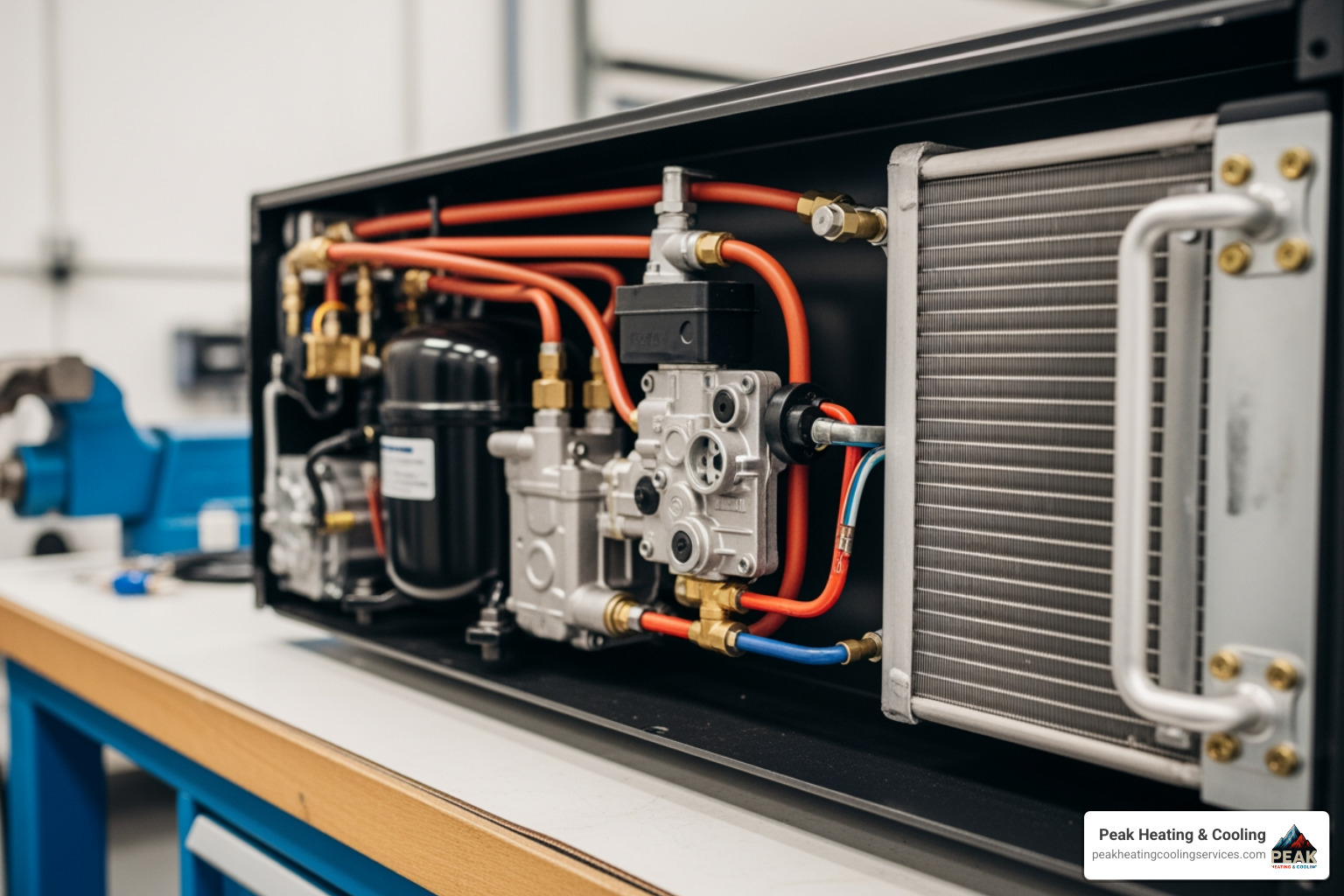
While a traditional air conditioner is a one-way street—moving heat from inside to outside—a heat pump is a two-way street. By shifting the flow of refrigerant, it can pull thermal energy from the outdoor air (even when it feels cold to us) and bring it inside to warm your home. This process of moving heat rather than generating it through combustion is what makes heat pumps incredibly efficient. If your AC stopped working or is struggling to keep up with the humid Glenview summers, you might need air conditioning repair service from a locally operated HVAC contractor to determine if a simple fix or a full system upgrade is in your future.
How a Heat Pump vs Air Conditioner Works in Cooling Mode
During a sweltering July afternoon in Skokie, both systems perform the same job. Liquid refrigerant pumps through the indoor evaporator coils. As warm indoor air blows over these cold coils, the refrigerant absorbs the heat and evaporates into a gas. This process doesn’t just lower the temperature; it also provides essential indoor dehumidification by condensing moisture out of the air.
The hot refrigerant gas is then pumped to the outdoor unit. The compressor squeezes the gas, and the outdoor fan blows air across the condenser coils to reject the heat into the atmosphere. According to the Department of Energy air conditioning basics, the refrigerant then reverts back to a liquid state and heads back inside to start the cycle over again.
The Role of the Reversing Valve in Heating
The “magic” happens when the temperature drops and you flip the thermostat to “Heat.” In a heat pump, the four-way reversing valve engages, physically changing the direction the refrigerant flows.
- Flow Reversal: The outdoor coil now acts as the evaporator, and the indoor coil acts as the condenser.
- Outdoor Heat Extraction: The system finds ambient heat in the outdoor air—yes, even in Illinois winters—and “pumps” it into your home.
- Defrost Cycle: Because the outdoor unit gets very cold during this process, it may occasionally develop frost. The system automatically enters a defrost cycle to melt ice buildup.
- Auxiliary Heat: In extreme Chicagoland freezes, the heat pump may call for “back-up” or auxiliary heat (usually electric strips or a gas furnace) to help maintain your comfort.
Cooling Performance and Energy Efficiency Standards
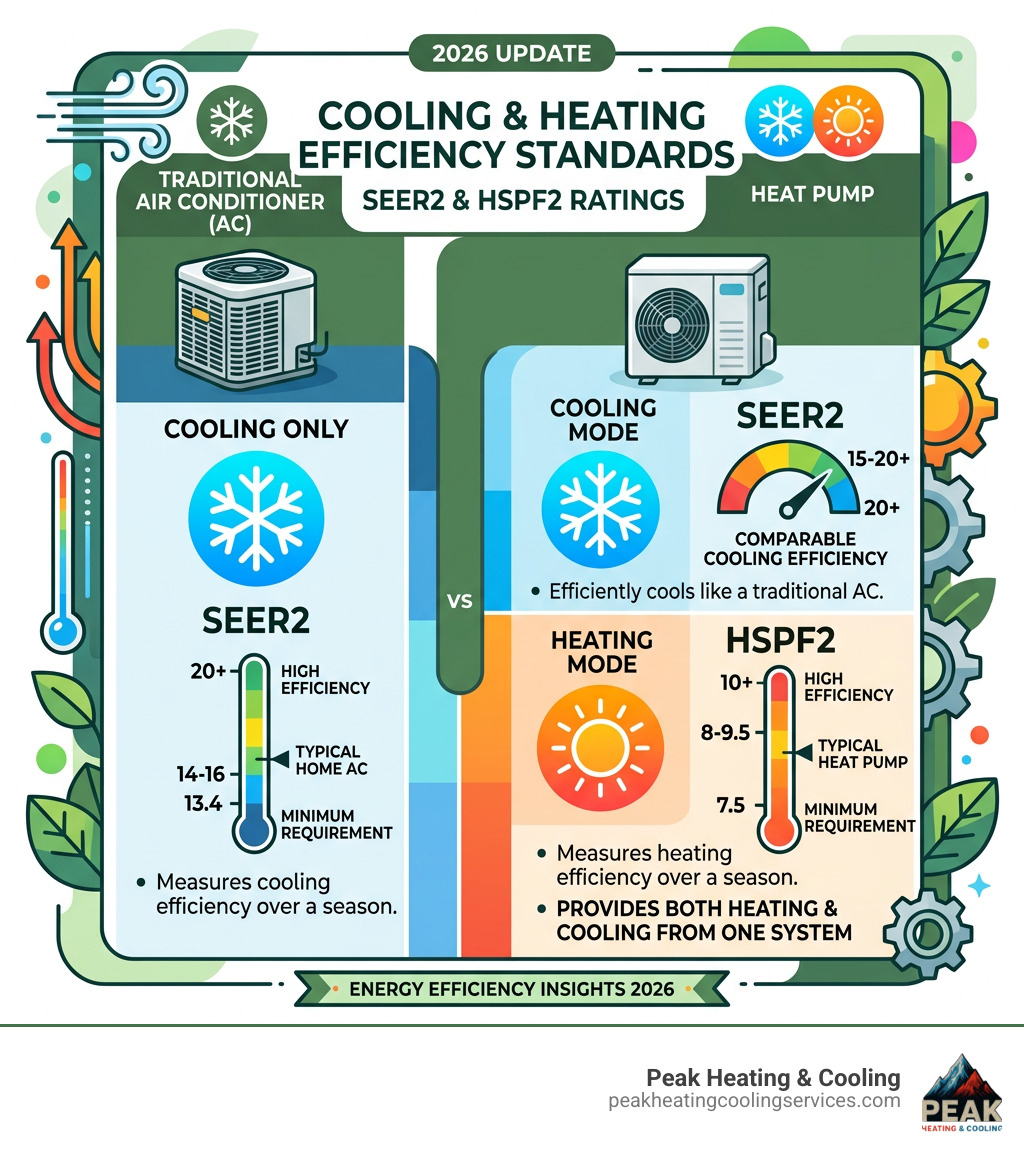
When comparing a heat pump vs air conditioner, efficiency is measured by SEER2 (Seasonal Energy Efficiency Ratio 2). The higher the number, the less electricity the unit uses to provide the same amount of cooling. Modern units in the North Shore area typically range from 14 to over 20 SEER2.
Technological leaps like inverter technology have changed the game. Older “on/off” systems are like a light switch—they are either 100% on or 0% off. Inverter-driven compressors are more like a dimmer switch. They can modulate their speed to match the exact cooling load of your home.
Comparing Heat Pump vs Air Conditioner Efficiency
While cooling efficiency is often a wash between the two, the heat pump shines in the heating department. Heating efficiency is measured by HSPF2 (Heating Seasonal Performance Factor 2).
Air-to-air heat pumps can be up to 300% efficient. This means for every one unit of electricity used, they move three units of heat. Compare that to the most efficient gas furnace, which tops out at about 98% efficiency. This massive jump in efficiency leads to a significant carbon footprint reduction and long-term energy savings. According to Energy Star cooling guidelines, heat pumps are the most efficient electric heating option on the market today.
| Metric | High-Efficiency AC | High-Efficiency Heat Pump |
|---|---|---|
| Cooling (SEER2) | Up to 21.5 | Up to 20.5 |
| Heating (HSPF2) | N/A | Up to 10+ |
| Efficiency % | N/A | Up to 300% (Heating) |
Impact of Inverter Technology on Home Comfort
At Peak Heating & Cooling, we often recommend variable-speed systems (using inverter technology) for our neighbors in Northbrook and Wilmette. These systems use Variable Frequency Drives (VFD) to provide:
- Precise Temperature Control: Maintaining your home within half a degree of your setting.
- Noise Reduction: Because they rarely need to run at full blast, they are much quieter than traditional units.
- Energy Modulation: They operate at partial loads most of the time, which is where the real energy savings happen.
- Soft-start Capabilities: They ramp up slowly, preventing the “dimming lights” effect when a large motor kicks on.
Heating Capabilities and Cold Climate Performance
A common myth in Chicagoland is that heat pumps don’t work in the cold. While that was true in the 1980s, modern “cold climate” heat pumps are built for Illinois. These units use advanced compressors to extract heat even when outdoor temperatures dip well below freezing.

Hybrid and Dual-Fuel System Configurations
For many homes in Glenview and Des Plaines, the “gold standard” is a hybrid or dual-fuel system. This setup pairs a high-efficiency heat pump with a gas furnace.
- The Heat Pump handles the cooling in the summer and the heating during the “shoulder seasons” (spring and fall).
- The Gas Furnace takes over automatically when temperatures drop below the heat pump’s “thermal balance point” (usually around 30°F or 40°F).
This provides the ultimate peace of mind. You get the electric efficiency of the heat pump most of the year, but you still have the “blast” of gas heat when a polar vortex hits. If you are considering this upgrade, our HVAC contractor services can help you design the perfect hybrid layout.
Performance in Extreme Illinois Temperatures
In extreme temperatures, the system relies on anti-freeze protection and electric resistance heat to keep the unit running. While a heat pump’s efficiency drops as it gets colder, new models can still provide effective heating down to -10°F or even -20°F. However, in the Chicago suburbs, having that gas backup in a dual-fuel configuration ensures you’re never left in the cold if the power grid struggles or temperatures stay sub-zero for a week straight.
Installation Factors and Financial Incentives in Illinois
Choosing between a heat pump vs air conditioner often comes down to the numbers. While a heat pump might require a different initial investment, the incentives available in 2024 and 2025 are historic.
Federal Tax Credits and State Rebates
Under the Inflation Reduction Act, the financial landscape has shifted in favor of heat pumps:
- Heat Pump Tax Credit: You can claim a federal tax credit of 30% of the project total for qualifying systems.
- Air Conditioner Tax Credit: Qualifying high-efficiency AC units also offer federal tax incentives.
- HEEHRA Rebates: Depending on your household income, state programs (like the HOMES program) may offer significant rebates for heat pump installations.
When you factor in these credits, the investment difference between a standard AC and a heat pump often disappears entirely. If you’re ready to see how these apply to your home, check out our guide to air conditioner installation in Glenview, IL for more on the installation process.
Long-Term Value and System Longevity
A central air conditioner typically lasts about 15 years. A heat pump has a similar lifespan of 12–15 years, though it may require more frequent maintenance because it runs year-round (heating and cooling) whereas an AC unit sits idle all winter. Regular annual maintenance is the key to protecting this investment. Over 15 years, the energy bill reductions from a heat pump can lead to substantial annual savings for a typical Illinois household.
Choosing the Right System for Your Chicagoland Home
Every home is different. When we visit a home in Park Ridge or Morton Grove, we look at several factors:
- Home Layout: Do you have “hot spots” that need zoned cooling?
- Existing Ductwork: If your ducts are old or undersized, a ductless mini-split heat pump might be a better choice.
- Sustainability Goals: Are you trying to “electrify” your home and move away from fossil fuels?
- Budget: We offer 0% financing to help make high-efficiency systems more accessible.
Whether you need a full system replacement or specialized services like duct sealing, professional sizing is critical. An oversized system will cycle on and off too much, while an undersized system will never keep you comfortable.
Frequently Asked Questions about Heat Pumps and ACs
Can a heat pump replace a furnace in Glenview, IL?
Yes, it can, especially if you choose a “cold climate” model. However, many Glenview homeowners prefer a “dual-fuel” setup where the heat pump works with a gas furnace for the most reliable heating during extreme freezes.
Is a heat pump as effective as an air conditioner during a heatwave?
Absolutely. In cooling mode, a heat pump is an air conditioner. It uses the exact same technology to dehumidify and cool your home. As long as the SEER2 rating is high, it will handle a 100-degree Chicago day with ease.
What is the difference between a single inverter and a triple inverter?
This usually refers to the complexity of the compressor. A “single inverter” varies the speed of the motor. “Double” or “triple” inverters often use advanced compressor designs with multiple rotors or chambers. This results in even higher efficiency, less vibration, and whisper-quiet operation.
Conclusion
The choice between a heat pump vs air conditioner isn’t just about the unit outside—it’s about how you want to live in your home for the next 15 years. With the massive tax credits currently available and the rising expense of natural gas, heat pumps have become a smart, future-proof investment for Chicagoland residents.
At Peak Heating & Cooling, we bring over 20 years of local experience to every job. We are a family-owned, locally operated team that understands the specific needs of North Shore and Northwest Suburb homeowners. Whether you need heating contractor services to prep for winter or a new AC for the summer, we are here to help.
Ready to upgrade your comfort?
- 0% Financing Options Available
- 24/7 Emergency Service
- Licensed and Insured Experts
Contact Peak Heating & Cooling today to schedule your consultation and find the perfect system for your home.