
When Your Furnace Won’t Light: What Chicagoland Homeowners Need to Know
Furnace ignitor replacement near me is one of the most common searches Glenview and North Shore homeowners make when their furnace clicks, the blower runs, but no warm air comes out. If that sounds familiar, you’re in the right place.
Here’s the quick answer:
Signs you need a furnace ignitor replacement:
- Furnace clicks repeatedly but won’t ignite
- Blower runs but air stays cold
- No orange or red glow visible through the furnace viewport
- Furnace starts then shuts off quickly
- Intermittent or inconsistent heating
Your options:
- Test it yourself — use a multimeter to check for continuity
- Replace it yourself — ignitors are available at Lowe’s, Home Depot, Ace Hardware, or online (prices typically range from around $20 to $95+ depending on the part)
- Call a licensed HVAC technician — recommended for most homeowners due to the fragility of the part and gas system safety
A furnace ignitor is a small but critical part. It’s the component that lights the gas when your thermostat calls for heat. Without it working properly, your furnace simply won’t produce heat — no matter how hard it tries.
Ignitors are also one of the most common wear-and-tear parts in any heating system. A typical ignitor lasts just 3 to 5 years, which means most Chicagoland homeowners will deal with this repair at least once or twice over the life of their furnace.
The good news? It’s one of the more straightforward furnace repairs out there — when handled correctly.
Quick look at furnace ignitor replacement near me:
Understanding Your Furnace Ignitor and How It Works
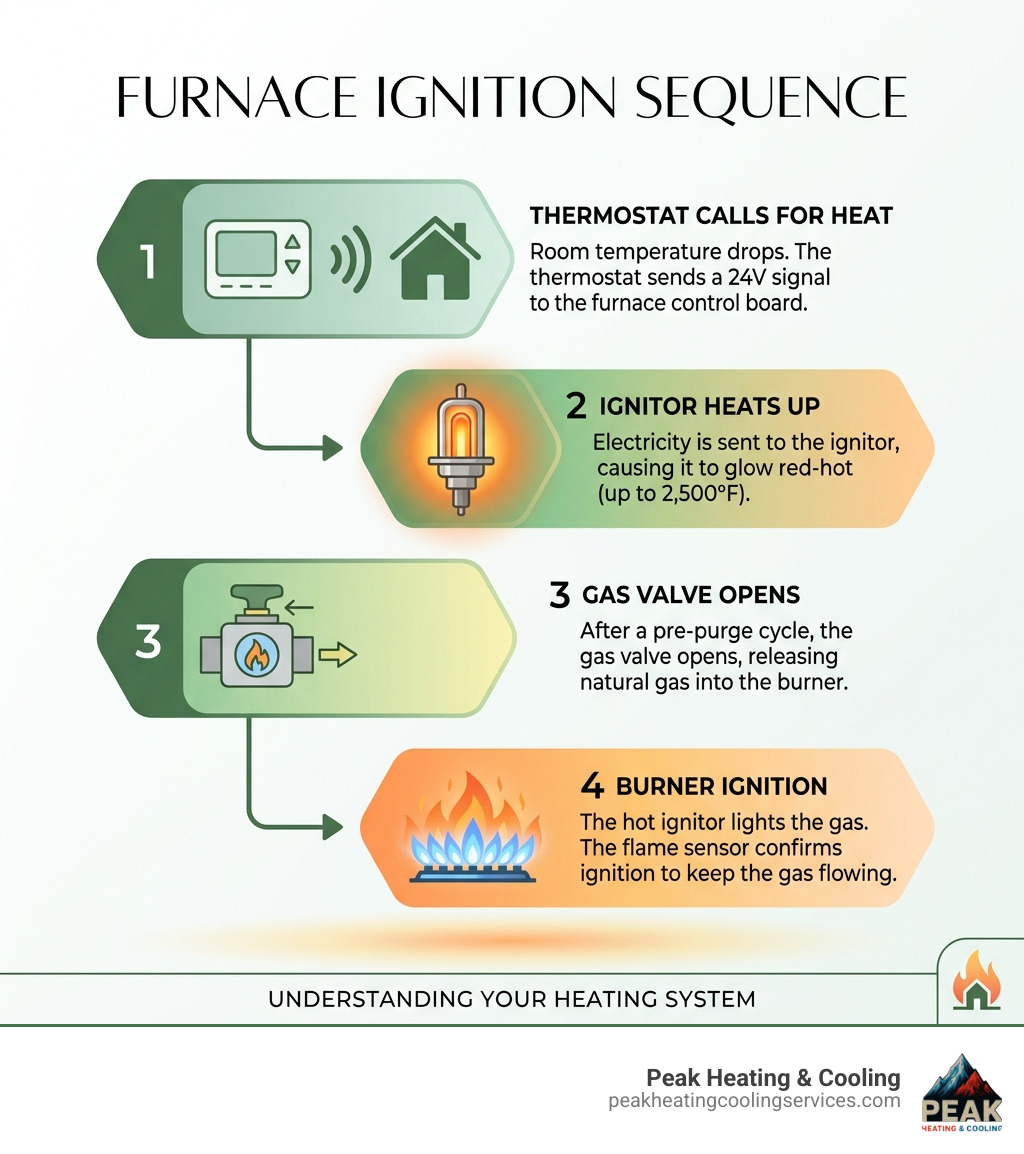
In modern heating systems, the old-fashioned standing pilot light (that tiny flame that stayed lit all winter) has been replaced by electronic ignitors. Think of your furnace ignitor like the heating element in a toaster or the spark plug in a car. When your thermostat senses the temperature in your Glenview home has dropped, it sends a 120V AC electrical signal to the furnace control board.
The board then sends power to the ignitor. As electricity flows through it, the ignitor begins to glow red-hot. Once it reaches the correct temperature, the gas valve opens, and the heat from the ignitor lights the gas to create the flames that warm your home.
According to experts at Hot Surface Igniter Replacement in Fayetteville, NC, this component is vital for a safe startup. If the ignitor doesn’t glow or reach the right temperature, the system’s safety sensors will prevent the gas valve from staying open, leaving you with a furnace that won’t kick on.
Different Types of Ignitors
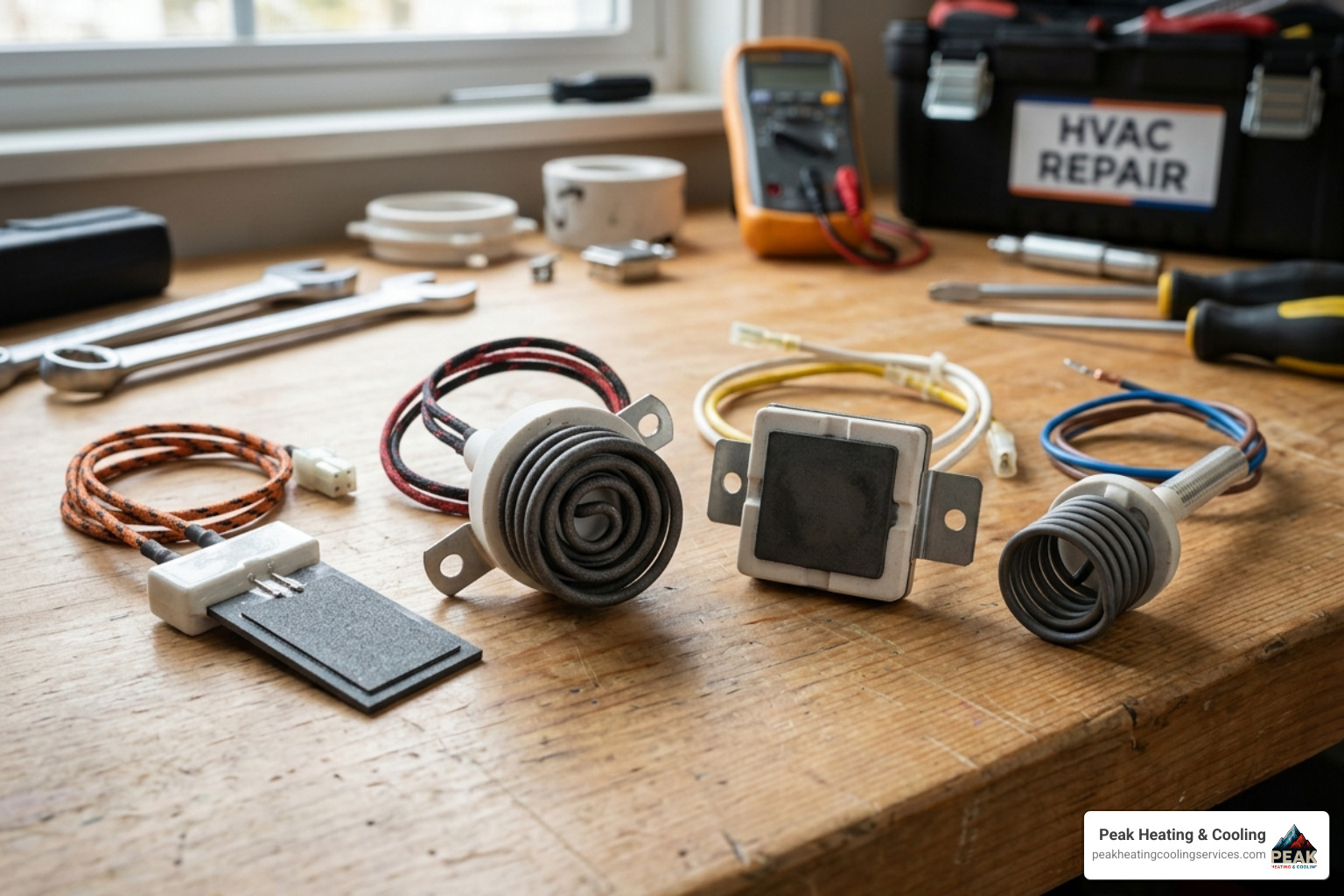
Not all ignitors are created equal. Depending on the age and brand of your system—whether it’s a Lennox, Ducane, or Trane—you likely have one of these three types:
- Silicon Carbide: These are the most common in older high-efficiency furnaces. They are flat or “M” shaped and operate at 120V. While effective, they are incredibly brittle and prone to cracking over time.
- Silicon Nitride: This is the “upgraded” version found in many newer units. Silicon nitride ignitors are more durable, heat up faster, and generally last longer than carbide versions. They are often sold as universal upgrade kits.
- Spark Igniters: Common in older gas appliances or specific boiler configurations, these create an actual electrical spark (much like a grill ignitor) to light the gas.
Silicon Carbide vs. Silicon Nitride Durability
| Feature | Silicon Carbide | Silicon Nitride |
|---|---|---|
| Typical Lifespan | 3–5 Years | 5–10 Years |
| Fragility | Extremely Brittle | High Durability |
| Heat-up Time | Slower | Rapid |
| Common Failure | Surface Cracks | Electrical Failure |
Signs You Need a Furnace Ignitor Replacement Near Me
When your furnace stops working suddenly during a Skokie winter night, the ignitor is often the prime suspect. Because it undergoes intense “thermal shock” (going from room temperature to over 2,500°F in seconds), it eventually develops microscopic cracks.
Common symptoms include:
- The “Click-Click-No-Flame” Dance: You hear the furnace click, the inducer motor starts humming, but the burners never light.
- Blower Running Cold Air: If your furnace is blowing cold air, it often means the blower is doing its job, but the ignition sequence failed.
- Visible Damage: If you pull the ignitor out and see a white “hot spot” or a visible break in the dark gray material, it’s toast.
- No Glow: If you look through the small glass viewport on your furnace door while it tries to start and don’t see a bright orange glow, the ignitor isn’t receiving power or is burnt out.
If you are finding the best furnace repair in Glenview, these are the first things our technicians look for.
Troubleshooting a Furnace Ignitor Replacement Near Me
Sometimes the issue isn’t a total burnout. You might experience short cycling, where the furnace turns on and off frequently, or intermittent heating, where it works one hour and fails the next. This can be caused by soot buildup on the ignitor or a loose wiring connection.
According to the Round Furnace Igniter technical specifications, many round-style ignitors used in Rheem or Ruud models can fail if the ceramic base becomes cracked, even if the element itself looks okay.
Testing for Continuity
The most reliable way to know if your ignitor is bad is to test it with a multimeter. This measures “continuity”—essentially checking if electricity can still flow through the part.
- Turn off power to the furnace.
- Disconnect the ignitor’s plastic wiring plug.
- Set your multimeter to Ohms (Ω).
- Touch the probes to the two pins in the plug.
A “good” ignitor will usually show a reading between 40 and 90 Ohms. If your multimeter reads “OL” (Open Loop) or infinite resistance, the internal circuit is broken, and you definitely need a replacement. Regular HVAC maintenance can help catch these issues before the first cold snap hits Chicagoland.
Step-by-Step Guide to DIY Replacement
If you’re a handy homeowner in Morton Grove or Niles, you might be tempted to tackle this yourself. It is a manageable task, but you must be extremely careful.
- Safety First: Turn off the electrical power at the breaker or the switch next to the furnace. Shut off the gas supply line for extra safety.
- Access the Burner: Remove the furnace front panels. You’ll find the ignitor near the gas burners, usually held in by one or two screws.
- Disconnect: Unplug the wire harness. Note how it’s clipped in so you can replicate it.
- Remove with Care: Unscrew the bracket. Do not drop the old ignitor—if it shatters, shards could get into the burner ports.
- Install the New Part: Reverse the steps. Ensure the new ignitor is positioned exactly like the old one so it sits in the path of the gas.
CRITICAL WARNING: Never touch the gray/black element of the new ignitor with your bare hands. The oils from your skin stay on the surface and create a “hot spot” when the ignitor heats up. This causes the part to crack and fail almost immediately. Always wear latex gloves or handle it only by the ceramic base. Proper furnace installation techniques apply even to small parts!
Choosing the Right Part for Furnace Ignitor Replacement Near Me
You can find replacements at local retailers like Grainger in Morton Grove or Johnstone Supply in Niles. When shopping, you have two choices:
- OEM Parts: These are made specifically for your brand (Trane, American Standard, Lennox). They are a guaranteed fit but often cost more.
- Universal Ignitors: Brands like White-Rodgers or Eastman make universal kits that include various brackets. These are great if you can’t find your exact model number, but you must ensure the voltage (usually 120V) matches perfectly.
Professional vs. DIY: When to Call an Expert
While the part itself might only cost $20 to $50 at a big-box store, there are several reasons why many Northfield and Wilmette residents choose professional furnace ignitor replacement near me.
- Fragility: As mentioned, these parts are like glass. One slip of the screwdriver and you’ve wasted your money on a broken part.
- Warranty: We provide guarantees on our work. If we install it and the part fails, we handle it. If you break it during a DIY attempt, you’re out of luck.
- Safety: Working around gas lines and high-voltage electricity carries risks. A pro ensures there are no gas leaks and the system is cycling safely.
- Diagnosis: Sometimes it’s not the ignitor. It could be a faulty flame sensor, a bad control board, or a clogged pressure switch. We provide a full diagnostic to ensure we’re fixing the actual problem.
If your furnace goes out at 2 AM on a Tuesday, we offer 24/7 emergency service and same-day repairs throughout the Chicagoland suburbs. You can learn more about choosing a licensed HVAC contractor here.
When to Consider a Full System Upgrade
If your furnace is over 15 years old and you find yourself calling for an ignitor replacement every couple of years, it might be time to look at the bigger picture. Frequent repairs and climbing energy bills are signs that your system is nearing the end of its life.
Newer Lennox or Ducane systems are significantly more energy-efficient and reliable. Check out our furnace replacement 101 guide to see if an upgrade makes more sense for your home’s long-term comfort.
Frequently Asked Questions
How long does a furnace ignitor typically last?
Most ignitors last between 3 to 5 years. They are considered a “consumable” part, much like lightbulbs. Factors like how often your furnace cycles and the cleanliness of your air filters can impact this lifespan. Annual tune-ups are the best way to monitor their health. For more on keeping your system running, see our HVAC repair tips for Winnetka.
Can I touch the new ignitor with my bare hands?
No. As stressed before, skin oils are the enemy of hot surface ignitors. The oil creates an uneven heat distribution that leads to premature burnout. If you accidentally touch it, you can try cleaning it gently with a cotton swab and rubbing alcohol, but it’s best to avoid contact entirely.
Why is my furnace clicking but not staying lit?
This is often a “safety lockout.” If the ignitor works but the flame sensor doesn’t “see” the fire within a few seconds, it shuts the gas off to prevent a dangerous buildup. It could be a dirty flame sensor, a faulty gas valve, or a failing ignitor that isn’t getting hot enough. If you’re worried about repair costs, we offer financing options for broken furnaces to help you get the heat back on without stress.
Conclusion
A cold house in the middle of a Chicago winter is no joke. Whether you decide to try a DIY furnace ignitor replacement near me or prefer the peace of mind that comes with professional service, getting your heat back on is the top priority.
At Peak Heating & Cooling, we’ve spent over 20 years serving our neighbors in Glenview, Northbrook, and across the Chicagoland suburbs. We specialize in Lennox and Ducane systems and offer 0% financing for qualified customers, along with 24/7 emergency service. Don’t spend another night shivering—our licensed and insured technicians are ready to provide same-day repairs and get your home cozy again.
Schedule your furnace service today with Peak Heating & Cooling