

Why Indoor Air Quality Matters in Every Chicagoland Home
The best indoor air quality solution Glenview IL depends on your specific situation — but most Glenview and North Shore homeowners benefit from a combination of these approaches:
| Solution Type | Best For | Examples |
|---|---|---|
| Source control | Eliminating the problem at its root | Sealing ducts, removing mold, switching products |
| Ventilation | Diluting and replacing stale indoor air | Exhaust fans, open windows, HRV/ERV systems |
| Air purification | Capturing or destroying airborne particles | HEPA filters, UV lights, carbon filters |
| Humidity control | Preventing mold and dryness | Whole-home humidifiers, dehumidifiers |
| Smart monitoring | Tracking air quality in real time | PM2.5 sensors, VOC monitors |
Most homes need more than one of these working together.
Understanding Indoor Air Quality and Its Impact on Health
Indoor Air Quality (IAQ) refers to the condition of the air within and around buildings, specifically as it relates to the health and comfort of the people inside. Because we spend an average of 87% to 90% of our lives indoors, the air we breathe in our living rooms, bedrooms, and offices has a profound impact on our well-being.
When the air is filled with pollutants—which are often 2 to 5 times more concentrated than outdoor air—the effects can be immediate. You might notice short-term symptoms like:
- Persistent headaches or dizziness
- Irritation of the eyes, nose, and throat
- Frequent fatigue or “brain fog”
- Worsening of asthma or allergy symptoms
However, the long-term risks are even more concerning. Scientific research suggests that prolonged exposure to poor IAQ is linked to serious respiratory diseases, heart disease, and even cancer. Fine particulate matter can travel deep into the lungs and enter the bloodstream, increasing the risk of stroke and heart attack. This is why finding a comprehensive indoor air quality solution Northbrook IL is not just about comfort; it is a critical health priority for every family in the North Shore.
Identifying Common Causes of Poor Air Quality in Chicagoland Homes
In areas like Glenview and Northbrook, our homes face unique challenges. During our humid Illinois summers and freezing winters, we keep windows shut, which traps contaminants inside.
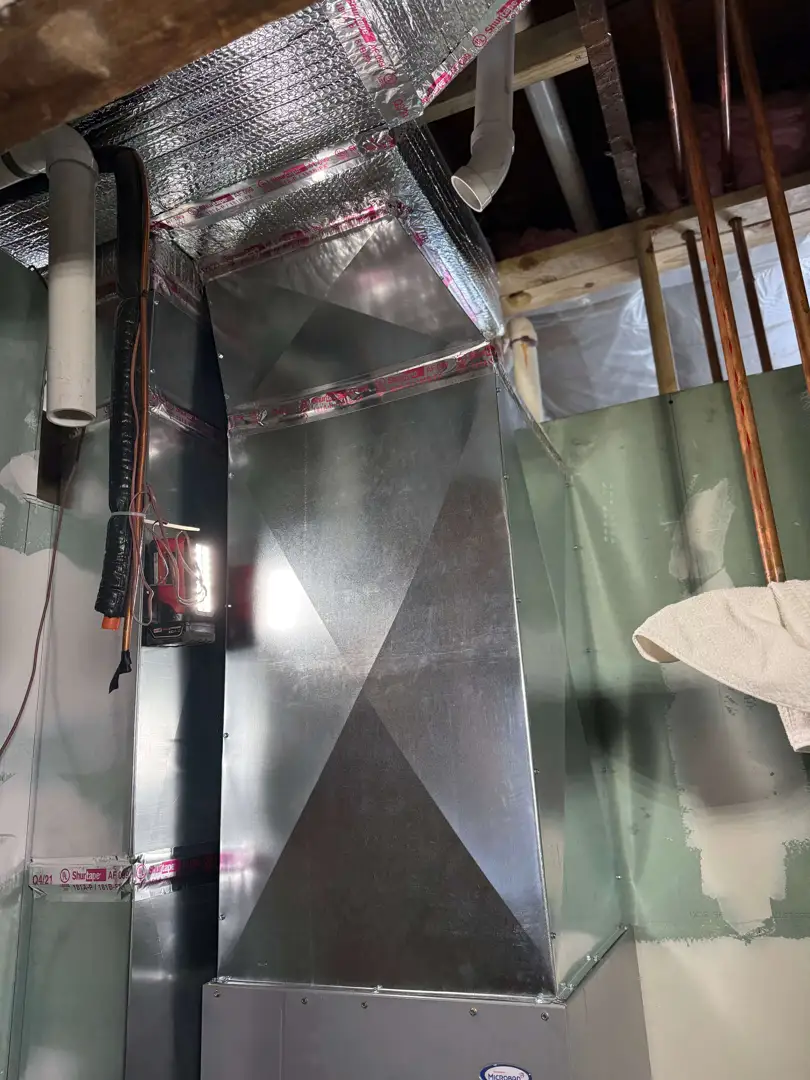
Common culprits for poor air quality in our region include:
- Moisture and Mold: High humidity or water leaks can lead to mold growth. Mold spores are major respiratory irritants and can hide behind walls or inside damp ductwork.
- Volatile Organic Compounds (VOCs): These are gases emitted from household items like cleaning products, paints, new furniture, and even some carpets.
- Radon: This naturally occurring radioactive gas is the second leading cause of lung cancer in the U.S. The EPA recommends testing every home for radon, regardless of its location.
- Combustion Byproducts: Furnaces, space heaters, and gas stoves can release carbon monoxide and nitrogen dioxide if they aren’t properly vented or maintained.
- Dust and Dander: Over time, dust and pet dander accumulate in your vents. If your ducts have leaks, they can pull in even more debris from crawlspaces or attics. This is why duct repair and sealing is often the first step in a total IAQ strategy.
Finding the Right Indoor Air Quality Solution for Your Home
Improving your air quality doesn’t always require a massive overhaul. The EPA suggests three basic strategies: source control, improved ventilation, and air cleaners.
| Strategy | How it Works | Effectiveness |
|---|---|---|
| Source Control | Removing or sealing off the source of pollution (e.g., sealing asbestos, fixing a gas leak). | Most effective and reliable. |
| Ventilation | Bringing in outdoor air to dilute indoor pollutants. | High, but can be limited by outdoor weather or pollution. |
| Air Cleaning | Using filters or technology to pull particles out of the air. | Effective for particles; varies for gases/odors. |
For a DIY approach, simple habits make a big difference. Opening your windows for just 10 minutes a day can significantly dilute indoor pollutants. In the winter, you can use the “stack effect”—where warm air rises and escapes through upper openings while pulling in fresh air from lower levels—to help move air, though this is less controlled than mechanical ventilation.
If you notice uneven airflow or excessive dust despite cleaning, your ductwork might be the problem. You can check out this DIY guide to better airflow to see if simple repairs can help your system breathe easier.
Benefits of an Integrated Indoor Air Quality Solution
While portable units are great for single rooms, a whole-home indoor air quality solution Chicagoland integrated into your HVAC system offers unmatched protection. These systems work whenever your heating or cooling is running (or even just the fan), providing “hospital-grade” filtration for every corner of the house.
By integrating solutions like the Lennox PureAir™ system, you can filter out more than 95% of particles down to 0.3 microns and combat 90% of germs and bacteria. This is far more efficient than running multiple small units and is much quieter for the homeowner.
Selecting a Portable Indoor Air Quality Solution
If you live in an apartment or only need help in a specific nursery or bedroom, a portable purifier is a solid choice. When shopping, look for:
- CADR (Clean Air Delivery Rate): This tells you how quickly the unit can clean a specific room size.
- Noise Levels: Look for “QuietMark” certified units or those with “night modes” (around 20-30 dB).
- Filtration Type: Always opt for True HEPA. Some advanced models, like the Atem X, use HyperHEPA technology to capture ultrafine particles as small as 0.003 microns—that’s smaller than many viruses!
Advanced Filtration and Purification Technologies
Technology has come a long way from the basic fiberglass filters of the past. Today, we have access to several “super-technologies” for our air:
- HEPA Filtration: High-Efficiency Particulate Air filters are the gold standard, capturing 99.97% of particles like pollen, dust, and smoke.
- UV Lights: Installed inside your HVAC coils, these lights kill mold and bacteria before they can be blown into your living space. This also helps your AC run more efficiently by keeping the coils clean.
- Carbon Filters: These are essential for removing odors from cooking, pets, or smoke, as well as trapping harmful VOC gases that standard filters miss.
- PECO and ActivePure Technology: Some modern systems don’t just trap pollutants; they destroy them. Technologies like PECO (Photoelectrochemical Oxidation) or ActivePure (originally developed for the International Space Station) use light and catalysts to break down organic contaminants into harmless water vapor and CO2.
Managing Humidity and Smart Monitoring
In Chicagoland, humidity management is half the battle. If the air is too dry (common in winter), it can irritate your respiratory tract and cause static electricity. If it’s too humid, it becomes a breeding ground for dust mites and mold.
Smart monitoring tools are now available to help you “see” your air. Many modern purifiers and thermostats include PM2.5 sensors (for fine dust) and VOC tracking. When these sensors detect a spike—like when you’re searing a steak or using a strong cleaning spray—they can automatically ramp up your filtration system.
If you’re tired of itchy skin and static shocks during the Glenview winters, you might want to stop the static with a professional humidifier installation. Maintaining a balanced humidity level (between 30% and 50%) is a key part of any indoor air quality solution Glenview IL.
Professional Maintenance and Long-Term Strategies
The best air purifier in the world won’t help if it isn’t maintained. We recommend a “maintenance roadmap” for every homeowner:
- Filter Changes: Check your filters every 1-3 months. For better IAQ, we recommend using MERV-13 rated filters, which are thick enough to catch bacteria and smoke without overworking your furnace motor.
- Annual Inspections: Have a professional technician inspect your heat exchanger and cooling coils. A cracked heat exchanger isn’t just an efficiency issue—it’s a carbon monoxide risk.
- Source Control: When remodeling, choose “Low-VOC” paints and formaldehyde-free cabinetry.
Regular HVAC maintenance is the most reliable way to ensure your air stays clean year-round. Our team at Peak Heating & Cooling sees how a little preventative care can stop mold and dust buildup before it starts.
Frequently Asked Questions about Indoor Air Quality
How often should I change my HVAC filters?
For standard 1-inch filters, every 30 to 90 days is typical. However, if you have pets, live in a high-pollen area like Skokie or Morton Grove, or use a high-efficiency MERV-13 filter, you should check it monthly. A clogged filter restricts airflow and can actually lower your air quality by letting “bypass” air leak around the edges.
Can indoor plants significantly improve air quality?
While plants are beautiful and do produce oxygen, EPA research suggests they don’t significantly reduce pollutants in a typical home environment. You would need a literal “indoor jungle” to see a measurable drop in VOCs. They are a great supplement for mental well-being, but they aren’t a replacement for a mechanical indoor air quality solution Northbrook IL.
When should I consider professional mold testing?
If you can smell a “musty” odor but can’t see the source, or if family members experience respiratory relief only when they leave the house, it’s time for a professional assessment. Professionals use specialized equipment to measure spore counts and identify the root cause, such as a hidden leak in your ductwork.
Conclusion
Breating clean air shouldn’t be a luxury. Whether you start by opening a window or by installing a hospital-grade whole-home purification system, every step you take improves the health and comfort of your family.
At Peak Heating & Cooling, we are proud to be a family-owned, locally operated contractor serving Glenview, Northbrook, and the surrounding Chicagoland suburbs for over 20 years. We are licensed, insured, and dedicated to helping our neighbors breathe easier. If you’re ready to find the perfect indoor air quality solution Glenview IL for your space, we offer upfront pricing and 0% financing for qualified customers on new installations.
Don’t let poor air quality linger in your home. Schedule professional HVAC services with Peak Heating & Cooling today and experience the difference that truly clean air can make.