
What Is the Real Air Heat Pump Energy Usage? (Quick Answer)
If you’re comparing heating options for your home in Glenview IL, one of the biggest questions is how much energy an air-source heat pump may use through a Chicago-area winter.
Here’s a quick breakdown before we go deeper:
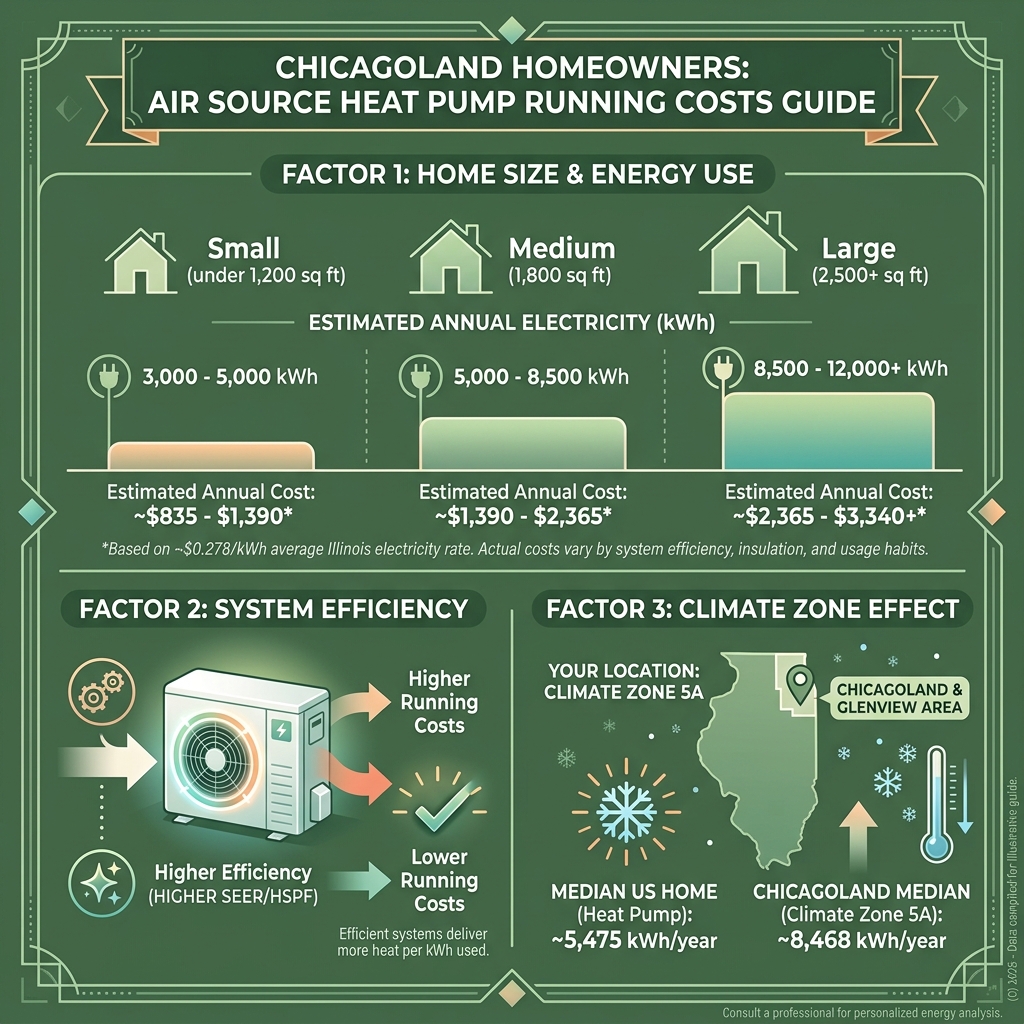
| Home Size | Estimated Annual kWh |
|---|---|
| Small (under 1,200 sq ft) | 3,000 – 5,000 kWh |
| Medium (1,800 sq ft) | 5,000 – 8,500 kWh |
| Large (2,500+ sq ft) | 8,500 – 12,000+ kWh |
The honest truth? Energy use depends heavily on your home — not just the heat pump itself.
A high-efficiency 16kW system in a drafty, poorly sealed older home will use far more electricity than a properly sized 8kW unit in a well-sealed newer build. According to data from the DOE ResStock database, the median US home uses around 5,475 kWh per year for heat pump heating — but that number swings widely, from as low as 400 kWh to over 22,500 kWh depending on climate zone and home characteristics.
Here in Climate Zone 5A — that’s the Chicago and Glenview area — the median jumps to roughly 8,468 kWh per year, reflecting our long, cold heating season.
This guide walks through the main factors that affect electricity use: system size (8kW through 16kW), outdoor temperatures, efficiency ratings, and how heat pumps stack up against gas furnaces in Illinois.
Factors Influencing Air Heat Pump Energy Usage
When we visit homes in Northbrook IL or Park Ridge IL, we often find that two identical heat pump models can lead to very different levels of electricity use. Why? Because a heat pump doesn’t operate in a vacuum. It is part of a larger system: your home.
Several critical factors dictate how hard your system has to work:
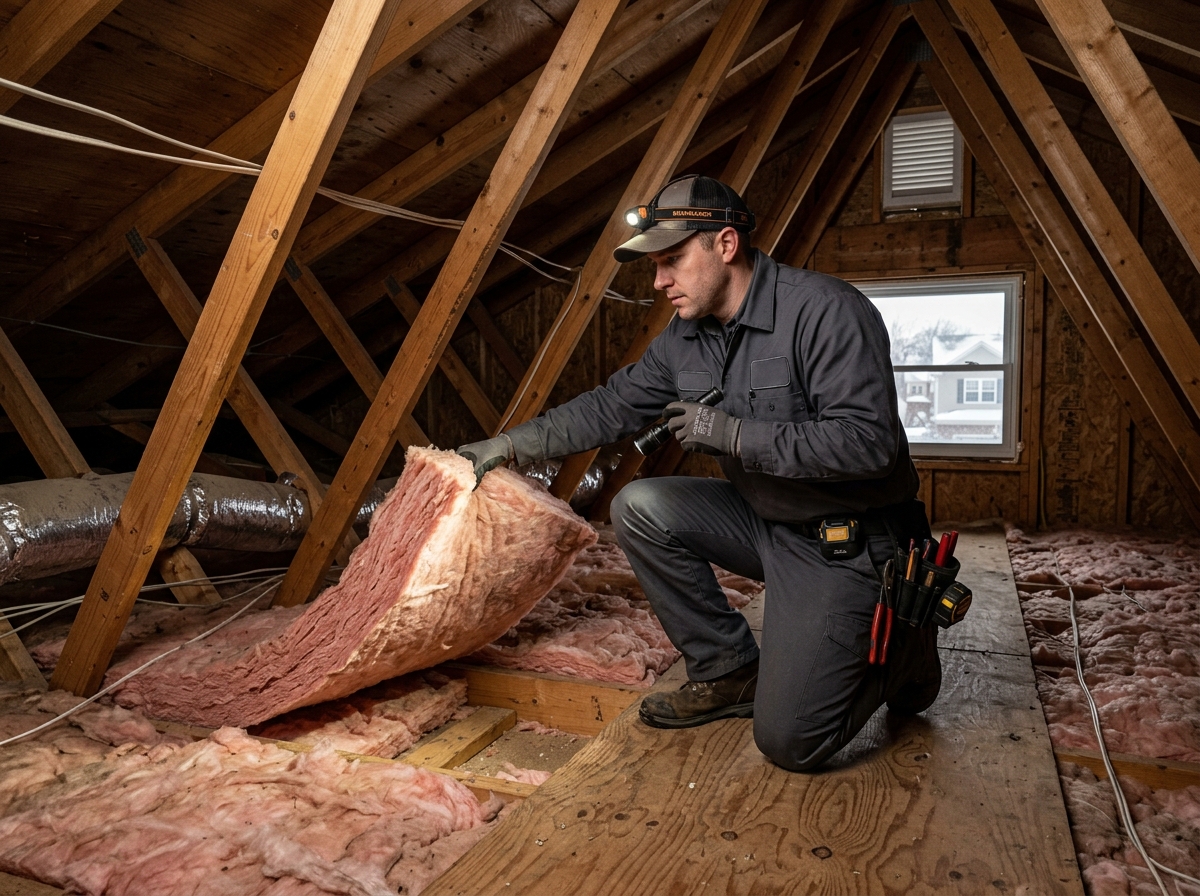
- Home Air Sealing: If your home has drafty rim joists, older windows, or noticeable air leaks, your heat pump will run longer cycles to keep up with heat loss. Tightening up the home can help lower electricity use.
- Property Size: Naturally, a 3,000 sq ft home in Wilmette IL requires more thermal energy than a 1,200 sq ft bungalow in Skokie IL. However, volume matters too — high vaulted ceilings create more space to heat.
- System Sizing: This is where many DIY or cut-rate installations fail. An undersized unit will run constantly and may rely on backup electric heat, while an oversized unit will short cycle, which can reduce efficiency. We highly recommend checking out The Ultimate Heat Pump Sizing Guide for Your Home to understand how we calculate the right fit for Climate Zone 5A.
- Ductwork Integrity: Leaky ducts in unconditioned crawlspaces or attics can waste a significant amount of the energy your heat pump produces.
- Usage Habits: If you like your home at 75°F when it’s 10°F outside, your energy draw will be significantly higher than someone who keeps the thermostat at 68°F.
Impact of Outdoor Temperatures on Air Heat Pump Energy Usage
In the Chicagoland area, our winters are the ultimate test for any HVAC system. Modern inverter-driven heat pumps are highly capable in cold weather, but they do behave differently as the mercury drops.
Scientific research on inverter-driven heat pumps in cold climates shows that while these systems can maintain impressive efficiency at low temperatures, their “Coefficient of Performance” (COP) naturally declines as it gets colder.
When temperatures fall below freezing, the outdoor unit may enter a defrost cycle to melt ice buildup on the coils. During this brief window, the system uses extra electricity. If the outdoor temperature drops below the heat pump’s balance point, the system may engage supplemental heat strips (electric resistance heat). These strips provide a necessary boost but use much more electricity than the heat pump’s primary compressor. This is one reason we often recommend cold-climate models for homeowners in Glencoe IL and Winnetka IL.
Calculating Air Heat Pump Energy Usage by Home Size
To give you a realistic idea of what to expect, we’ve broken down estimated energy usage based on typical Chicagoland heating degree days.
| System Size (kW) | Typical Home Size (sq ft) | Est. Annual Heating kWh | Est. Annual Cooling kWh |
|---|---|---|---|
| 8kW | 1,000 – 1,400 | 4,200 kWh | 850 kWh |
| 12kW | 1,600 – 2,000 | 6,800 kWh | 1,200 kWh |
| 16kW | 2,400 – 3,000+ | 9,500 kWh | 1,800 kWh |
Estimates based on median energy intensity of 3.84 kWh per square foot per year for Climate Zone 5A.
For a standard 1,800 sq ft home, the national median usage is around 5,475 kWh, but because our Illinois winters are more demanding, a well-maintained system in Des Plaines IL or Mount Prospect IL usually lands between 6,500 and 8,500 kWh for the full year.
Efficiency Ratings and Energy Consumption
Understanding the stickers on your unit can help you predict electricity use through the heating and cooling season.
- COP (Coefficient of Performance): This is the ratio of heat delivered to electricity consumed. A COP of 3.0 means for every 1 unit of electricity you use, you get 3 units of heat. Scientific research on Coefficient of Performance (COP) metrics highlights that while electric baseboard heaters have a COP of 1.0, high-end heat pumps can achieve COPs of 3.0 to 4.0 in milder weather.
- HSPF2 (Heating Seasonal Performance Factor): This measures heating efficiency over an entire season. In Illinois, you want an HSPF2 of at least 9.0.
- SEER2 (Seasonal Energy Efficiency Ratio): This measures cooling efficiency. Since heat pumps provide AC in the summer, a high SEER2 (16+) helps keep summer electricity use lower.
At Peak Heating & Cooling, we frequently install Lennox and Ducane systems because they offer strong efficiency and dependable performance for Midwestern conditions.
Heat Pumps vs. Gas Furnaces in Illinois
This is a common conversation in Glenview IL and Northbrook IL. Traditionally, natural gas has been very common in Illinois homes, but many homeowners are now comparing heat pump performance, seasonal efficiency, and long-term comfort.
In a “hybrid” or dual-fuel setup, we pair a high-efficiency heat pump with a gas furnace. The heat pump handles heating during the fall and spring, and the gas furnace takes over when temperatures drop into the single digits.
This approach offers the best of both worlds:
- Efficient electric heating during shoulder seasons.
- Reduced carbon footprint by using electricity for much of the year.
- Reliability during extreme Chicago “Polar Vortex” events.
To keep either system running at peak performance, regular HVAC Maintenance is non-negotiable. A dirty coil or a clogged filter can drive up energy use quickly.
How to Lower Your Monthly Energy Bills
You don’t have to just live with high utility bills. There are practical steps you can take to keep your heat pump energy use in check:
- Smart Thermostats: Installing a Nest, Ecobee, or Honeywell thermostat allows the system to optimize its run times. Avoid the “setback” trap — heat pumps are most efficient when they maintain a steady temperature rather than trying to recover 10 degrees in an hour.
- Annual Tune-ups: Our 20+ years of experience shows that a well-calibrated system uses less power. We check refrigerant levels and clean the outdoor fan to ensure maximum airflow.
- Duct Sealing: Leaky ducts can waste a surprising amount of heated air. Sealing problem areas can improve comfort and system performance.
- 0% Financing for Upgrades: If your old system is driving up energy use, don’t wait for a total breakdown. We offer 0% financing options for qualified customers looking to upgrade to a high-efficiency Lennox or Ducane system.
Frequently Asked Questions about Air Heat Pump Energy Usage
Does a heat pump use more energy at higher thermostat settings?
Yes. The difference between the outdoor air and your desired indoor temperature affects energy draw. If it’s 20°F outside and you want it to be 75°F inside, the compressor has to work much harder than if you set it to 68°F.
What is the typical value of a high-efficiency system?
While the initial transition is a significant step compared to a standard AC/furnace combo, the efficiency gains are substantial in the Chicagoland area. Homeowners may also benefit from federal tax credits and local utility incentives from ComEd and Nicor. Over a 15-20 year outlook, the energy savings and property value increase often make it a strong long-term choice.
How do Chicagoland winters impact efficiency?
In Climate Zone 5A, we expect a seasonal efficiency level that is lower than what you’d see in milder climates. However, modern cold-climate models are designed to provide strong heating capacity down to 5°F or even lower. You may see more frequent defrost cycles during humid snowfalls, which is normal. If your system is blowing cold air or the outdoor unit is encased in a solid block of ice, you may need an emergency heating repair.
Conclusion
Navigating air heat pump energy usage doesn’t have to be a guessing game. By choosing the right system size, improving air sealing, and staying on top of maintenance, you can enjoy a comfortable, energy-efficient home all year round.
At Peak Heating & Cooling, we bring over 20 years of experience to every job site in Glenview IL, Northbrook IL, and the surrounding Chicagoland suburbs. We are a family-owned, licensed, and insured contractor committed to honest, upfront communication. Whether you need heat pump installation Glenview IL, heat pump maintenance Northbrook IL, furnace repair Skokie IL, or 24/7 emergency service, we are here to help.
Ready to talk through the right heating setup for your home? Call Peak Heating & Cooling today or explore our full range of Services to schedule your consultation. We offer same-day service and flexible payment plans to help keep your home comfortable through every Illinois season.