
Why AC and Furnace Maintenance Matters for Chicagoland Homeowners
AC and furnace maintenance is the single most effective thing you can do to keep your home comfortable year-round — and avoid a nightmare breakdown on the coldest night of a Chicagoland winter.
Here’s what you need to know upfront:
| Task | Who Does It | How Often |
|---|---|---|
| Replace air filter | Homeowner | Every 1-3 months |
| Clean vents and registers | Homeowner | Seasonally |
| Clear debris around outdoor unit | Homeowner | Seasonally |
| Test thermostat | Homeowner | Before each season |
| Professional furnace tune-up | Licensed technician | Every fall |
| Professional AC tune-up | Licensed technician | Every spring |
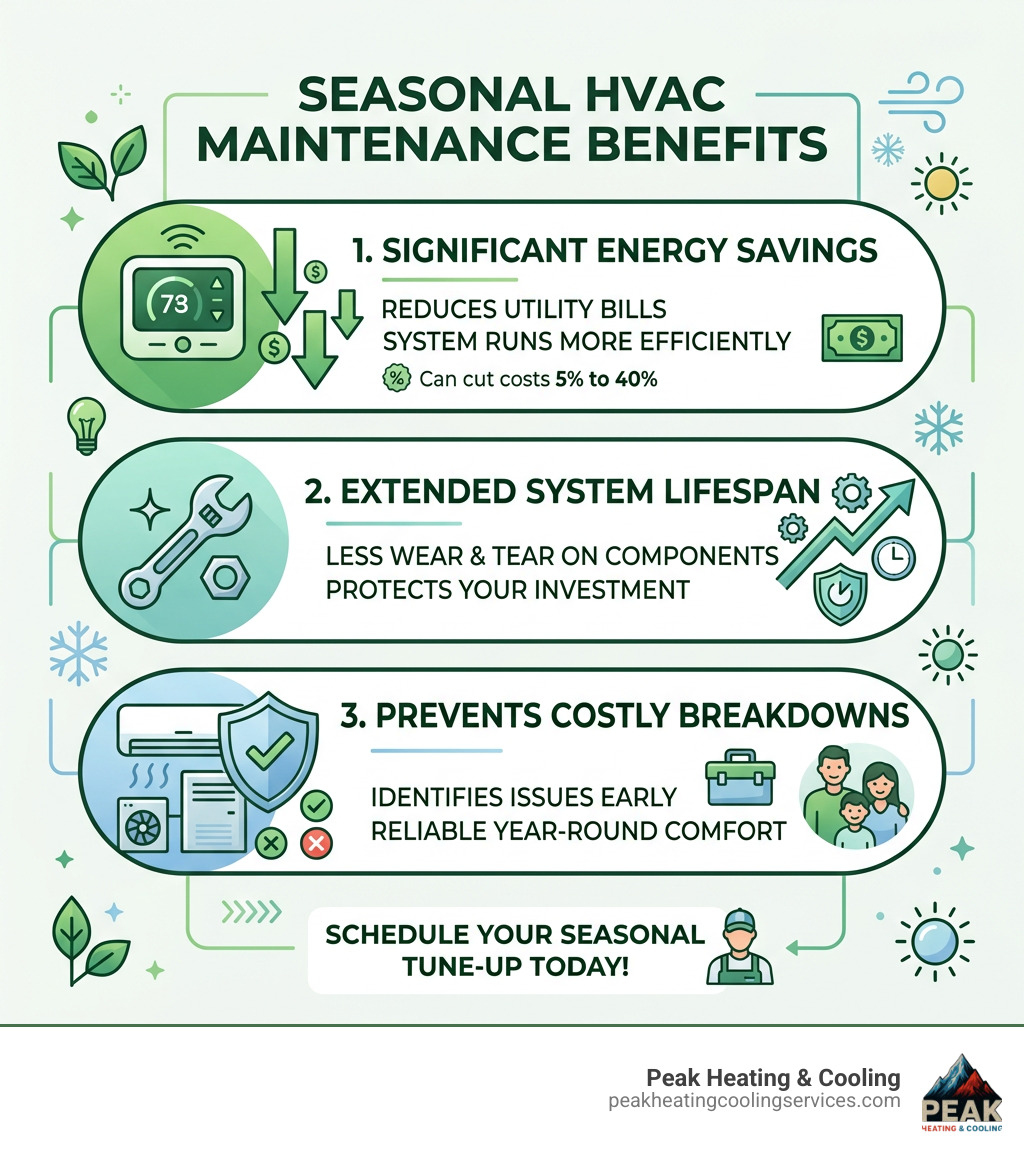
Skipping routine maintenance doesn’t just cost you comfort — it costs you money. Effective maintenance can cut HVAC energy costs by anywhere from 5 to 40 percent. And a typical U.S. home already loses 20-30% of its conditioned air through leaky ducts alone.
For homeowners in Glenview, Northbrook, Skokie, and across the North Shore, the stakes are especially high. Chicagoland winters are brutal. Summers aren’t much kinder. Your furnace and AC work harder here than almost anywhere in the country — and they need regular care to keep up.
This guide walks you through everything: what you can do yourself, what a licensed technician should handle, when to schedule service, and what warning signs mean it’s time to call Peak Heating & Cooling.
Why Regular AC and Furnace Maintenance is Essential
We often compare your HVAC system to a car. You wouldn’t drive 50,000 miles without an oil change, yet many homeowners expect their furnace to run for 2,000 hours a year without a single check-up. Regular HVAC Maintenance is the “oil change” your home needs to stay efficient.
When your system is clean and well-lubricated, it doesn’t have to work as hard to reach your target temperature. This directly translates to lower utility bills and a longer lifespan for your equipment. According to the Department of Energy, Maintaining your Air Conditioner and furnace can prevent the 15% efficiency drop caused by common airflow problems.
Preventing Emergency HVAC Chicagoland Situations
There is nothing worse than waking up to find the furnace went out when it’s ten below zero in Northbrook. Most emergency HVAC service calls we receive could have been prevented with a simple seasonal inspection.
During a tune-up, we look for the small red flags that homeowners might miss:
- Strange noises: Squealing belts or banging metal often signal a part is about to fail.
- Uneven heating: If the living room is freezing but the bedroom is sweltering, your system is struggling.
- Energy bill spikes: A sudden jump in costs usually means your system is working overtime to compensate for a dirty component.
- Pilot light issues: A flickering or yellow flame on a gas furnace can be a serious safety warning.
Maintaining Manufacturer Warranties
If you have a high-end Lennox system or reliable Ducane equipment, you likely have a manufacturer’s warranty protecting your investment. However, almost all manufacturers require proof of annual professional service to keep that warranty valid. If a major component like a compressor or heat exchanger fails and you haven’t had your ac and furnace maintenance performed, the manufacturer may deny your claim. We provide the professional documentation you need to keep those protections in place.
Homeowner Checklist for Seasonal HVAC Care
While complex mechanical work requires a pro, there is plenty of “HVAC TLC” you can handle yourself. Keeping your system clean is half the battle. You can start by ensuring all supply and return vents are open and unobstructed by furniture or rugs.
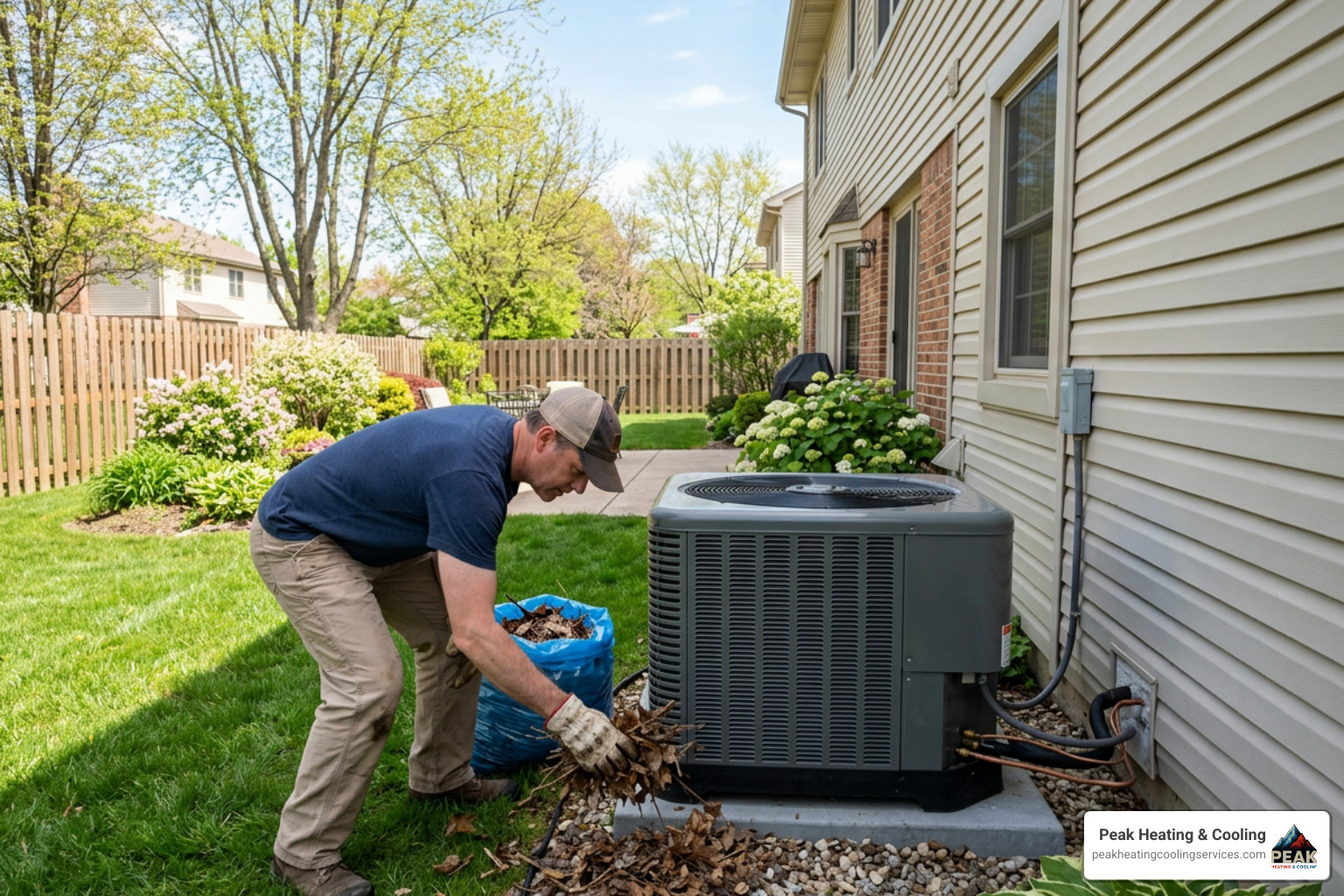
In the spring, head outside to check your AC condenser. Remove any tall grass, leaves, or “cottonwood fluff” that has accumulated against the fins. We recommend keeping at least a two-foot “clear zone” around the unit to ensure proper heat transfer. For a deeper look at what you can handle, check out our HVAC Maintenance Roadmap.
Replacing Filters for AC and Furnace Maintenance
The single most important DIY task is changing your air filter. A dirty filter is the leading cause of HVAC breakdowns. It restricts airflow, which can cause your furnace to overheat and “short cycle” or cause your AC coils to freeze into a block of ice.
- Frequency: Check your filter monthly. If it looks grey or dusty, replace it. Most homes in the Chicagoland area need a new filter every 30 to 60 days, especially if you have pets.
- MERV Ratings: While high-efficiency filters trap more dust, they also make your motor work harder. We generally recommend a MERV 8 to 11 for residential homes to balance filtration and airflow.
- Dust Reduction: Regular changes keep your home cleaner and reduce allergens, which is a win for everyone in the house.
Preparing for a Chicagoland Winter
In our neck of the woods, “winterizing” is a survival skill. If your house won’t warm up or you notice the furnace not blowing heat, it might be too late for preventive steps. Before the first frost:
- Clear Intake Pipes: Ensure the white PVC pipes exiting the side of your house aren’t blocked by snow or bird nests.
- Seal Drafts: Use weatherstripping around windows to keep the heat inside, reducing the load on your furnace.
- Switch the Humidifier: If your furnace has a built-in humidifier, change the water panel and turn the humidistat to the “winter” setting (usually 35-45%).
What Happens During a Professional Tune-Up?
When we arrive for a professional ac and furnace maintenance visit, we go far beyond what a homeowner can see. A professional tune-up typically takes about an hour and involves a comprehensive Maintenance Checklist designed to optimize every moving part.
Professional Steps for AC and Furnace Maintenance
Our technicians perform deep-cleaning and technical adjustments that keep your system running like new. For our Furnace Repair Services and maintenance, this includes:
- Heat Exchanger Inspection: We check for tiny cracks that could leak carbon monoxide.
- Burner Cleaning: We remove soot and debris to ensure a clean, efficient burn.
- Refrigerant Levels: For AC units, we check for leaks and ensure the “charge” is correct—too much or too little refrigerant can kill a compressor.
- Coil Cleaning: We clean the evaporator and condenser coils to improve heat transfer.
- Lubrication: We oil motors and bearings to reduce friction and electrical draw.
Safety Checks and Performance Testing
Safety is our primary concern. During a furnace tune-up, we test for gas leaks and measure manifold pressure to ensure the gas is burning at the correct rate. We also perform a combustion analysis to ensure your home is safe from carbon monoxide. Finally, we recalibrate your thermostat to ensure the temperature you see on the screen is the actual temperature in the room.
When to Schedule Service and Warning Signs to Watch For
Timing is everything. We recommend scheduling your spring AC tune-up in Northbrook or Glenview during March or April. This allows us to catch issues before the first 90-degree day hits. Similarly, a pre-winter furnace inspection in Chicagoland is best handled in September or October. Scheduling during these “shoulder seasons” helps you avoid the long wait times that occur when everyone else’s system breaks down at once.
Identifying Symptoms of HVAC Failure
If you notice any of these symptoms, don’t wait for your scheduled maintenance—call for Air Conditioning Repair Service or heating help immediately:
- AC keeps freezing up: Usually a sign of low refrigerant or a very dirty filter.
- Smell coming from vents: A “burning” smell is common during the first furnace start-up, but a “rotten egg” smell (gas) or a persistent “musty” odor needs professional attention.
- Furnace blowing cold air: This could be a failed ignitor or a tripped safety sensor.
- Furnace making strange noise: Rattling, whistling, or grinding sounds are never a good sign.
Optimal Timing for Seasonal Maintenance
By staying ahead of the weather, you ensure your family’s comfort. We offer same-day service for many repairs, but the goal of ac and furnace maintenance is to make sure you never need that emergency call in the first place.
Improving Efficiency Through Duct Sealing and Smart Controls
Even the most efficient furnace can’t save you money if the heat is escaping into your attic or crawlspace. According to ENERGY STAR, Duct Sealing is one of the most overlooked aspects of HVAC health.
The Impact of Leaky Ductwork
A typical home loses 20% to 30% of its air through leaks, holes, and poor connections. This leads to:
- Airflow problems: Certain rooms never getting enough air.
- Poor air quality: Dust and insulation particles being sucked into the ducts from the attic.
- Higher bills: Your system running longer to make up for the lost air. Our Duct Repair and Sealing services ensure that the air you pay to heat or cool actually reaches your living space.
Upgrading to High-Efficiency Systems
If your system is over 15 years old, even the best maintenance might not be enough to keep it efficient. We specialize in Lennox furnace installation in Glenview and high-efficiency AC replacement in Northbrook.
Modern systems offer incredible benefits:
- Variable-Speed Technology: These units adjust their speed to match your needs perfectly, eliminating “hot and cold spots.”
- Smart Thermostats: We install Nest, Ecobee, and Honeywell systems that learn your schedule and save energy automatically.
- Heat Pump Installation: A great option for Chicagoland homeowners looking to reduce their carbon footprint.
- Financing: We offer 0% financing options for qualified customers to help make a new installation more manageable.
Frequently Asked Questions about HVAC Maintenance
How often should I change my HVAC filter?
You should inspect your filter every month. In most Chicagoland homes, a replacement is needed every 30 to 60 days. If you have multiple pets or suffer from allergies, you may need to change it more frequently to maintain high indoor air quality.
What are the signs my furnace needs a tune-up?
If your furnace keeps cycling on and off frequently, makes loud banging or whistling noises, or if your utility bills have climbed without a change in weather, it’s time for a tune-up. Uneven heat across different rooms is also a major red flag.
When is the best time for AC maintenance?
Early spring (March or April) is the ideal time for an AC tune-up. This ensures your system is ready for the first heat wave and allows us to find any parts that may have been damaged over the winter before you actually need the cooling.
Conclusion
At Peak Heating & Cooling, we’ve spent over 20 years serving our neighbors in Glenview, Northbrook, Skokie, and the surrounding Chicagoland suburbs. As a family-owned, licensed, and insured HVAC contractor, we know exactly what local homes need to survive our extreme seasons.
Whether you need a routine ac and furnace maintenance visit to keep your warranty valid or you need same-day furnace repair because your no heat in the house situation has become an emergency, we are here for you. We offer 24/7 emergency service and a 100% satisfaction guarantee on every job.
Don’t wait for your system to fail. Schedule your maintenance today and enjoy the peace of mind that comes with a reliable, efficient home.