
Why Every Glenview Homeowner Should Take Gas Heating System Maintenance Seriously
Gas heating system maintenance is the regular upkeep that keeps your furnace running safely, efficiently, and reliably — especially critical during harsh Chicagoland winters.
Here’s what proper gas heating system maintenance includes:
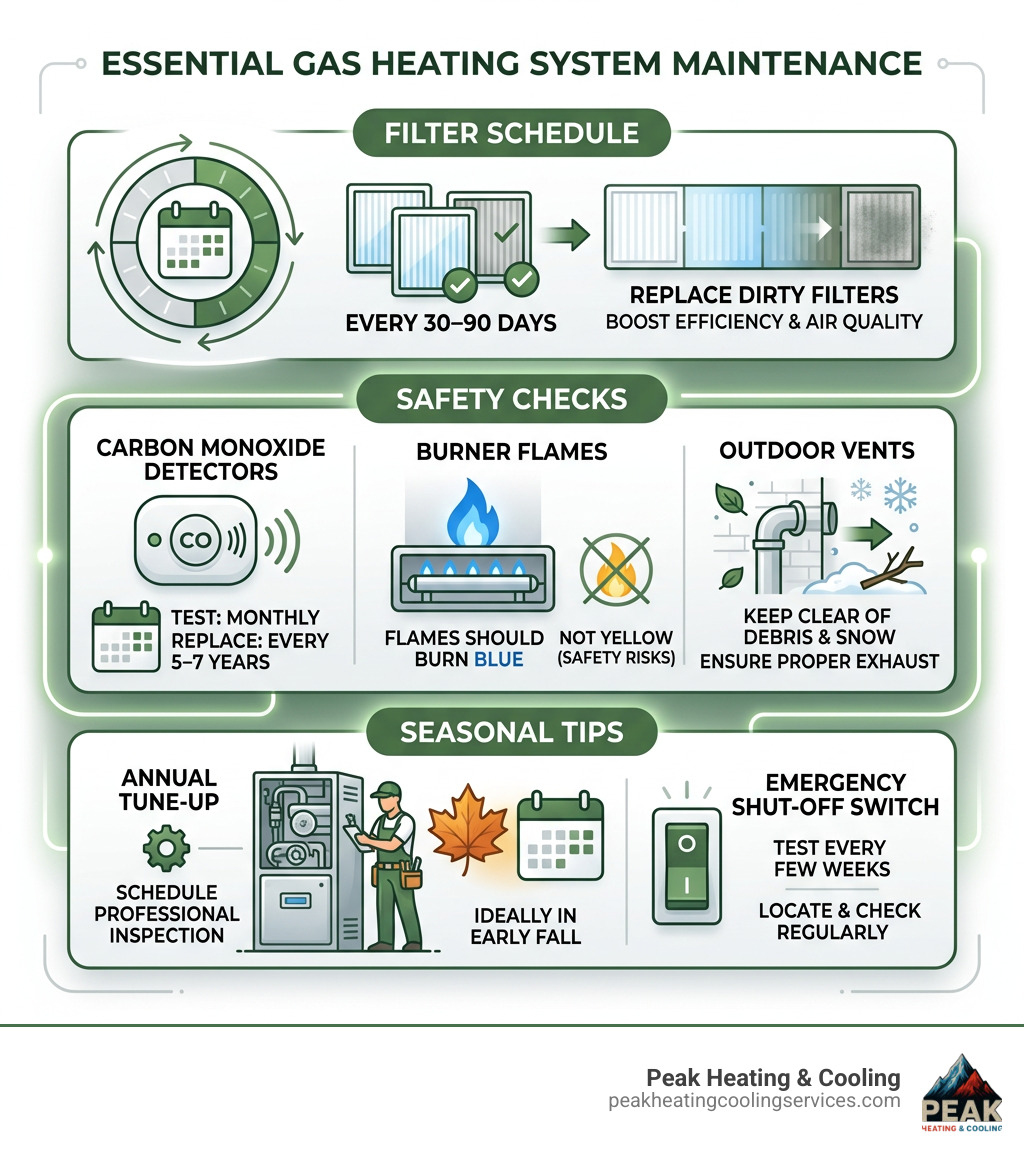
- Change the air filter every 30–90 days
- Test carbon monoxide detectors and replace them every 5–7 years
- Check burner flames — they should burn blue, not yellow
- Clear outdoor vents of leaves, snow, and debris
- Test the emergency shut-off switch every few weeks
- Schedule a professional tune-up once a year, ideally in early fall
These are the core tasks that protect your home, lower your energy bills, and extend the life of your heating system.
Heating and cooling account for roughly 43% of the average U.S. home’s utility bill. In a place like Glenview, IL — where temperatures can drop well below freezing for months — your gas furnace isn’t just a comfort appliance. It’s a necessity.
The problem is that most homeowners don’t think about their furnace until something goes wrong. A cold morning, a strange noise, or a heating bill that suddenly spikes — that’s when the phone calls start.
But here’s the thing: most of those emergency situations are preventable. A little regular attention to your gas heating system goes a long way toward avoiding the headaches, the cold nights, and the stress of a system that fails when you need it most.
This guide covers everything you need to know — from simple DIY tasks you can do today to what a professional tune-up actually includes.
Why Gas Heating System Maintenance is Essential for Your Home
Living in the Chicagoland area, we know that winter isn’t just a season; it’s a test of endurance for your home. When the “Hawk” wind blows off the lake and temperatures plummet in Skokie or Park Ridge, your furnace becomes the most important piece of equipment you own.
Regular maintenance isn’t just a “nice to have” service—it’s a financial and safety imperative. In the U.S., heating and cooling typically account for 43% of a home’s utility bill. By keeping your system tuned, you ensure that every therm of gas you pay for is actually turning into heat for your family, rather than escaping through a dirty flue or being wasted by a struggling motor.
Beyond the monthly savings, there is the matter of total system longevity. According to the Building Performance Association, outdated gas furnaces can result in significantly higher heating bills annually. Colder regions like ours often see even steeper bills. When a system is neglected, components like the blower motor and igniter have to work twice as hard to achieve the same temperature. This extra friction leads to premature part failure and a shortened lifespan for the entire unit.
Most importantly, maintenance is about safety. Gas furnaces involve combustion, which produces carbon monoxide (CO). A well-maintained system safely vents these gases outdoors. However, a cracked heat exchanger or a blocked vent can lead to CO leaking into your living spaces. Our heating contractor services are designed to catch these life-threatening issues before they become a crisis.
Homeowner Checklist: DIY Gas Heating System Maintenance Tasks
While complex mechanical work should always be left to the pros, there are several high-impact tasks you can handle yourself to keep things running smoothly between professional visits.
1. The Air Filter: Your Furnace’s Lungs The single most important thing you can do is change your air filter. A clogged filter restricts airflow, forcing the blower motor to work harder and potentially causing the system to overheat and “limit out.”
- Schedule: Check it monthly during the winter. Replace it every 30 to 90 days.
- Pets and Allergies: If you have a golden retriever in Wilmette or kids with allergies, you’ll likely need to change it every 30 days.
- Direction Matters: Always look for the arrow on the filter frame; it should point toward the furnace, in the direction of the airflow.
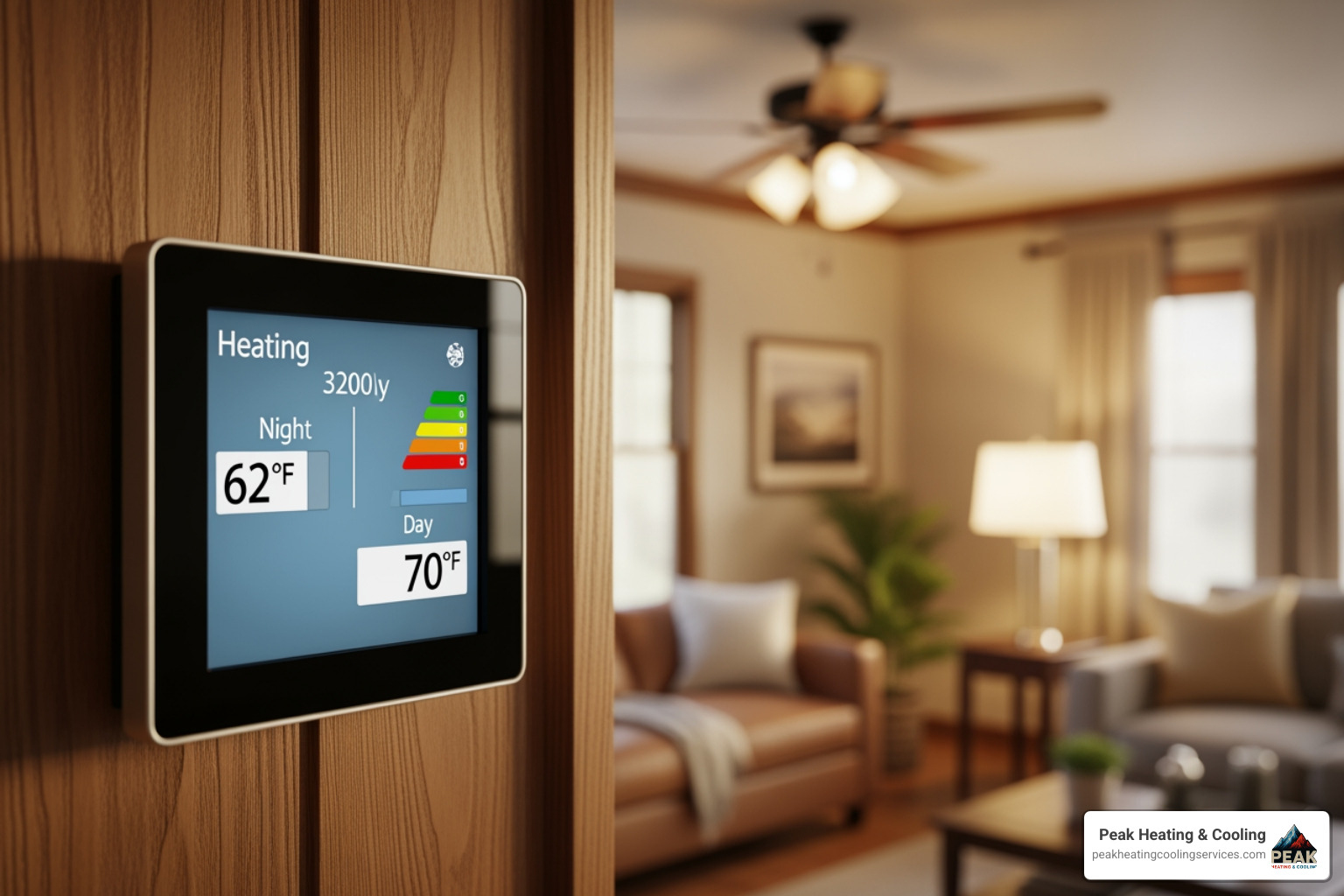
2. Thermostat Maintenance If your furnace isn’t kicking on, it might just be the thermostat. If yours isn’t hardwired, change the batteries every fall. Ensure it is set to “Heat” and the “Auto” fan setting to save energy.
3. Clearing the Path Walk around your home and ensure that return grilles (the big vents that suck air in) and supply registers (the ones that blow hot air out) aren’t blocked by furniture, rugs, or heavy drapes. If air can’t circulate, your house won’t warm up evenly. You can also use a vacuum attachment to pull dust out of these grilles to improve indoor air quality. If you find that even with clear vents your house is still cold, you may need furnace repair services to investigate ductwork or blower issues.
Safety Checks and Visual Inspections
Safety is our #1 priority. Before the snow starts piling up in Morton Grove or Des Plaines, perform these quick visual checks:
- Carbon Monoxide Detectors: Ensure you have CO detectors on every level of your home and near sleeping areas. These devices have a lifespan of 5 to 7 years. If yours are older than that, replace them immediately.
- The Flame Test: If your furnace has a viewing window, look at the burner flame. It should be a steady, crisp blue. A flickering yellow or orange flame is a major red flag—it indicates incomplete combustion and potential carbon monoxide production.
- The “Area of Clearance”: We recommend keeping at least three feet of clear space around your furnace. Never store flammable liquids, paint thinners, or stacks of old newspapers near the unit.
- Outdoor Venting: For high-efficiency units that vent through PVC pipes on the side of the house, ensure they aren’t blocked by autumn leaves or bird nests. During a heavy Chicagoland snowstorm, clear away any drifts that might cover these pipes; a blocked exhaust will cause your furnace to shut down instantly for safety.
For a full list of what we look for during an inspection, check out more info about our services.
What to Expect During a Professional Gas Heating System Maintenance Visit
When a technician from Peak Heating & Cooling arrives at your Glenview home for a tune-up, they aren’t just there to change a filter. A professional gas furnace maintenance procedure is a deep-dive into the “health” of your system.
Key steps in a professional tune-up include:
- Combustion Analysis: We use specialized tools to measure the gases leaving your system. This ensures the furnace is burning fuel cleanly and efficiently.
- Heat Exchanger Inspection: We look for microscopic cracks or rust spots. This is the most critical safety check, as the heat exchanger is what keeps combustion gases separate from the air you breathe.
- Cleaning the Flame Sensor: Over time, silica and carbon buildup can “blind” the flame sensor. We clean this delicate rod to prevent the furnace from failing to light.
- Manifold Pressure Adjustment: We check that the gas pressure entering the burners is exactly to manufacturer specifications—not too high (which wastes gas) and not too low (which causes poor heating).
- Electrical Tightening: We check all wiring for signs of heat damage and tighten connections that may have vibrated loose over the previous season.
Standard vs. High-Efficiency Maintenance
Not all furnaces are maintained the same way. Here is a quick look at the differences:
| Maintenance Task | Standard Furnace (80% AFUE) | High-Efficiency (90%+ AFUE) |
|---|---|---|
| Venting Check | Inspect metal flue for rust/leaks | Inspect PVC pipes for blockages |
| Drainage | Usually not required | Flush condensate trap and lines |
| Heat Exchanger | Single primary exchanger | Primary and secondary exchangers |
| Combustion | Draft hood inspection | Sealed combustion chamber check |
Whether you have a classic model or a modern condensing unit, our team functions as a licensed and insured HVAC contractor ready to handle the specific needs of your equipment.
Recognizing Signs Your Furnace Needs Immediate Attention
Sometimes, despite your best efforts, the system will send out a distress signal. If you notice any of the following in your Glenview or Northbrook home, don’t wait for a scheduled appointment:
- Strange Noises: A loud bang at startup often means “delayed ignition,” where gas builds up before lighting. A squeal usually points to a failing belt or motor bearing.
- Short Cycling: If the furnace turns on and off every few minutes without actually reaching the temperature on the thermostat, it’s likely “short cycling.” This is often caused by a dirty filter or a faulty sensor.
- Uneven Heating: If the kitchen is sweltering but the bedrooms are freezing, you could have ductwork leaks or a blower motor that is losing its strength.
- Sudden Utility Spikes: If your gas bill jumps significantly but the weather hasn’t changed, your furnace is likely losing efficiency.
If your furnace went out or you have no heat in the house during a cold snap, we offer emergency HVAC in Wilmette and surrounding areas. We provide 24/7 service because we know that a furnace failure at 2:00 AM is a genuine emergency. If you’re experiencing these issues, see our furnace repair services page for immediate help.
When to Choose Replacement Over Continued Maintenance
Even with the best gas heating system maintenance, every furnace eventually reaches the end of its road. Most gas furnaces have a reliable lifespan of about 15 to 20 years.
If your furnace is over 15 years old and you’re facing a repair that is a major portion of the value of a new unit, it might be time to consider a replacement. Newer high-efficiency units use 20% to 50% less energy than older ones.
At Peak Heating & Cooling, we recommend and install major brands like Lennox and Ducane. These systems are built to withstand the rigors of Illinois winters while keeping your energy bills as low as possible.
Benefits of upgrading include:
- Lower Bills: Modern units often reach 96% to 98% efficiency.
- Quieter Operation: Variable-speed blowers eliminate the loud “whoosh” of old furnaces.
- Improved Comfort: Better airflow means no more cold spots in the house.
- Peace of Mind: A new warranty protects you from repair expenses for years.
We understand that a new system is a big investment, which is why we offer 0% financing options for qualified customers. Whether you need a furnace replacement in Glenview, IL or a new energy-efficient AC installation for the summer, we make the process straightforward and stress-free.
Frequently Asked Questions about Gas Heating Systems
How often should I schedule professional maintenance?
We recommend an annual tune-up every single year. The best time is early fall, before you need to turn the heat on for the first time. Regular service keeps you in compliance with manufacturer warranties—many brands will actually void your warranty if you can’t prove the system was maintained annually.
What role do MERV ratings play in my furnace filter?
MERV stands for Minimum Efficiency Reporting Value. For most Chicagoland homes, a MERV 8 filter is the “sweet spot.” It catches dust, pollen, and pet dander without being so thick that it chokes the airflow. If you go too high (like MERV 13 or 16) without a system designed for it, you can actually damage your blower motor by creating too much resistance.
What are the dangers of skipping annual inspections?
The biggest danger is safety. Without an inspection, a cracked heat exchanger could leak carbon monoxide into your home unnoticed. Beyond that, skipping maintenance leads to “emergency repair” situations—which always seem to happen on the coldest day of the year when every HVAC company is booked solid. Maintenance is the best way to ensure your system doesn’t stop working suddenly and protects you from unexpected repair expenses.
Conclusion
At Peak Heating & Cooling, we’ve spent over 20 years keeping our neighbors in Glenview, Northbrook, and throughout the North Shore warm and safe. We are a family-owned, locally operated company that believes in upfront pricing and honest advice.
Whether you need a simple fall tune-up, a complex repair, or a full system replacement, our licensed and insured team is ready to help. We take pride in our 5-star service and our commitment to the community.
Don’t wait until the first hard freeze to find out if your furnace is ready. From 24/7 emergency service to same-day repairs, we are the reliable HVAC contractor you can trust to keep your home comfortable all winter long.
Schedule your heating contractor services today and rest easy knowing your home is ready for whatever the Chicagoland winter throws our way!