

Is It Time to Replace Your Boiler? Here’s What Glenview Homeowners Need to Know
Replacing a boiler system is one of the biggest heating decisions a homeowner can make — and in Chicagoland, where winters are brutal and a failing boiler isn’t just uncomfortable, it’s a real problem.
Here’s a quick overview of what the process involves:
Key steps when replacing a boiler system:
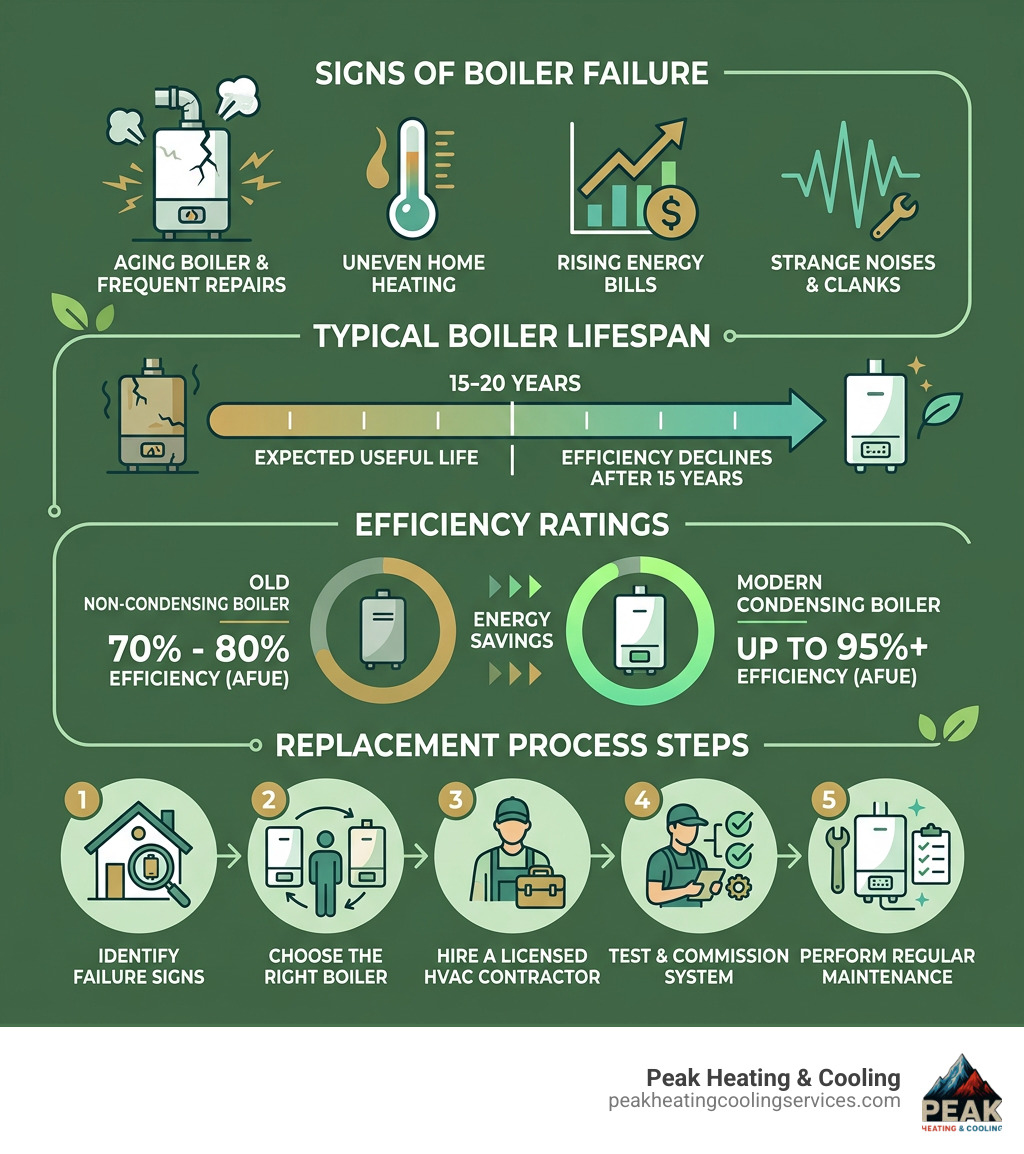
- Recognize the signs — age over 15-20 years, rising energy bills, uneven heat, strange noises, or frequent breakdowns
- Choose the right boiler — gas, electric, condensing, or combi, sized correctly for your home
- Hire a licensed HVAC contractor — proper installation, near-boiler piping, and venting are critical
- Test and commission the system — safety checks, pressure testing, and a homeowner walkthrough
- Maintain it regularly — annual inspections keep your new system running efficiently for years
Most boilers last 15 to 20 years. After that, efficiency drops and repair bills climb. A modern condensing boiler can reach up to 95% efficiency — a significant upgrade over an aging unit that may be burning fuel with little return.
Whether your boiler is showing warning signs or you’re simply planning ahead, this guide walks you through everything: what to look for, how to choose the right replacement, what installation involves, and how to protect your investment long-term.
Signs It’s Time for Replacing a Boiler System
Knowing when to pull the trigger on a new unit can save you from a “no heat” emergency in the middle of a sub-zero January night. While some issues can be fixed with furnace repair services, boilers eventually reach a point of diminishing returns.
One of the most obvious signs is age. Most boilers are designed to last between 15 and 20 years. If yours is pushing two decades, it’s likely operating at a fraction of its original efficiency. You might also notice rising energy bills despite no change in your usage habits. This happens because internal components scale up or wear down, forcing the unit to work harder to produce the same amount of heat.
Keep an eye out for these physical red flags:
- Frequent Breakdowns: If we’re visiting your home in Northbrook or Park Ridge more than once a season for repairs, those expenses are better directed toward a replacement. A good rule of thumb: if a repair exceeds 50% of the value of a new unit, it’s time to upgrade.
- Uneven Heating: Are some rooms in your Wilmette home sweltering while others are freezing? This often points to a failing pump or internal corrosion.
- Strange Noises: Banging, whistling, or gurgling (often called “kettling”) usually indicates a buildup of lime or sludge on the heat exchanger.
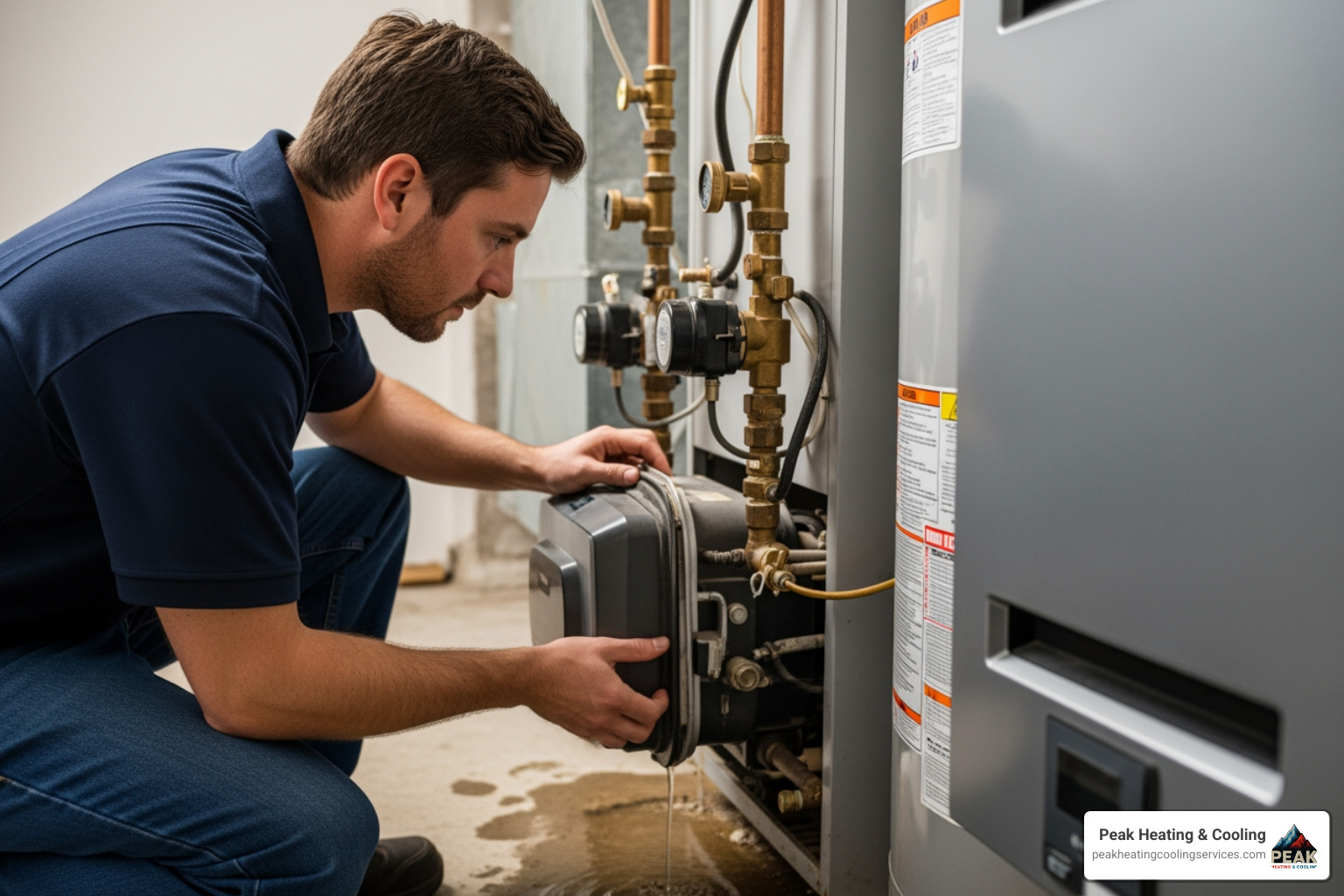
- Visible Leaks: Water pooling around the base of the unit is a serious sign of a cracked section or failing seals.
Sometimes, the issue is simpler. If only one radiator is cold at the top, you might just need to bleed it to let out trapped air. However, if the “hammers of hell” are pounding on your pipes every time the heat kicks on, the system likely needs a professional evaluation.
Choosing the Right Unit: Types and Sizing
When you decide on replacing a boiler system, you aren’t stuck with the same technology that was installed in the 1990s. Modern options are vastly more efficient and quieter. Selecting a new boiler requires looking at your fuel source and your home’s specific layout.
- Gas Boilers: The most common choice in the Chicagoland suburbs. They are generally the most efficient to run if you have a natural gas line.
- Electric Boilers: These are nearly 100% efficient at the point of use, but because electricity is often more expensive than gas in Illinois, they can lead to higher monthly energy usage.
- Condensing Boilers: These are the gold standard for efficiency. They use two heat exchangers to capture heat from exhaust gases that older models simply vent out the chimney. This technology can reduce gas usage by up to 20%.
- Combi (Combination) Boilers: Perfect for smaller homes in Skokie or Morton Grove. These compact units provide both central heating and on-demand hot water, eliminating the need for a separate water heater tank.
For homeowners looking for specialized expertise, our heating contractor services can help you navigate these choices based on your home’s existing infrastructure.
Sizing for Efficiency When Replacing a Boiler System
Bigger isn’t always better. An oversized boiler will “short cycle,” turning on and off rapidly, which wastes energy and wears out parts prematurely. Conversely, an undersized unit won’t keep you warm when the “Polar Vortex” hits.
To get the sizing right, we perform a heat-load assessment. We don’t just look at square footage; we measure walls, windows, insulation levels, and even the number of bathrooms. We highly recommend looking for ENERGY STAR certification, which ensures the unit meets strict efficiency guidelines.
Pay close attention to the AFUE (Annual Fuel Utilization Efficiency) rating. A rating of 90% or higher means 90% of the fuel consumed goes directly into heating your home. High-end models also feature modulating burners that adjust their output based on the outdoor temperature, providing a steady, comfortable heat rather than a blast of hot air.
The Professional Installation Journey
Replacing a boiler system is a complex technical task that involves high-pressure water, gas lines, and venting systems. It is not a DIY project. When you book our HVAC services, we follow a rigorous process to ensure your home stays safe and warm.
The journey begins with a thorough evaluation of your existing distribution system—whether you have radiators, baseboards, or radiant floor heating. We then carefully remove the old equipment, ensuring all utilities are safely disconnected. It’s important to note that condensing boilers have particular requirements, such as a drain for the acidic condensate they produce and specialized PVC venting rather than a traditional brick chimney.
Professional Steps for Replacing a Boiler System
A quality installation is all about the details that happen “near the boiler.”
- Near-Boiler Piping: We use threaded steel pipe for steam systems to handle expansion and contraction. Proper piping ensures you get “dry steam,” preventing that annoying banging noise in the pipes.
- Venting Requirements: We ensure the exhaust is vented safely to the outdoors, following all local Glenview and Chicagoland building codes.
- System Testing: We pressure test the entire system for leaks and calibrate the controls for maximum efficiency.
- Safety Checks: This includes testing the low-water cutoff (which prevents the boiler from firing if it’s dry) and installing fresh carbon monoxide detectors nearby.
- Homeowner Walkthrough: We don’t just leave once the heat is on. We’ll show you how to use your new thermostat and how to monitor the system’s pressure.
Steam Systems vs. Hot Water and Modern Alternatives
In many older homes in Northfield or Glencoe, you’ll find steam systems. These require a different approach than modern hot water (hydronic) systems. For steam, radiator measurement is the only way to size the boiler correctly—using “rules of thumb” based on square footage will lead to uneven heat and high bills.
We also focus on system health by installing:
- Air Separators: These “scrub” air bubbles out of hot water systems, preventing the need for constant radiator bleeding.
- Flow-Bypass Lines: Essential for protecting new boilers when they are connected to old, large-volume gravity systems.
- Threaded Steel Pipe: Specifically for steam, to ensure the joints don’t fail under the stress of heat.
If you’re looking to move away from fossil fuels, you might consider cold climate heat pumps. These systems can provide both heating and cooling. While some homeowners use them as a total replacement, many in the Chicago area opt for a hybrid heating setup, using the heat pump for most of the year and a boiler only during the most extreme cold snaps. You can find more about these options through our heating contractor services.
Ensuring Long-Term Performance and Reliability
Once your new system is in place, the goal is to make it last another 20 years. The best way to do that is through annual inspections. During a tune-up, a technician will check safety controls, clean the burner, and flush sediment from the system. This prevents the “sludge” that leads to kettling and efficiency loss.
As a licensed and insured HVAC contractor serving Glenview, Northbrook, and Wilmette, we understand the specific challenges our local climate puts on heating systems. We also know that replacing a boiler system is a significant investment, which is why we offer 0% financing options for qualified customers to help make the upgrade more manageable.
To learn more about our team and our commitment to quality, check out our HVAC contractor page.
Frequently Asked Questions about Boiler Replacement
How long does the installation process usually take?
The timeline depends heavily on the complexity of the job. A “like-for-like” swap where we replace an old boiler with a similar new model usually takes about one day. However, if we are converting your system (e.g., from oil to gas) or performing complex retrofitting, it can take 3 to 5 days.
| Installation Type | Estimated Time |
|---|---|
| Like-for-like Swap | 6–10 Hours |
| System Conversion (Oil to Gas) | 2–3 Days |
| Complex Retrofitting/Piping | 3–5 Days |
Should I consider a heat pump instead of a traditional boiler?
In Chicagoland, heat pumps have become much more viable thanks to “cold climate” technology that works down to -20°F. They offer great renewable energy compatibility and can save money on cooling in the summer. However, for many local homes with existing radiators, a high-efficiency boiler remains the most straightforward and powerful way to stay warm.
What safety features are essential during installation?
Safety is our top priority. Every installation must include a pressure relief valve to prevent the tank from over-pressurizing and a low-water cutoff to protect the burner. We also perform rigorous gas leak testing and ensure the venting system is airtight to prevent carbon monoxide from entering your living space.
Conclusion
Replacing a boiler system doesn’t have to be a stressful experience. By recognizing the warning signs early and choosing a high-efficiency unit like those from Lennox or Ducane, you can enjoy a warmer home and lower energy bills for decades to follow.
At Peak Heating & Cooling, we’ve spent over 20 years keeping our neighbors in Glenview, Northbrook, and the entire Chicagoland area comfortable. Whether you need an emergency repair or are ready to discuss a full system replacement, we are here with 24/7 emergency service and same-day repairs.
Don’t wait for the next big snowstorm to find out your boiler can’t keep up. Schedule heating contractor services with us today and ensure your home is ready for whatever the Illinois winter throws your way.