

Why Proper HVAC Installation Makes All the Difference
HVAC installation is the process of setting up a complete heating, ventilation, and air conditioning system in your home — including the furnace or heat pump, air conditioner, ductwork, and thermostat — so every component works together to keep your home comfortable year-round.
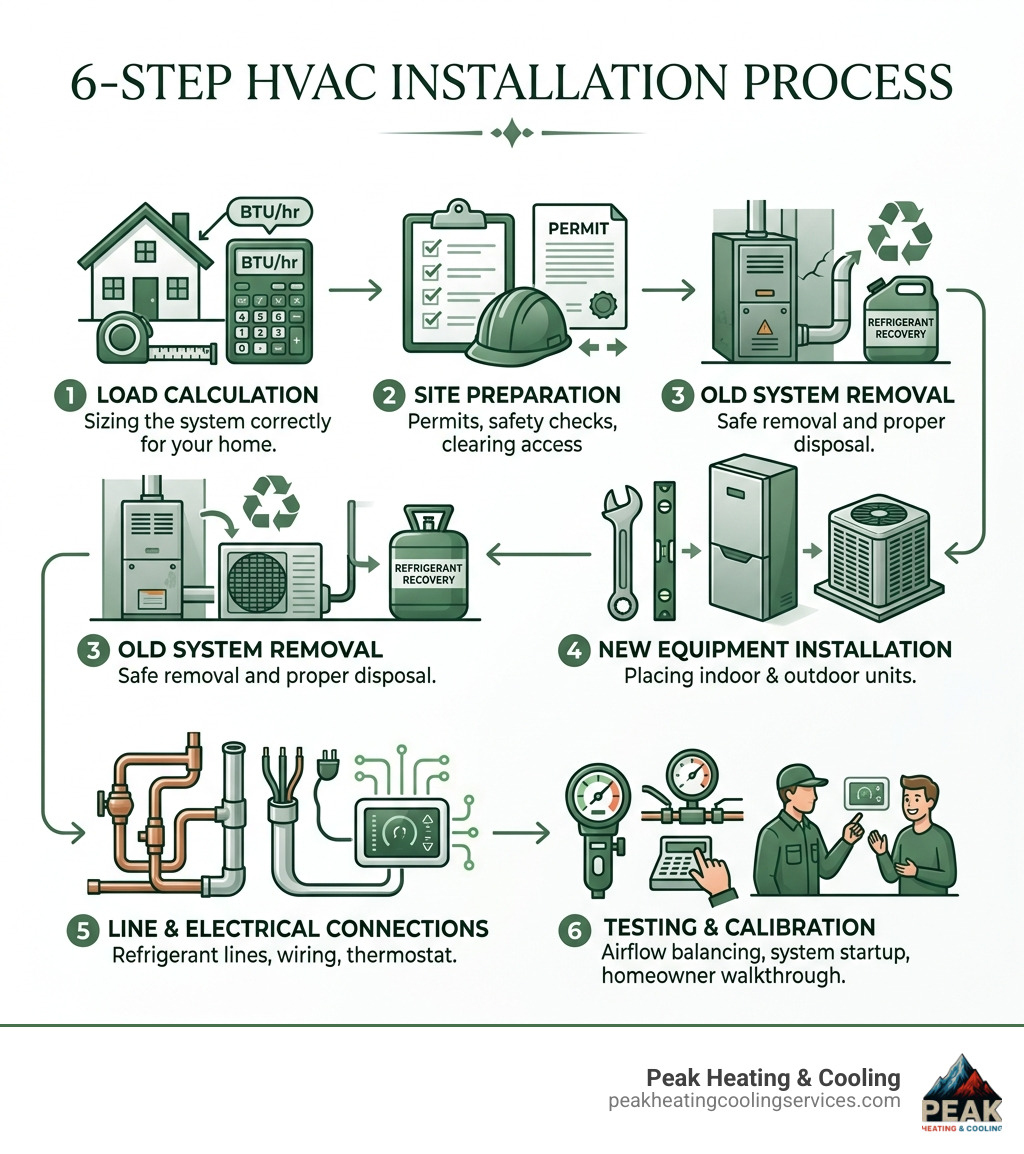
Here’s a quick overview of what the process involves:
- Load calculation — sizing the system correctly for your home
- Site preparation — permits, safety checks, clearing access
- Old system removal — safe refrigerant recovery and disposal
- New equipment installation — placing indoor and outdoor units
- Line and electrical connections — refrigerant lines, wiring, thermostat
- Testing and calibration — airflow balancing, system startup, homeowner walkthrough
For Chicagoland homeowners, getting this right isn’t optional. Illinois winters are brutal and summers get hot fast. A system that’s incorrectly sized or poorly installed won’t just underperform — it’ll increase your monthly bills and break down sooner.
The numbers back this up. A properly installed HVAC system can improve your home’s energy efficiency by up to 30%. Most systems last 10 to 15 years, but that lifespan depends heavily on how well the installation was done in the first place. Cut corners during installation and you’re looking at higher energy bills, uneven temperatures, poor indoor air quality, and repairs that add up fast.
Whether you’re replacing an aging system in Glenview, upgrading to a high-efficiency unit in Northbrook, or installing central air in a home that’s never had ductwork — understanding the installation process helps you make smarter decisions and avoid major mistakes.
Handy HVAC installation terms:
Understanding System Selection and Efficiency
Before the first tool is ever touched, we have to make sure we’re putting the right equipment in your home. Choosing an HVAC system isn’t as simple as picking the biggest unit on the shelf. In fact, “bigger is better” is one of the most dangerous myths in the industry. An oversized unit will cycle on and off too frequently, which wears out the motor and fails to remove humidity from your home.
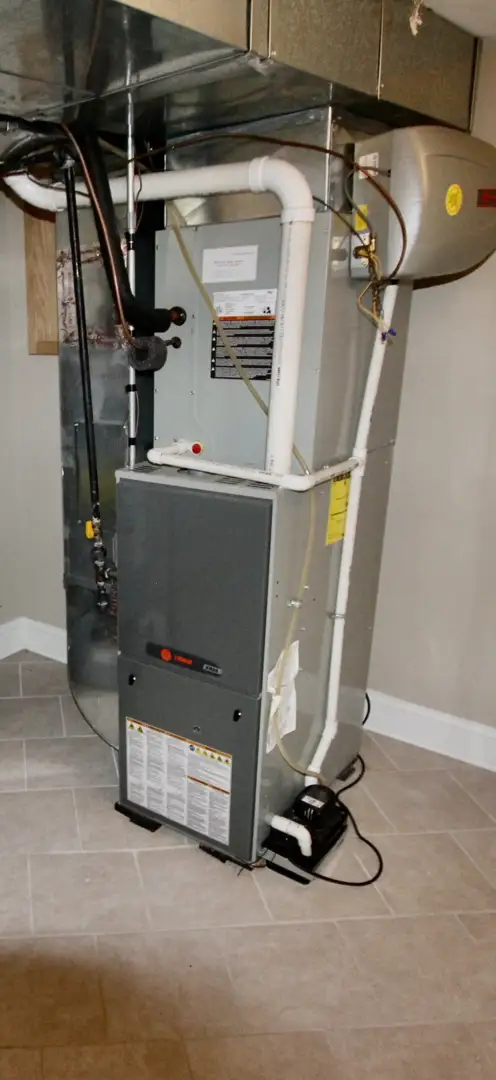
To get it right, we perform a Manual J load calculation. This isn’t a “rule of thumb” based on square footage alone. We look at your home’s insulation levels, the number and placement of windows, ceiling height, and even which direction your house faces. This ensures your new HVAC installation is perfectly sized for your specific needs in the North Shore climate.
You’ll also need to consider efficiency ratings:
- SEER2 (Seasonal Energy Efficiency Ratio): This measures cooling efficiency. As of April 2026, modern systems offer significantly higher SEER2 ratings than units from just a decade ago. Replacing a 10-year-old AC with a high-efficiency model can improve cooling efficiency significantly. For a general overview of HVAC efficiency standards, see the U.S. Department of Energy HVAC guide.
- AFUE (Annual Fuel Utilization Efficiency): This measures how efficiently a furnace converts fuel into heat. A 95% AFUE furnace means only 5% of the energy is lost through the flue.
Comparing System Types
Every home in Chicagoland is different. Some have existing ductwork, while others rely on older radiator systems. Here is how the most common options stack up:
| System Type | Best For | Key Benefit |
|---|---|---|
| Central AC & Furnace | Homes with existing ductwork | Consistent, whole-home comfort |
| Heat Pumps | Energy-conscious homeowners | Provides both heating and cooling |
| Ductless Mini-Splits | Additions or homes without ducts | Zoned control and high efficiency |
For more details on the technical side of these units, check out our HVAC Installation page.
How to Do HVAC Installation in 6 Simple Steps
Once the system is selected, the real work begins. A standard HVAC installation usually takes between 8 to 10 hours for a straightforward replacement, though complex projects involving new ductwork can take a few days.

Step 1: Professional Load Calculation and Sizing
As mentioned, we start with the data. We assess your square footage and insulation to determine the exact BTU (British Thermal Unit) requirements for your home. This step is the foundation of a system that runs quietly and efficiently. Top-tier pros everywhere prioritize this step to ensure long-term performance.
Step 2: Preparing the Installation Site
Safety is our first priority. We clear paths to the work area, lay down drop cloths to protect your floors, and shut off the main power and gas lines. We also ensure all necessary municipal permits are acquired. This is especially important in areas like Park Ridge or Wilmette, where local codes are strictly enforced.
Step 3: Removing the Existing System
Removing an old unit isn’t just about heavy lifting; it’s about environmental safety. We must carefully recover the old refrigerant according to EPA regulations so it doesn’t leak into the atmosphere. Once the old furnace and AC are disconnected, we haul them away for proper disposal, leaving a clean slate for your new equipment.
Step 4: Installing the New HVAC Installation Components
Now, the new hardware goes in. We install the indoor air handler or furnace and the evaporator coil. Outside, we set the new condenser unit on a level vibration pad to reduce noise and prevent shifting over time. For those interested in Chill Out with a Professional House AC Installation, this is where the magic happens.
Step 5: Connecting Lines and Electrical Wiring
This is the most technical phase. We run new copper refrigerant lines between the indoor and outdoor units. We then use a specialized vacuum pump to remove all air and moisture from these lines — a critical step to prevent compressor failure later. Finally, we handle the electrical connections, ensuring the circuit sizing matches the new equipment’s requirements.
Step 6: System Testing and Calibration
We don’t just flip a switch and leave. We balance the airflow to ensure every room gets the right amount of conditioned air. For gas furnaces, we perform a combustion analysis to ensure the unit is venting safely. We finish with a homeowner walkthrough, explaining how to use your new smart thermostat and how to maintain your system for the long haul.
Why Professional Expertise Matters for Your Home
It can be tempting to look at a DIY guide, but HVAC installation is one of the few home projects that truly requires a professional. Beyond the heavy lifting, you are dealing with high-voltage electricity, pressurized refrigerants, and natural gas lines.
Maintaining Your Warranty with Professional HVAC Installation
Most major manufacturers, including Lennox and Ducane, require professional installation to keep the equipment warranty valid. If a part fails three years from now and the system wasn’t installed by a licensed contractor, you could be stuck paying for the repair out of pocket. Professional installation ensures your investment is protected for its entire 15-year lifespan.
Ensuring Safety and Code Compliance During HVAC Installation
In the Chicagoland suburbs, building codes are there for a reason. Improperly vented furnaces can lead to carbon monoxide buildup, and faulty wiring is a major fire hazard. By hiring experts, you ensure the job meets all local safety standards and passes municipal inspections without a hitch. You can read more about this in our Permits and Professionals: The Park Ridge Furnace Installation Checklist.
Signs It’s Time for an HVAC Replacement in Chicagoland
How do you know if you should keep repairing your old unit or bite the bullet on a new HVAC installation? We often recommend the “repair-to-age rule”: if the investment for the repair multiplied by the age of the unit exceeds a significant threshold, it’s usually smarter to replace it.
Watch for these red flags:
- Rising Energy Bills: If your gas or electric bills are creeping up despite similar usage, your system is losing efficiency.
- Frequent Repairs: If we’ve been to your house three times in the last year, those service calls are a sign of total system failure on the horizon.
- Strange Noises: Banging, screeching, or persistent humming often indicates a failing motor or compressor.
- Uneven Temperatures: If the living room is a sauna while the bedroom is an icebox, your old system can no longer handle the load.
If your furnace is over 15 years old, replacing it can lead to a 15% reduction in heating energy expenses. For more advice on local heating needs, check out our Furnace Installation Near Me: A Guide to Staying Toasty.
Frequently Asked Questions about HVAC Systems
How long does a typical installation take?
Most standard replacements in Glenview or Northbrook are completed in a single day, typically taking 8 to 10 hours. If we are installing entirely new ductwork or a complex geothermal system, the project may take 2 to 3 days. We always aim to minimize disruption to your daily routine.
What factors influence the total investment?
Several variables affect the final investment for a new system. These include the efficiency ratings (higher SEER2 or AFUE units require a higher initial investment but save more over time), the size of your home, and whether your existing ductwork needs repair or sealing. Added features like smart thermostats or whole-home humidifiers also play a role.
Are there financing options available for new systems?
Absolutely. We know a new HVAC system is a major investment. To help our neighbors in the North Shore and Northwest Suburbs, we offer 0% financing for qualified customers. This allows you to manage the investment through manageable monthly payments while immediately benefiting from lower energy bills.
Conclusion
A new HVAC installation is more than just a home improvement project; it’s an investment in your family’s comfort and safety. At Peak Heating & Cooling, we’ve spent over 20 years serving the Glenview, IL community and surrounding suburbs like Skokie, Niles, and Des Plaines. As a locally operated, licensed, and insured contractor, we take pride in doing the job right the first time.
Whether your furnace stopped working in the middle of a January freeze or you want to get your AC ready before the first Chicagoland heatwave, we are here to help. With our 0% financing options, 24/7 emergency service, and commitment to same-day repairs, you can rest easy knowing your home is in good hands.
Ready to upgrade your home comfort? Schedule your professional HVAC installation today and experience the Peak difference.