

When Your Heat Stops Moving: What to Know About Replacing Circulator Pump on Boiler Units
Replacing a circulator pump on a boiler is one of the most common hydronic heating repairs Chicagoland homeowners face — especially when radiators go cold or you start hearing strange noises from your mechanical room.
Here’s a quick overview of the process:
- Turn off power at the breaker and confirm zero voltage with a multimeter
- Shut off isolation valves (or drain the system if none are present)
- Disconnect wiring and unbolt the old pump from its flanges
- Install the new pump with fresh gaskets and correct flow direction
- Refill the system to 12-15 psi, bleed air from all zones
- Restore power and test for leaks and proper circulation
It takes most professionals about 2-3 hours. A confident DIYer with basic mechanical and technical knowledge can complete the job in roughly the same time — if the system is straightforward.
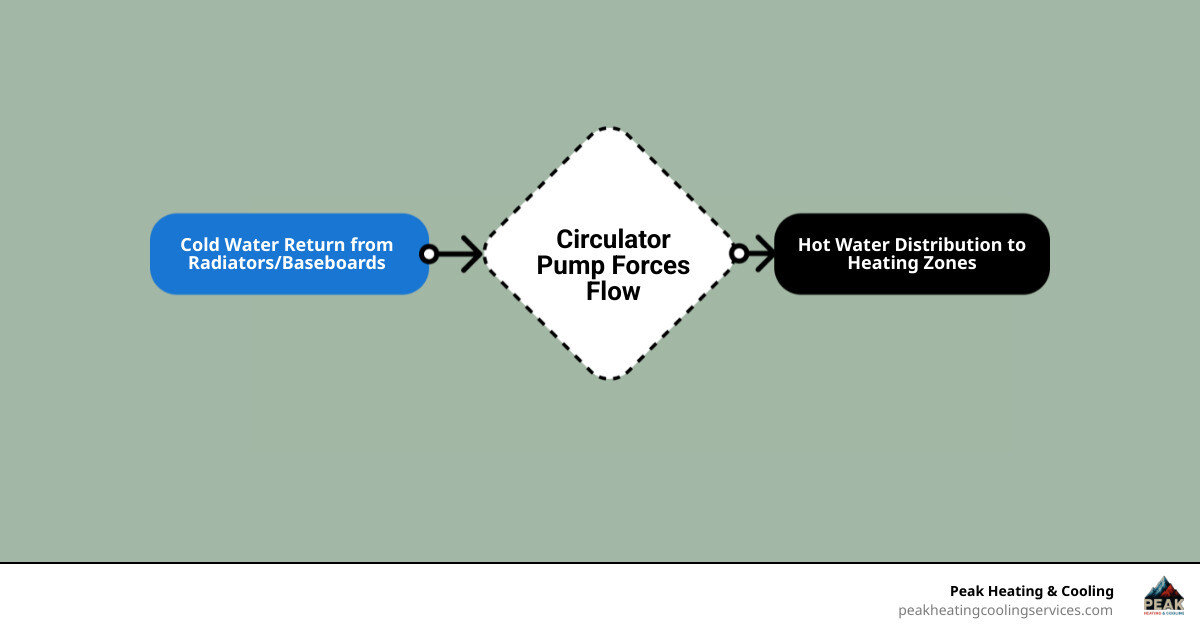
Your boiler’s circulator pump is the engine behind your comfort. It pushes hot water from the boiler through your pipes, radiators, and baseboard heaters. Without it, heat barely moves. Water will circulate slowly on its own through convection — but at only a fraction of the flow rate you need to actually warm your home on a Glenview winter night.
When the pump fails, rooms go cold fast. And in a Midwest winter, that’s not just uncomfortable — it’s a problem that needs solving today.
This guide walks you through everything: how to spot a failing pump, how to replace it safely, and when it’s smarter to call a licensed heating contractor like Peak Heating & Cooling rather than tackle it yourself.
Handy replacing circulator pump on boiler terms:
Understanding the Role of Your Boiler Circulator Pump
In a hydronic heating system, the boiler heats the water, but the circulator pump is what actually delivers that warmth to your living spaces. Think of it as the heart of your home’s vascular system. It uses an internal impeller motor to create “head pressure,” which is a technical way of saying it overcomes the friction of the pipes to keep water moving in a closed loop.
Without a functional pump, you are relying solely on convection currents — the natural tendency of hot water to rise and cold water to fall. While convection works in theory, it is incredibly slow. In a large home in Northbrook or Wilmette, convection simply won’t cut it. You need the mechanical force of the pump to maintain consistent heat distribution and proper system pressure.
When installing a circulator pump for a boiler, the flow direction is the most critical factor. Every pump has an arrow stamped into the metal casing indicating which way the water should move. If you install it backward, you’ll be fighting the natural flow of the system, leading to zero heat and potential boiler damage.
Signs You Need to Consider Replacing Circulator Pump on Boiler Units
How do you know if your pump is actually the culprit? Usually, it won’t go quietly. You might hear strange noises coming from the basement or mechanical closet. Humming or buzzing often points to an electrical issue or a stuck impeller, while grinding and clattering usually mean the internal bearings have given up the ghost.
Other common red flags include:
- Cold Radiators: If the boiler is firing but the radiators are cold (or only lukewarm at the bottom), the water isn’t circulating.
- Uneven Heating: Some zones in your house are toasty while others are freezing.
- Leaking Gaskets: Visible water pooling around the pump flanges or the motor housing.
- Tripped Breakers: A failing motor can draw too much current, causing your electrical panel to pop.
If you notice these symptoms, it’s time to act. Ignoring a failing pump can lead to the boiler overheating and shutting down entirely. You can find more info about when to say goodbye and replacing your boiler for good if the pump failure is just one of many growing issues with an aging unit. In many cases, boiler repair in Glenview, IL can save the system, but you have to catch the signs early.
Preparation and Safety for Hydronic Maintenance
Before you pick up a wrench, safety is the absolute priority. We are dealing with high-voltage electricity and scalding hot water under pressure.
- Power Isolation: Turn off the power at the main breaker. Don’t just flip the switch on the side of the boiler. Use a multimeter to verify there is zero voltage at the pump’s terminal box before touching any wires.
- Cooling Period: Never work on a hot boiler. Let the system sit until the water temperature drops significantly to avoid severe burns.
- Water Supply: Shut off the water feed to the boiler.
- Tool Check: You’ll need two large pipe wrenches (one to turn the bolt, one to hold the pipe steady), wire cutters, a screwdriver, and a bucket for the inevitable drips.
According to Grundfos circulator replacement guides, preparation is 90% of the job. Having the right gaskets and a matching replacement pump on hand before you disconnect anything will prevent your home from turning into an icebox while you run to the hardware store.
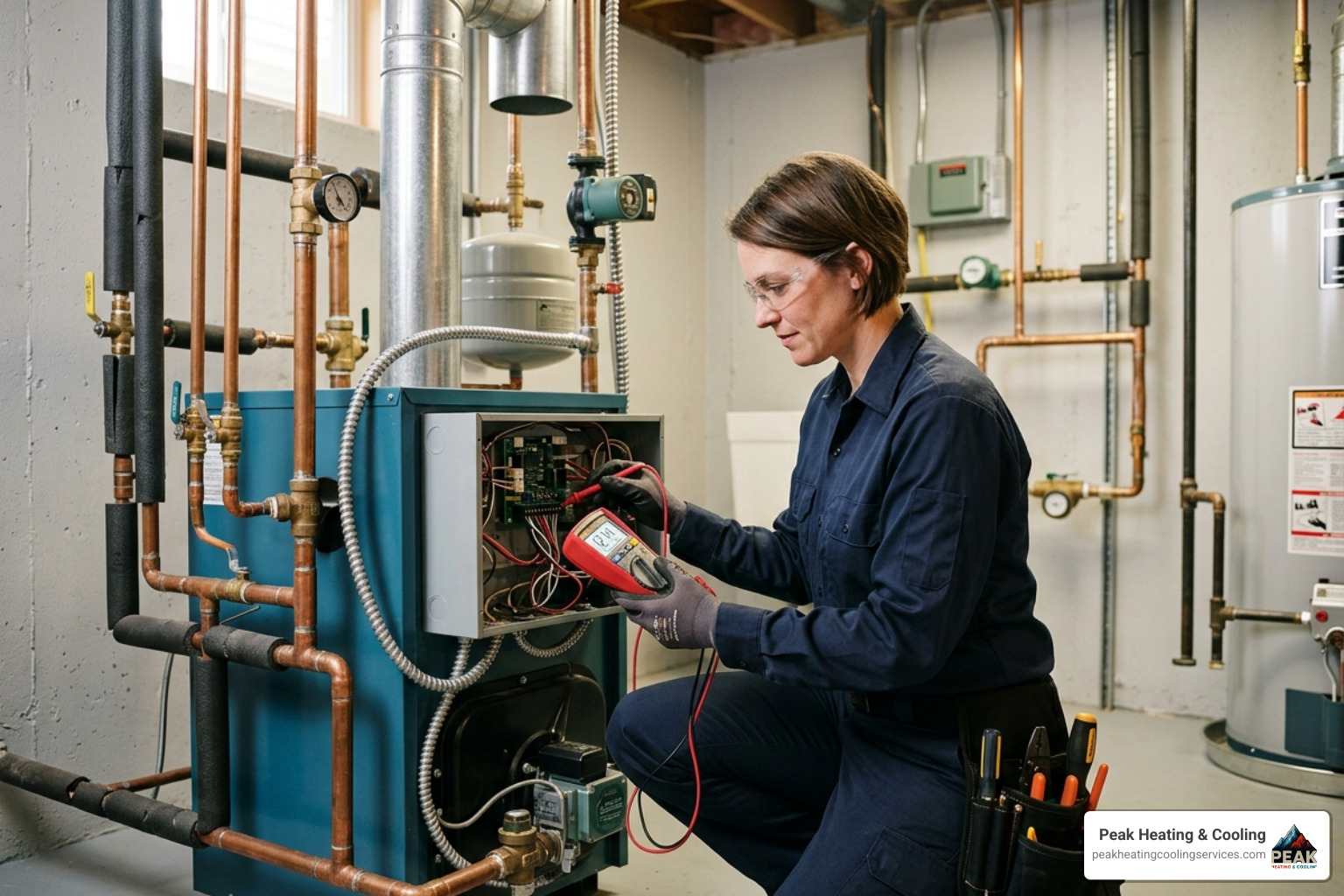
Step-by-Step Guide to Replacing Circulator Pump on Boiler
If you have isolation valves (often called “service valves”) located above and below the pump, you’re in luck. You can swap the pump without draining the entire house. If you don’t have these, you’ll need to drain the system down until the water level is below the pump.
Disconnecting Electrical Components Before Replacing Circulator Pump on Boiler
Start by opening the terminal box on the old pump. You will typically see three wires: black (hot), white (neutral), and green or bare copper (ground).
- Take a photo: Before disconnecting, snap a picture of how it’s wired.
- Loosen the strain relief: This is the nut that holds the conduit or wire in place.
- Disconnect: Unscrew the wire nuts and pull the wires clear.
Removing and Installing the Pump
With the power and water isolated, it’s time for the heavy lifting.
- Unbolt the Flanges: Use your pipe wrenches to loosen the flange bolts. Be prepared for some water to spill out; keep your bucket handy.
- Clean the Surfaces: Once the old pump is out, use a rag or wire brush to clean the flange faces. Any leftover old gasket material will cause a leak.
- Gaskets and Orientation: Place fresh gaskets on the flanges. Double-check the flow arrow on your new pump. It must match the direction of the old one.
- Mounting: Slide the new pump into place. Tighten the flange bolts in a crisscross pattern to ensure even pressure on the gaskets. Don’t over-torque them, as you could crack the flange or crush the gasket.
- Wiring: Reconnect the wires following your photo and the wiring diagram. Ensure the ground wire is securely attached.
Final Testing After Replacing Circulator Pump on Boiler
Once the pump is physically installed and wired, you need to bring the system back to life.
- Refill: Slowly open your water feed. Monitor the boiler gauge; you want to reach about 12-15 psi for a standard two-story home in Skokie or Park Ridge.
- Bleed Air: This is the most important step. Air trapped in the pump can cause it to burn out instantly (dry firing). Use the air bleed screw on the pump head and bleed your radiators or baseboards one by one.
- Check for Leaks: Watch the flanges closely as the pressure rises. If you see a drip, give the bolts a slight turn.
- Test Run: Restore power and turn up the thermostat. Listen for the smooth hum of a working pump.
Refilling, Bleeding, and Testing the Hydronic System
Refilling isn’t just about turning on a tap. If your system uses a Fill-Trol expansion tank, the tank itself regulates the pressure. You may need to adjust the air pressure in the tank to ensure the system fills correctly.
As the water enters, you’ll hear gurgling. This is air moving through the pipes. You must open the zone valves manually (if they are electronic) to allow water to pass through every part of the house. Go to the highest point in your home — usually the attic or top-floor radiators — and bleed the air until a steady stream of water comes out.
If you find that the system won’t hold pressure or you can’t get the air out, it might be time for finding the best boiler repair pros to perform a professional power purge.
Frequently Asked Questions about Boiler Pumps
How do I know if my circulator pump is failing?
Look for cold spots in the house, strange grinding or humming noises, or a pump motor that feels excessively hot to the touch. If your energy bills have spiked and your radiators are lukewarm, the pump is likely struggling.
Can I replace just the pump head instead of the whole unit?
Yes! On many modern “wet rotor” pumps, you can unscrew the four hex bolts holding the motor head to the “volute” (the part attached to the pipes). If the metal housing is in good shape and not corroded, replacing just the head saves you from having to mess with pipe flanges.
Is it necessary to drain the entire boiler system?
Not if you have isolation valves. These valves allow you to “trap” the water in the rest of the house while you work on the pump. If you don’t have them, we highly recommend having us install them during your pump replacement to make future maintenance much easier.
Conclusion
Replacing a circulator pump on a boiler is a task that sits right on the edge of DIY and professional territory. While the mechanical steps are straightforward, the risks of high-voltage wiring, system leaks, and air locks are real.
In many modern homes, especially those with high-efficiency combi boilers, the pumps are internal and governed by complex printed circuit boards (PCBs). Opening these units often requires a licensed professional to maintain the warranty and ensure gas safety.
If you’re in Glenview, Northbrook, or anywhere in the Chicagoland area and your heat has gone on strike, don’t stay in the cold. We offer 24/7 emergency service and same-day repairs to get your home back to a comfortable temperature. We specialize in major brands like Lennox and Ducane and offer 0% financing for qualified customers on new installations.
Schedule service with a local heating contractor at Peak Heating & Cooling today and let us handle the heavy lifting.