

Why Bleeding a Central Heating Pump Matters for Your Home’s Warmth
Bleeding a central heating pump is the process of releasing trapped air from your pump so hot water can flow freely through your heating system again.
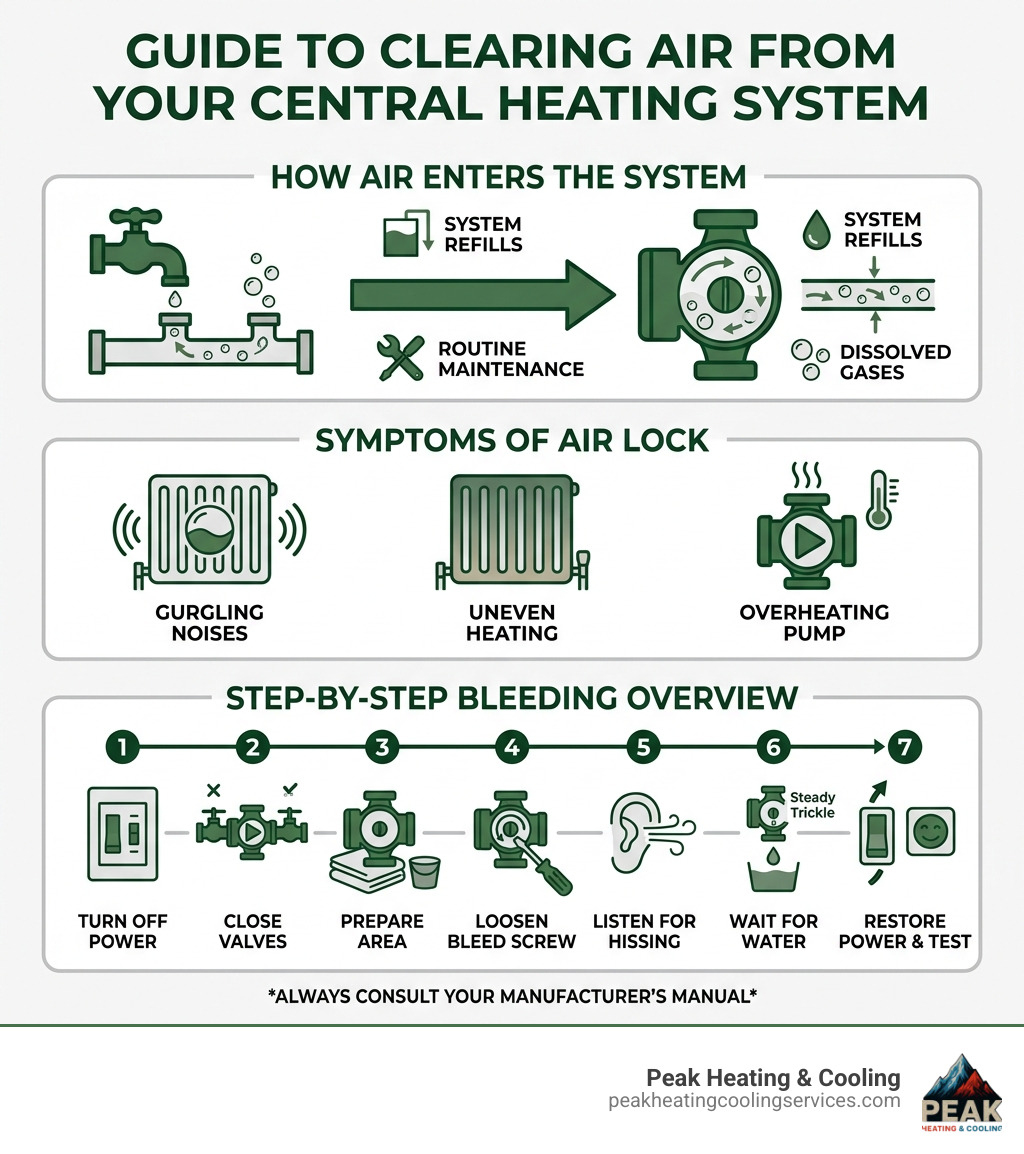
Here’s the quick version of how to do it:
- Turn off the power to your heating system at the fuse box
- Close the gate valves on either side of the pump
- Place towels on the floor beneath the pump
- Slowly loosen the bleed screw (usually a flat-head disk on the front of the pump) counterclockwise
- Listen for hissing — that’s trapped air escaping
- Wait for a steady trickle of water, then tighten the screw back up
- Restore power and test your system
That’s the short answer. But there’s more to it — especially if your pump model doesn’t have a visible bleed screw, or if the noise doesn’t stop after bleeding.
If your Glenview home’s radiators are making a gurgling sound, heating unevenly, or your pump housing feels unusually hot to the touch, trapped air is almost certainly the culprit. Air sneaks into your central heating system more easily than most homeowners realize — during routine maintenance, after a system refill, or simply as dissolved gases come out of solution over time.
The good news? For most homeowners across the North Shore and Chicagoland area, bleeding a pump is a manageable DIY task. The tricky part is knowing what to do when the basic steps don’t work — and that’s exactly what this guide covers.
Understanding Your Central Heating Pump and Why It Traps Air
To understand why bleeding a central heating pump is necessary, we first have to look at what this component actually does. Think of the circulating pump as the “heart” of your hydronic heating system. While the boiler heats the water, the pump is responsible for pushing that life-giving warmth through the veins of your home—the pipes and radiators.
In our experience serving the Chicagoland suburbs, from Wilmette to Park Ridge, we see these pumps working overtime during our long winters. Most modern homes utilize high-efficiency systems, often featuring Lennox or Ducane units, which rely on a precise flow of water to maintain comfort.
The Role of the Pump in Your Chicagoland Home
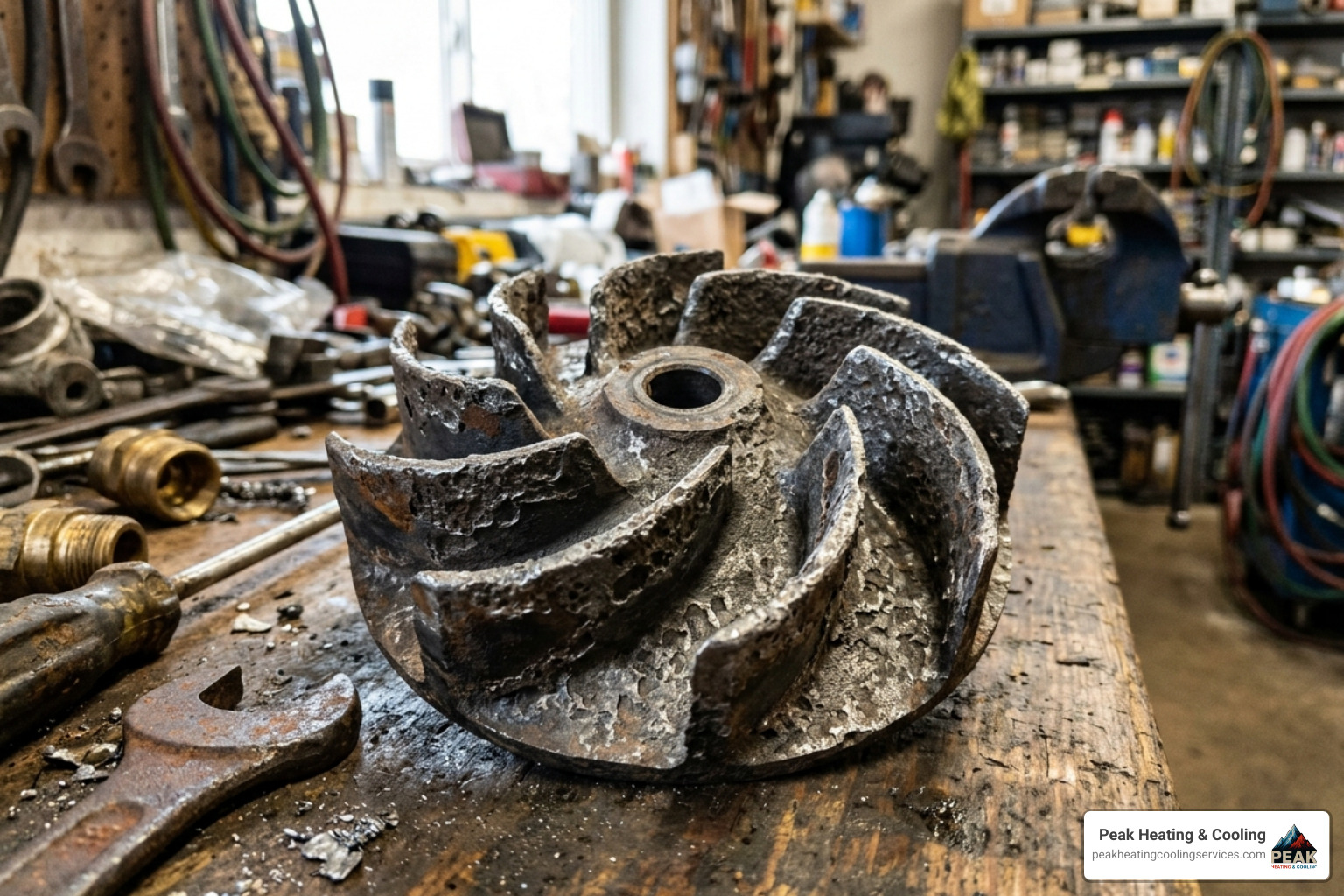
The circulating pump contains an internal component called an impeller. As this impeller spins, it creates the centrifugal force needed to move water through the boiler loop. If air bubbles get trapped inside the pump housing, they interfere with the impeller’s ability to “grip” the water.
This leads to a phenomenon called air entrapment. When air takes up space where water should be, the pump has to work much harder, leading to reduced efficiency and, eventually, a total lack of heat. For more on keeping your system running smoothly, check out our guide on Stay Warm and Toasty: Essential Heating Maintenance Tips.
Common Causes of Air Buildup in 2026
As of April 2026, even the most advanced heating systems aren’t immune to airlocks. Air can enter your system in several ways:
- System Filling or Refilling: Whenever you drain your system for a repair or a radiator flush, air naturally fills the void.
- Suction Leaks: Tiny gaps in joints or seals can act like a straw, sucking air into the system while the pump is running.
- Pressure Loss: If your system pressure drops too low, it can create a vacuum effect that draws air in.
- Microbubbles: Water naturally contains dissolved gases. When heated, these gases form tiny microbubbles that eventually collect at high points—like your pump.
- Cavitation: This is a more serious issue where low pressure causes “vapor bubbles” to form and collapse violently. This can actually pit and damage the metal of your impeller over time.
Signs You Need to Start Bleeding a Central Heating Pump
How do you know it’s time to grab your screwdriver? Your heating system is usually quite vocal when it’s unhappy. If your furnace went out or the house won’t warm up, the pump is one of the first places we look.
Identifying Symptoms in Your Glenview Home
If you live in Glenview or nearby Northbrook, keep an ear out for these common “cries for help” from your utility room:
- The Knocking Noise: A loud knocking or banging sound often indicates a significant airlock. This happens as water hits air pockets at high speed.
- Gurgling Sounds: If your pipes sound like a brook in the woods, you have air circulating where it shouldn’t be.
- Hot Pump Housing: While the water inside is hot, the pump motor itself shouldn’t be scorching. If the housing is too hot to touch, the pump might be struggling against an airlock, causing it to overheat.
- Vibration: Excessive vibration in the pump or the surrounding pipework is a classic sign of air interfering with the impeller.
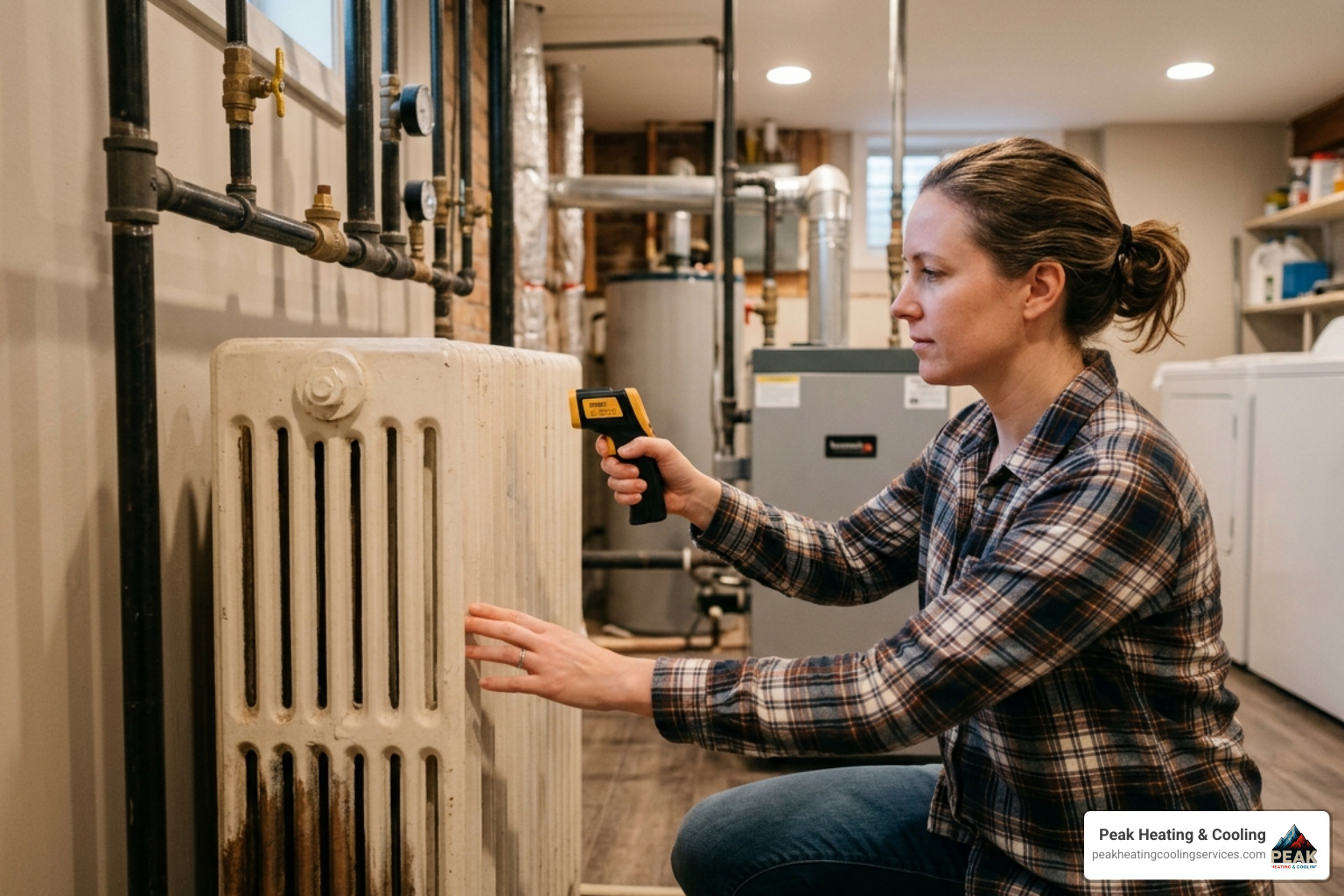
- Uneven Heating: If your downstairs radiators are hot but the upstairs ones are stone cold, air has likely collected at the highest point of the loop—often the pump or the top-floor radiators.
According to The Complete Guide to Central Heating Pump Problems, these symptoms shouldn’t be ignored, as running a pump “dry” (full of air) can lead to the motor burning out entirely.
When to Call a Professional for Bleeding a Central Heating Pump
While bleeding a central heating pump is often a DIY job, there are times when you need an expert. If you’ve bled the pump and the noise persists, or if you notice a seized shaft (the pump is humming but not spinning), it’s time to call us. Electrical faults or leaks around the pump seals also require professional attention to ensure your home stays safe and dry. If you’re facing a total system failure, our Furnace Repair Services are available 24/7 for Chicagoland residents.
Step-by-Step Guide: Bleeding a Central Heating Pump Safely
Ready to get started? Safety is our top priority. Before you touch anything, ensure you have the right tools and protection. You’ll need a flathead screwdriver (or a specific pump multitool), several thick towels, and perhaps a small container to catch water.
Locating the Bleed Screw on Different Models
Not all pumps are created equal.
- Grundfos UPS2 and similar models: These are very common in the North Shore area. You’ll see a large, silver, disk-shaped screw right in the center of the pump face. This is your target.
- Older Grundfos UPS Models: These often have a large silver plate that you might need to loosen.
- Grundfos UPS15-58FC and Modern “Self-Venting” Models: Here’s where it gets tricky. Many newer pumps, especially those installed in the last few years leading up to 2026, do not have a bleed screw. They are designed to be “self-bleeding.” If you don’t see a screw, don’t try to pry off the plastic cover! You’ll likely need to bleed the system via high-point vents or by running the pump at its highest speed setting for 30 minutes to push the air toward the radiators.
The Process of Bleeding a Central Heating Pump
Follow these steps to ensure a stress-free experience:
- Power Down: Turn off your heating system. You don’t want the pump spinning while you’re trying to bleed it, as this can actually draw more air in or spray hot water everywhere.
- Protect the Area: Lay down towels. Even a successful bleed will result in some water discharge.
- Isolate (Optional but Recommended): If your pump has gate valves (lever or wheel handles) on either side, some experts suggest closing them slightly, though for a simple air bleed, many homeowners leave them open.
- The Slow Turn: Using your flathead screwdriver, slowly turn the bleed screw counterclockwise. You only need to turn it about a half to a full rotation.
- Listen and Watch: You will hear a hissing sound. This is the air escaping. Keep the screw open until the hissing stops and a steady, slow trickle of water emerges.
- Tighten Up: Once you see a consistent stream of water (no bubbles), turn the screw clockwise to tighten it. Don’t over-torque it; “snug” is enough to prevent leaks.
- Restore and Monitor: Turn the power back on. Check the pump for a smooth humming sound and verify that your radiators are beginning to heat up evenly.
For a deeper dive into the mechanics of this process, How to Bleed Air from a Circulating Pump provides excellent technical insights.
Troubleshooting and Advanced Maintenance
Sometimes, bleeding a central heating pump is only the first step. If you’ve followed the guide and still have issues, you might be dealing with system-wide pressure problems or component wear.
What to Do if Water Starts Leaking
If water continues to drip from the bleed screw after you’ve tightened it, the O-ring or seal inside may have perished. In some cases, debris from the system (sludge) can get caught in the threads. Try loosening it slightly and re-tightening. If the leak persists, you may need a replacement screw or, in older pumps, a new pump head.
Regular HVAC Maintenance can prevent these small parts from failing unexpectedly during a Skokie or Niles cold snap.
Differences in Sealed vs. Open Vent Systems
The way you manage air depends heavily on your system type:
- Sealed Systems (Combi Boilers): These are common in newer Chicagoland builds. After bleeding the pump, you must check your pressure gauge. Bleeding releases pressure, so you’ll likely need to top it up to about 1.5 bar using the filling loop.
- Open Vent Systems: These have a feed and expansion tank (usually in the attic). These systems are “self-filling,” but they are also more prone to drawing air in if the water level in the tank is too low or if the pump is positioned too high in the circuit.
| Feature | Manual Bleeding Pump | Self-Venting Pump |
|---|---|---|
| Bleed Screw | Visible silver disk on front | None (Solid casing) |
| Action Required | Manual turn with screwdriver | Set to max speed for 30 mins |
| Risk of Leaks | Moderate (at the screw) | Low |
| Common Models | Grundfos UPS2, Flomasta | Grundfos UPS15-58FC |
Frequently Asked Questions about Central Heating Pumps
Is it safe to bleed a central heating pump myself?
Yes, it is generally safe as long as the system is turned off and the water has had a chance to cool slightly. The water inside can be very hot, so always use caution and keep your face away from the bleed point. If you aren’t comfortable working with tools near electrical components, we’re happy to help.
How often should I bleed my pump for maintenance?
We recommend checking your pump and radiators at the start of every heating season (typically late September or October in Illinois). If your system is well-maintained and has no leaks, you shouldn’t need to bleed it more than once a year. Frequent air buildup is a sign of a larger issue, like a failing expansion vessel or a hidden leak.
What if my pump doesn’t have a visible bleed screw?
Don’t panic! As mentioned, many modern pumps are self-venting. In these cases, air is removed by bleeding the radiators and ensuring the system’s automatic air vents (usually located near the boiler) are clear and functioning. You can also refer to our guide on Stay Warm and Toasty: Essential Heating Maintenance Tips for more on system-wide air removal.
Conclusion
Bleeding a central heating pump doesn’t have to be a stressful ordeal. By following these steps, most homeowners in Glenview, Northbrook, and the surrounding North Shore suburbs can restore their home’s comfort in under twenty minutes. A quiet pump is a happy pump, and a happy pump means a warm, cozy home for your family.
At Peak Heating & Cooling, we’ve spent over 20 years helping our neighbors across Chicagoland navigate the quirks of their heating systems. Whether you’re looking for a professional tune-up, a same-day repair, or a brand-new high-efficiency Lennox or Ducane installation, we’re here for you. We offer 0% financing for qualified customers and 24/7 emergency service because we know that furnaces don’t always wait for business hours to stop working.
If your pump is still acting up or you’d rather leave the maintenance to the experts, don’t hesitate to reach out. Contact us today for reliable Heating Contractor Services and let us take the stress out of your home maintenance.