
Your Furnace Won’t Wait — Here’s What Chicagoland Homeowners Need to Know
Furnace maintenance is the single most important thing you can do to keep your home warm and your heating expenditures under control — especially during a brutal Chicagoland winter.
Here’s a quick answer if you need it fast:
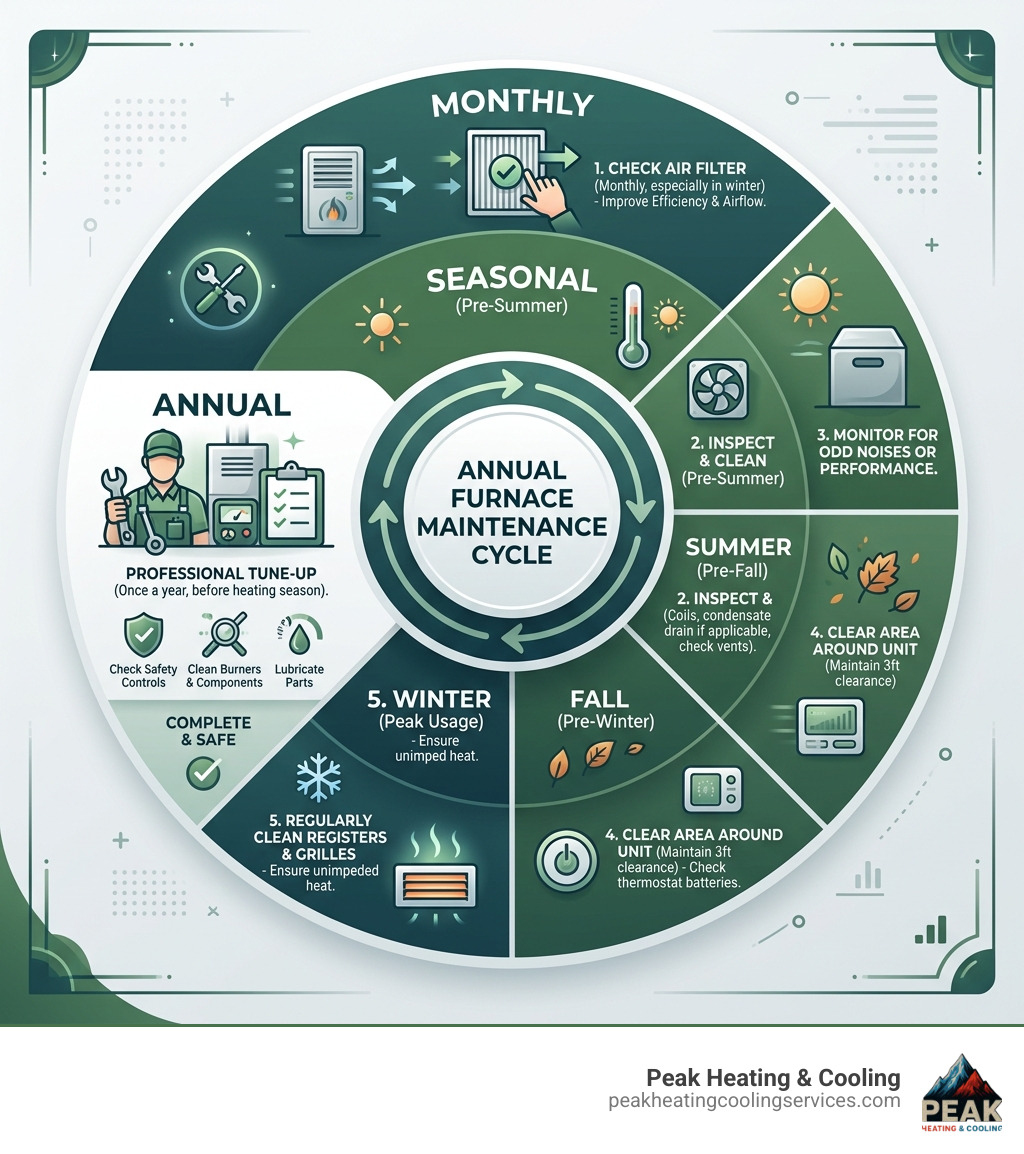
How to do furnace maintenance in 5 simple steps:
- Inspect and replace the air filter — every 1–3 months, monthly in winter
- Clean vents and return grilles — vacuum registers to keep airflow clear
- Verify thermostat functionality — check batteries and calibration
- Clear the area around the unit — maintain at least 3 feet of clearance
- Monitor for unusual performance — odd noises, smells, or pilot light color changes
And once a year, schedule a professional tune-up before the heating season starts.
A neglected furnace doesn’t just use more energy to run — it can fail completely when you need it most. Research shows a well-maintained furnace can last 20+ years, while a neglected one may give out in as few as 12. Dirty filters alone can restrict airflow enough to cause premature equipment failure. And airflow problems from dusty components can cut your system’s efficiency by up to 15%.
For homeowners in Glenview, Northbrook, Wilmette, and across the North Shore, that’s not just an inconvenience. It’s a real risk when temperatures drop hard in January and your system hasn’t been touched in years.
This guide walks you through exactly what to do — both the DIY tasks you can handle yourself and the professional checks that keep your system safe and efficient all season long.
Furnace maintenance terms at a glance:
Why Regular furnace maintenance is Essential for Your Home
Living in Chicagoland, we rely on our heating systems for a significant portion of the year. When April 2026 rolls around and you look back at your winter energy usage, the difference between a maintained system and a neglected one is often reflected in significant energy savings. Regular furnace maintenance isn’t just about avoiding a breakdown; it’s about optimizing the equipment you already own.
A well-maintained furnace can easily reach a 20-year lifespan. Without care, that same unit might fail in just 12 years, forcing a premature and expensive replacement. By catching small issues early—like a worn belt or a dusty sensor—we prevent the “domino effect” where one small failure leads to a total system shutdown. For more detailed advice on keeping your home cozy, check out these Essential Heating Maintenance Tips.
Improving Airflow and Efficiency
Dirt is the primary enemy of your heating system. When dust accumulates on the blower blades or inside the cabinet, your furnace has to work significantly harder to move air through your home. Statistics from the U.S. Department of Energy show that airflow problems can reduce your system’s efficiency by up to 15%. Even more concerning, visible dust on blower blades can reduce airflow by over 20%. This doesn’t just make your house feel drafty; it puts immense strain on the motor, leading to early failure. You can learn more about managing your system’s health in our HVAC Maintenance Roadmap.
Protecting Your Manufacturer Warranty
Most homeowners don’t realize that their manufacturer warranty often comes with “fine print” requiring documented annual service. If a major component like the heat exchanger cracks, the manufacturer may ask for proof of professional furnace maintenance before honoring the warranty. Skipping your annual tune-up could leave you responsible for the full expense of a replacement. Keeping a folder of service receipts is the best way to ensure your HVAC TLC pays off in the long run.
5 Simple Steps for DIY Furnace Maintenance
While complex mechanical repairs should always be left to the pros, there are several tasks Glenview homeowners can safely perform to keep their systems running smoothly.
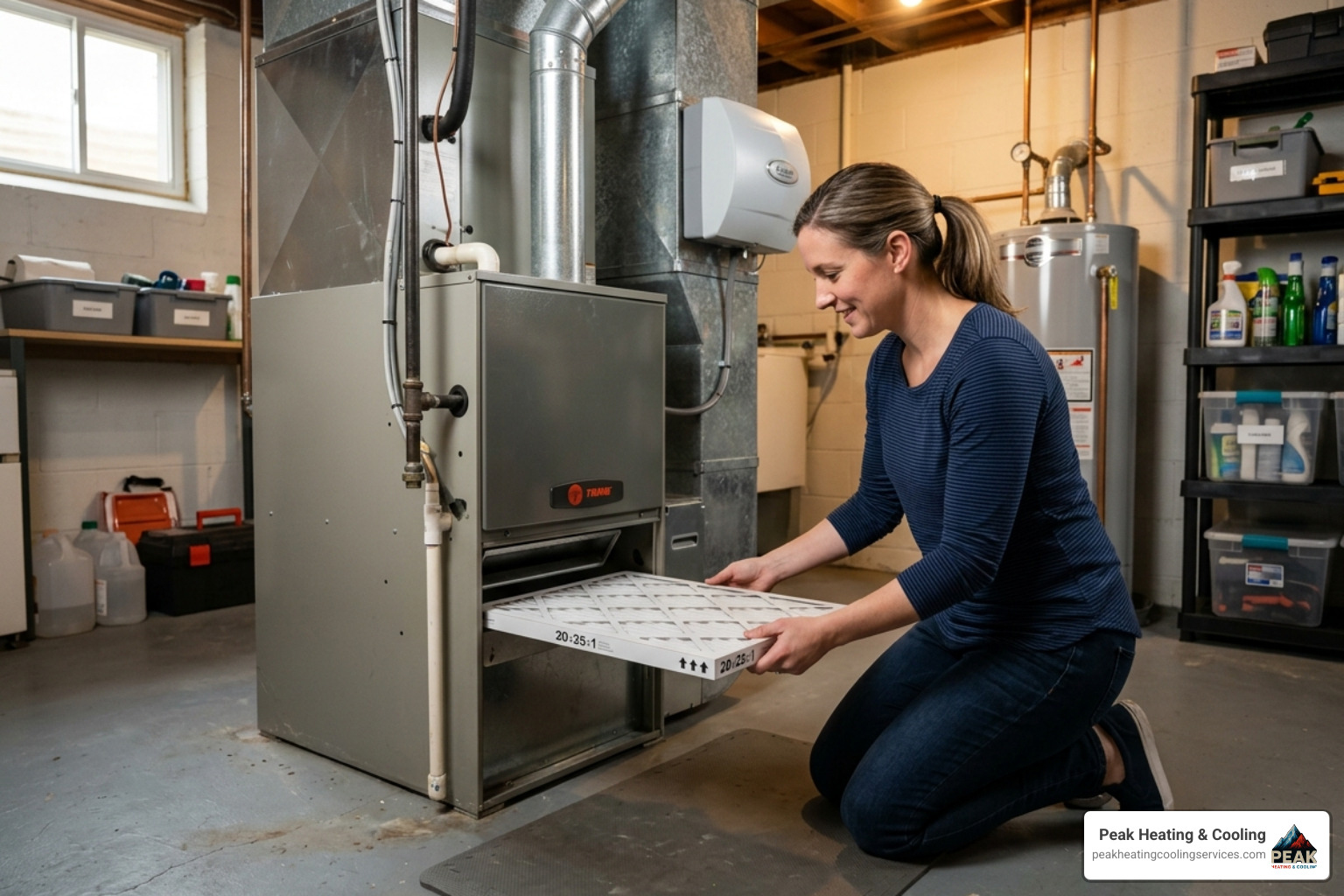
Safety First: Before performing any maintenance, always turn off the power to the furnace at the circuit breaker or the dedicated service switch located on or near the unit. If you have a gas furnace, ensure the gas valve is handled with care.
| Task | Frequency | DIY or Professional? |
|---|---|---|
| Filter Replacement | Every 1-3 Months | DIY |
| Cleaning Vents/Registers | Every 6 Months | DIY |
| Clearing Debris Around Unit | Monthly | DIY |
| Heat Exchanger Inspection | Annually | Professional |
| Combustion Analysis | Annually | Professional |
| Lubricating Moving Parts | Annually | Professional |
Step 1: Inspect and Replace the Air Filter
This is the single most important DIY task. For most Chicagoland homes, a MERV 8 filter provides the best balance between air filtration and unrestricted airflow. During the peak of winter, we recommend checking your filter every month. A clogged filter is the #1 cause of “no heat” service calls, as it causes the furnace to overheat and trip a safety sensor.
Step 2: Clean Vents and Return Grilles
Walk through your home in Northbrook or Park Ridge and ensure all supply registers and return air grilles are unobstructed. Use a vacuum attachment to remove dust, pet hair, and cobwebs. Blocked vents force the system to work harder, increasing energy consumption and causing uneven heating between rooms.
Step 3: Verify Thermostat Functionality
If your thermostat screen is blank or the furnace isn’t responding to temperature changes, start with the batteries. We recommend replacing thermostat batteries once a year. Additionally, verify your settings. Using a programmable thermostat to lower the temperature by 5-8 degrees while you are asleep or away can result in significant energy savings.
Step 4: Clear the Area Around the Unit
Your furnace needs “room to breathe.” Maintain at least three feet of clear space around the unit. Do not store flammable materials, cleaning chemicals, or cardboard boxes near the furnace. This ensures proper combustion air intake and reduces fire hazards in your basement or utility closet.
Step 5: Monitor for Unusual Performance
Be the “eyes and ears” of your home. Listen for banging, whistling, or rattling noises. Check the pilot light (on older units); it should be a steady blue. A yellow or flickering flame can indicate improper combustion. If you notice a persistent sulfur or “rotten egg” smell, evacuate the home immediately and call for Furnace Repair Services.
What a Professional Furnace Tune-Up Includes
A professional tune-up goes much deeper than a standard DIY cleaning. When our technicians visit a home in Skokie or Wilmette, we use specialized tools to diagnose the “health” of the system before a breakdown occurs.
Safety Inspections and Cleaning
The most critical part of a professional visit is the safety check. We inspect the heat exchanger for microscopic cracks that could leak deadly carbon monoxide into your home. We also clean the flame sensor—a 5-minute task that prevents the furnace from shutting down unexpectedly—and test the ignitor, which is the most common wear item in modern furnaces.
Mechanical Lubrication and Testing
We lubricate all moving parts, including the blower motor, to reduce friction and electricity usage. We also tighten electrical connections, as vibration over time can loosen wiring. Finally, we check the condensate drain on high-efficiency units to prevent water damage and perform a combustion analysis to ensure your fuel is burning as cleanly as possible.
Warning Signs Your Heating System Needs Attention
Even with the best furnace maintenance, parts eventually wear out. Knowing the warning signs can save you from a “no heat” emergency in the middle of a January freeze.
Identifying Dangerous Symptoms
- Yellow Pilot Light: Indicates the gas isn’t burning purely, which could mean carbon monoxide is present.
- Sulfur Smells: This is the scent added to natural gas to alert you of a leak.
- Short Cycling: If your furnace turns on and off every few minutes, it may be overheating or have a failing sensor.
- Rising Energy Usage: A sudden spike in energy consumption without a change in weather usually means the system is struggling.
When to Call for Same-Day Service
If your furnace stops working suddenly or you smell an electrical burning odor, don’t wait. Frequent circuit breaker trips are also a sign of a serious electrical issue. We provide 24/7 emergency service and same-day repairs across the Chicagoland suburbs to ensure your family stays safe.
Frequently Asked Questions about Furnace Maintenance
How often should furnace maintenance be performed?
You should have a professional tune-up performed once a year. The best time to schedule this is in the fall, before the first cold snap hits. This ensures your system is ready for the heavy workload of a Chicago winter. As of April 2026, we still recommend this annual cadence to preserve equipment life and warranty status.
Can DIY furnace maintenance improve energy efficiency?
Absolutely. Simply changing a dirty filter can improve efficiency significantly. Airflow problems caused by dust and blocked vents can waste up to 15% of your heated air. By staying on top of the 5 simple steps mentioned above, you can keep your monthly expenditures lower. For more tips on general system care, see our guide on HVAC Maintenance.
What is the best month for a furnace tune-up?
Late summer or early autumn (August through October) is the ideal window. Scheduling early allows you to beat the “winter rush” when HVAC companies are busiest with emergency calls. It also gives you peace of mind knowing the heat will kick on the moment the temperatures dip.
Conclusion
Furnace maintenance is the smartest investment you can make in your home’s comfort and safety. From simple DIY filter changes to annual professional inspections, these steps ensure your system remains reliable for 20 years or more. Neglecting your furnace can lead to emergency repairs that are significantly more expensive than a simple tune-up, and it can even void your manufacturer warranty.
At Peak Heating & Cooling, we bring over 20 years of experience to every home in Glenview, Northbrook, and the surrounding Chicagoland suburbs. We are a locally operated, licensed, and insured contractor dedicated to keeping our neighbors warm. Whether you need a routine inspection or a high-efficiency Lennox or Ducane installation, we are here to help.
Don’t wait for the first snowstorm to find out your furnace isn’t up to the task. Schedule your professional heating contractor services today and enjoy the peace of mind that comes with a well-maintained home.